
It is well-known that the Covid-pandemic has forced change in many industries and driven digitalisation at a pace faster than anyone could have anticipated, but it has happened at the cost of robust security and digital authentication.

The ramifications of this could be felt soon as it becomes increasingly difficult to know whether the person on the other end of a digital transaction is legitimate and authenticated.

Juniper Research in its 2020-2025 Digital Identity Market Summary estimates that digital identity apps will exceed 6,2 billion by 2025 from a 2020 base of 1 billion.

South Africa, together with most other countries, is on an aggressive growth path towards digital authentication and digital recognition maturity. Entrepreneur and digital, remote biometric authentication specialist, Lance Fanaroff from the award-winning business, iiDENTIFii, says there have been pros and cons as a result of Covid.

“It would appear that 2020 and 2021 rolled into one, resulting in a very hard 24-month year for the majority of businesses. The Covid-19 pandemic has seemingly also been the tipping point for so many technology-driven change cycles, both good and bad, which has left many businesses in a digital dilemma.”

Having recognised the dire need for remote biometric identity authentication locally, iiDENTIFii has successfully developed globally relevant technology that provides proven biometric liveness, facial verification, and validates data through secure triangulated authentication. This unique approach has seen the company win the MTN Business App of the Year Awards 2021 in the ‘Best Enterprise Solution’ category; and it has also attained Microsoft co-sell Partner status with its biometric digital authentication and automated onboarding solution hosted in Microsoft Azure. The company has also won the 2021 new Microsoft ISV Partner of the Year award.

Fanaroff says that while Covid did accelerate digitalisation across many industries, the speed with which it was implemented led to poor choices, which will be felt in the next two to five years. A key area of concern, according to Fanaroff, is digital recognition and digital authentication solutions. These are widely regarded as critical must-haves coming out of the “24-month year” global pandemic.

Many companies may have implemented inadequate solutions and left their key assets — their data and intellectual property vulnerable and– at risk. 

It is well known that the pandemic forced significant change in many industries, including financial services, telecommunications, health and telemedicine, education, gaming and crypto – all of which hold valuable information that are priceless in the hands of certain individuals. “Covid fast-tracked so many online digital solutions and fuelled a worrisome digital identification threat fire. It is astounding to see the quality and ease with which deep-fake identities have been created. In 2018, comedian Jordan Peele warned many of this phenomenon, and Covid has just made the threat 100 times worse.”

Remote working has amplified the threat, and it is becoming imperative to know who you are really speaking to the other side of the screen. According to Fanaroff the Digital Identity Verification industry, globally,  had seen an investment of almost $2B when 15 scale-up businesses were funded to develop facial recognition solutions: “In 10 months the industry received more funding than in the last seven years. This spike of more than 100 times the funding previously received shows that those on the technology forefront know digital verification is a growing concern and immense opportunity.”

That said, Fanaroff believes that the industry has only addressed the tip of the iceberg. 

The financial services industry is leading the race when looking at digital authentication and digital recognition because regulations require them to have robust systems in place for Know your Customer (KYC) compliance.

He says that what is helping immensely is that although consumers are loathed to trust technology, they have become extremely comfortable taking a selfie. This, together with increased regulation and the POPIA – the Protection of Personal Information Act – will assist greatly in protecting not only the financial institution but also the consumer as well

Cloud growth and adoption has also played a role. Despite a two-year decline, the 2021 growth of cloud is forecast at $74,3 billion and Fanaroff says that this level of cloud availability has undoubtedly had a positive impact on the use of smart tech such as Artificial Intelligence, Machine Learning, and other automation solutions and services: “We have even seen a spike in cloud-related career choices as solutions continue to evolve and require higher levels of skills, while developers view these positions as ones that provide good job security.”

As 2021 speeds to the end, Fanaroff says that the year has been witness to some significant achievements. Massive adoption of more digital technology and a level of comfort with compliance are two of the main positives, while a level of standards setting has also been achieved: “We are seeing a move towards more impressive interoperability and benchmarks are being established with the digital identity authentication and digital recognition space. iiDENTIFii is looking forward to increased collaboration across sectors and even competitors. By working together, the success of cyber-attacks will undoubtedly decrease, and it is simply a mindset change that is acutely needed.” 

Ends


About iiDENTIFii

iiDENTIFii is a world leading remote biometric digital authentication and automated on-boarding technology platform. It fulfils the needs of customer-focused organisations that are required to authenticate and on-board customers. It makes use of a frictionless and non-invasive automated proven process, that meets customer intelligence, risk and compliance goals, as well as ticking all the boxes from a governance and legislative perspective.

https://iidentifii.com/

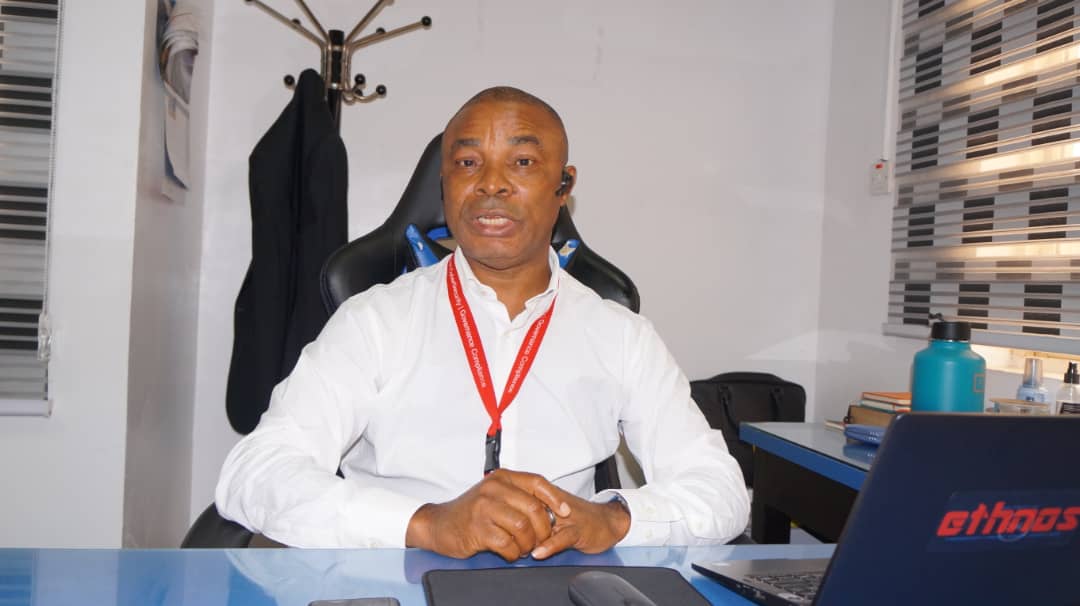
PICTURE CAPTION: Lance Fanaroff, chief strategy officer, iiDENTIFii.


Ethnos IT Security Solutions Limited is celebrating 10 years as an IT Security solution provider. Can we know how it all started?

As a company we were designed to provide security solutions to organisations, businesses and others. As technology keeps improving we came to knowledge that security is the backbone of technology. We can’t talk about technology advancement without thinking of how to secure your business assets and human to human engagements. We, at Ethnos IT Solutions have grown with the growth of technology, Today, technology is looking at artificial intelligence (AI), machine learning, metaverse, digital transformation, Holography and many others. We have grown with these new technologies and also improved in our capacity and skillset to support our customers as they consume these technologies. We have grown our market base, personnel, in terms of global technical engagements we have grown also. That is the journey. Someone said if I survive 5 years it means we would be in business for long and thank God we have survived these 5 years and we are ten today. Ten years has been a good experience for us. We have our ups and downs but we keep evolving.

Are you focused in B2B relationship or B2C relationship as it pertains to cyber security business?

Currently, we have a wealth of experience and we have changed our thinking and vision as a company. What we do now is to solve real problems for organisation and we are not limited in our thinking. We are not limited in any area of cyber security. Companies and organisations are on a journey as it pertains to business and we come in to solve problems for organisations in terms of security. We are no longer at this stage delivering products but solving problems. Some customers we evaluate them, some we train them and improve their cyber hygiene culture, some we deploy technologies to control their touchpoints, some we help on their regulatory compliance and certification journeys. We do firewall, application security, database security or perimeter security. So, we look at businesses and implement threat management and we have platforms that we can plugin your environment and help you control and detect threats from internet exposure to data base etc. We detect and remediate these threats. We also conduct threat hunting and keep checking what criminals will check for, we detect it before the criminals. We specialise in solving problems for customers regardless of what you are doing.

Do you do Penetration and vulnerability testing for companies?

Yes, we always do that for customers, before we implement anything, we first assess your threat and risk level… we do what we call threat assessment. This is the first level we take. Currently, we are conducting vulnerability and assessment testing for most of the stockbrokers as required by the Nigerian Stock Exchange.

What do you think about security breaches in Nigerian banking system?

There is the roadmap from Central Bank for banks on the levels of protections that should be in place. They have gone to define some framework that the banks must have, they are also looking at mobile environment such as mobile applications. If the CBN defines a roadmap, then banks must follow them because they are developed from expert experience and advise. So, banks must follow these guidelines. I’m not aware the Nigerian government has enacted a law that compels every organization to make their breaches public. This is what a responsible government must do. Banks are making huge efforts and investment to protect their data and that of their customers. I do sympathize with them because as they borrow new frameworks and technologies, they sometimes run into difficulties and no organization is breach proof and I know that the banks and CBN aren’t sleeping.

https://ethnos.com.ng

What about independent merchants and those deploying mobile apps?

As of the merchants, I don’t know how much regulatory frameworks are into this area. People are spinning out all kinds of mobile app, depending on what they are offering and these apps collate critical information from people and we do not know how they store and process it. We do not know the level of investment and I do not know how they do their source code analysis etc? We know how much source code analysis cost. The criticality of source code environment determines how strong the app is and criminals are now looking in that direction to launch attacks… there is the need to regulate them because if the apps are vulnerable, the users are in trouble.

Now, what do you think about public sector and what do you think that the government can do?

In business you have to know that there is what is called “focus”. Our focus as a business is to offer solutions to private businesses, it is easier and faster to deal with the organized private sector. Government isn’t an easy client to deal with, we do not want to be distracted while chasing or engaging with government. We know the political side of it and we are apolitical as a firm. If the government wants to engage us, we are open to consultancy but as per chasing government contracts, we are strictly focused on private sector. Although, we are engaging with NITDA as a DPCO (Data Protection Regulator Organization) that has been certified by NITDA. We want the lawmakers to make law on security of critical public infrastructure. There are couple of experts who are speaking to government here. We believe that it will come out positive.

You changed your corporate logo, why the change?

When we started as a company, we wanted to create an identity but as we have come of age, we tweaked our logo a bit to reflect whom we are as of today. The concept of the circle you find in our logo shows a network of our customers. If you look at it clearly it is not broken, we meant here that our customers are safeguarded and we are supplying the livewire they need to grow. We wanted that to reflect in our logo as a problem-solving organization.

What have you learnt this past 10 years as a CEO of an IT firm?

As a Chief Executive Officer of this organization and the leader of this team, I have learnt a lot of things. As a person, I have learnt to create a platform for people to thrive. We recently created an academy where people are recruited and made to know the rudiments of cybersecurity. We created a platform that will have skills available to the young ones and we trained them at no charges. We are building a platform of security experts. We are also a strong and bonded team; we encourage people to try. Opportunities abound in the market and we encourage people to take advantage of them. I also learnt that you just have to put in your best strategically and see where life take you. I enjoy what I do, it is no longer like a work to me but a lifestyle.

How did you gain market acceptance during your early years as an indigenous firm?

Well, it is mindset which has become cultural where Nigerians believe that foreign firms are better but we met some Nigeria who were of different opinion and they gave us a chance and here we are today. The industry has grown today, we were early birds that came to the industry when it was young or green. The security industry has grown so wide and today a lot of people have joined and the industry has grown. What sets us apart is that we do not only provide products but we provide services. We go to companies with questions like; what have you tried and failed? What are your plans for security? what fears do you nurse and your plan? We help organization answer these and even equip the people with skillset. We help organization to optimize their products. These are few of the things that sets us apart. We appreciate those that gave us a chance during the early days. A good number of Nigerian companies died off due to the acceptability of their products where many business owners think that foreign firms are better. Some companies are built from scratch to survive and we are built to stay in business and provide an environment for many others to thrive and grow.

What do we expect from you in future?

Currently, we are running a platform that allows us to conduct detection and response. It is a managed service that is focused on threat hunting. We want to grow that platform and see many organizations cost effectively enjoy security protection. We want to expand our capacity and give people opportunity to express themselves and contribute to protecting national assets. Cyberspace is getting more dangerous today with software everywhere, we have houses, watches, phones and a whole lot that is powered by software and because software is everywhere, it means that risk is everywhere. We want to stay relevant and ensure that these software are protected because they carry critical information from health, flight, defense, education to financial to others.

Today, technology is looking at artificial intelligence (AI), machine learning, metaverse, digital transformation, Holography and many others. We have grown with these new technologies and also improved in our capacity and skillset to support our customers as they consume these technologies. We have grown our market base, personnel, in terms of global technical engagements we have grown also. That is the journey. Someone said if I survive 5 years it means we would be in business for long and thank God we have survived these 5 years and we are ten today. Ten years has been a good experience for us. We have our ups and downs but we keep evolving.

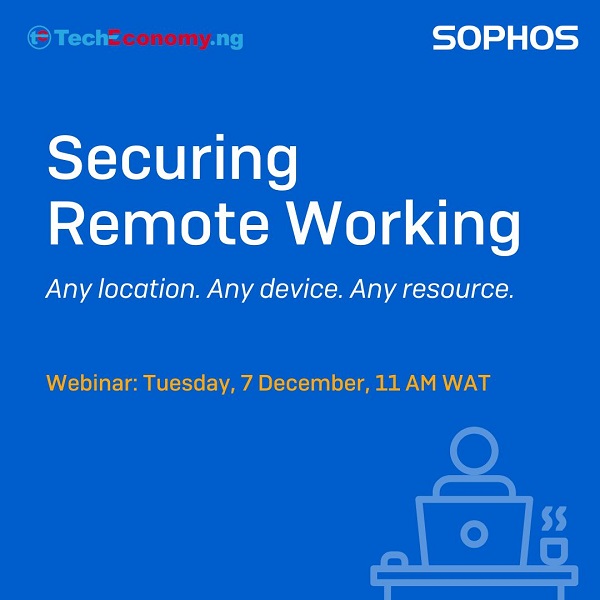
 Sophos, a UK company primarily focused on providing security software in conjunction with TechEconomy.ng has announced December 7, 2021 (11.00 AM WAT) as the date for the webinar on ‘Securing Remote Working’.

Coronavirus has brought remote working to the top of everyone’s mind, with many organizations already enabling or exploring it. 

According to the Velocity Smart Technology Market Research Report 2021, 70% of remote workers said they had experienced IT problems during the pandemic, and 54% had to wait up to three hours for the issue to be resolved.

Meanwhile, CISO’s Benchmark Report 2020, says organizations are struggling to manage remote workers’ use of phones and other mobile devices.

According to the organizers, the webinar will focus on the following: Providing secure connectivity for people working at home, on-site, and in the office, including VPN and ZTNA technologies; Securing the devices that make those connections against ransomware and other advanced threats; Protecting the data and workloads your users need to access, whether stored on-premises, in the cloud or both. 

Speaking ahead of the webinar, Peter Oluka, editor at TechEconomy.ng said with remote working now the new normal, it is important to start simplifying cybersecurity management for dispersed IT teams at the same time.

He said discovering the tips to help users, and organizations, stay secure while protecting everyone’s physical health had become imperative. 

“Remote working is not just people who are in multiple locations – the resources they use are as well.”

He explained that in offices there are security measures and protections in place such as firewalls and blacklisted IP addresses which help in reducing the risk but the case is different when working remotely.

“When you are working from home, chances are that you are connecting from unsafe wifi or connected to an untrusted network and that increases the risks of cyberattacks.”

Participation 

The organizers: Sophos and TechEconomy.ng, said that participation is FREE however you are required to pre-register through this Link HERE (https://register.gotowebinar.com/register/2411802264243755534)


The Nigerian Communications Commission (NCC) has hosted another edition of Campus Conversation (CC), at the weekend in Bayero University, Kano (BUK), where officials of the Commission engaged in intensive enlightenment of students of the varsity on their rights and privileges as telecoms consumers.


Campus Conversation is a sub-programme of the Telecom Conversations (TCs), a modified consumer information and education outreach programme in the purview of NCC’s Consumer Affairs Bureau (CAB). It consists of six sub-programmes, all conceived to target different categories of telecom consumers in order to empower them with the right information they require to make informed decisions.


Addressing a large gathering of students during the CC recently, the Director, Consumer Affairs Bureau, NCC, Efosa Idehen, said the Conversation at BUK is the fourth edition in a series, organized to enlighten the student segment of telecom consumers about their rights, privileges and obligations to enhance quality of experience in respect of telecom services.


The Conversation had earlier taken place at the University of Abuja, University of Benin, and the University of Nigeria, Nsukka.


Represented by the Head, Consumer Policy Development and Monitoring, Hafsat Lawal, Idehen said the objective of the CC is to ensure that telecom consumers on university campuses are adequately informed and educated on their rights and privileges.


Additionally, Idehen said, through the Conversation, students as telecoms consumers are able to acquire knowledge to make informed decisions and be able to protect themselves from unwholesome practices by service providers.
The Director Consumer Affairs outlined numerous channels the NCC had emplaced for aggrieved consumers to seek redress. These channels include the NCC Consumer Portal through which consumers can lodge complaints and also learn about consumer-centric activities of the Commission.


Other initiatives include the NCC 622 toll-free number, a second-level complaint mechanism for telecoms consumers to escalate complaints earlier lodged with their service providers which have not been addressed satisfactorily. The Director also mentioned NCC’s corporate social media handles on Facebook, Instagram, and LinkedIn, as well as through correspondence via the NCC official email address (ncc@ncc.gov.ng). Idehen told the students to take advantage of all the NCC channels of communication to get redress in terms of resolution of their telecom service-related complaints.

Also speaking at the event, NCC’s Director, New Media and Information Security, Dr. Alhassan Haru, emphasised the importance of cyber awareness and vigilance. He said as NCC works with all stakeholders to enhance accessibility to the Internet for more people, cyber criminals are also on the prowl to defraud unsuspecting users of the Internet. Thus, Haru said, “We constantly encourage the youths, especially students in universities, who are the largest individual users of the Internet to use Internet for legitimate activities and more importantly to be conscious of cyber criminals. So, at NCC, we also ensure that we educate you in order to ensure a safe cyberspace space experience for all Nigerians.”
Earlier in her welcome address, the Head, Consumer Information and Education at NCC, Mistura Aruna, said the Commission had put in place a number of consumer-centric initiatives that CAB has been mandated to take to all shades of stakeholders. She added that this mandate is in line with the NCC’s Strategic Management Plan (SMP) and other policy documents of the Federal Government, all of which have been streamlined in the Commission’s Strategic Vision Plan (SVP) 2021-2025 with emphasis and focus on strengthening consumer protection and empowerment.
The students, who participated at the event, enthusiastically engaged in the conversation process, asking questions to seek more clarification on telecom service-related services.


The Commission also distributed Information, Education and Communication (IEC) materials to the students so they can easily reference for effective and rewarding engagement with their service providers and the Commission.
Besides Campus Conversation, other types of the Telecom Conversations are: Telecom Public Sphere, Market Conversation, Professionals’ Dialogue, Village Square Dialogue, and the NYSC Sensitization.

Fani Kayode has used his social media platform, and Facebook to dispel rumours flying around the net that he never benefited anything from joining APC.

In his word, Kayode states that “I am proud to be a member of the APC. I have NO regrets. I NEVER said that APC has betrayed me. I am proud & honored to be in the party.”

“What God has ordained cannot be stopped. I shall be what God wants me to be. My destiny is irreversible and I am unstoppable.”

Kayode has been in and out and in APC to the surprise of many Nigerians. But as the saying goes “in politics there is no permanent enemies but interest” Kayode has used his Facebook to clarify doubts on his APC membership

Anthony Emeka Nwosu

     …Lists Management’s expectations

The Executive Vice Chairman and Chief Executive Officer (EVC/CEO) of the Nigerian Communications Commission (NCC), Prof. Umar Garba Danbatta, has urged the Nigeria Office for Developing the Indigenous Telecom Sector (NODITS) on the need to ensure effective delivery of its mandates with respect to the promotion of indigenous contents in the nation’s telecoms sector.

Danbatta made this call in a keynote address delivered at a two-day brainstorming and team-building session organised by NODITS team, which started in Abuja on Thursday, November 25, 2021. The EVC said the Office is very critical to effective mainstreaming of local content development in the nation’s burgeoning telecoms sector.

NODITS is a special purpose vehicle (SPV) designed to stimulate the creation and  development of top quality indigenous content in the telecommunication sector. The creation of the NODITS on July 5, 2021 and its domiciliary in the Commission was sequel to the signing of the National Policy for the Promotion of Indigenous Content in the Telecommunication Sector (NPPIC) by the President in March, 2021.

Represented at the event by the Director, Human Capital and Administration, NCC, Usman Malah, Danbatta said the development of NPPIC, facilitated by the Minister for Communications and Digital Economy, Prof. Isa Ali Pantami, is essentially aimed at driving the desire of the current administration and the NCC to ensure that indigenes become more active participants in Nigeria’s telecoms sector. 

Speaking on Management’s expectations from NODITS, the EVC said, as an SPV under the purview of the Commission, NODITS would be expected to get involved in development of new guidelines and regulations bordering on indigenous content, local manufacturing of telecom equipment, outsourcing services, construction and lease of telecoms ducts, succession planning in the telecoms sector, among others.

He also implored the NODITS team to adhere to regulatory and ethical principles held in high esteem by the Management of NCC. “The Commission’s commitment to maintaining high standards, ethical conduct, and superior performance is a priority of the Management, hence by extension, NODITS should reflect the established values, guiding principles, strategic awareness and the goodwill associated with the NCC,” he said.

Besides, the EVC said NODITS would be involved in working with various stakeholders towards reducing capital flight, as local manufacturers would be encouraged to participate in the design and manufacturing of devices. This vision will also ensure that manpower requirements towards making indigenes active participants in the Nigeria’s telecoms development are met.

“In essence, NODITS will be expected to initiate strategic programmes and projects that will stimulate the growth of the telecoms sector through an approach that is visionary, focused, sustainable and based on incentives to indigenous telecom stakeholders” EVC said added.

The EVC rounded off by congratulating the pioneer team of the new Office. He pointed out that they were carefully selected by NCC Management based on their background, dedication, integrity. He urged the team to work harmoniously within the Office and with other relevant stakeholders to fast-track seamless delivery of its mandates, as clearly spelt out in the NPPIC.

In his remarks, the Team Lead, NODITS, Babagana Digima, spoke about the mission and vision of NODITS, as he made his presentation on the progress so far recorded by the team in five months of its existence. He said while the Mission of NODITS is “to deliver on the objectives of the National Policy for the Promotion of Indigenous Content in the telecom industry and the Executive Orders 003 & 005,” its vision is “to harmoniously integrate indigenous content in the Nigerian telecoms sector.”

The Executive Order 003 mandates all the Ministries, Departments and Agencies (MDAs) to always grant preference to local manufacturers of goods and service providers for procurement; while the Executive Order 005 seeks the promotion of Nigerian content in contracts bordering on science, engineering and technology.

Digima itemised some of the activities being carried out by NODITS within the last five months of its creation. This include visiting the National Information Technology Development Agency (NITDA); visitations to various Subscriber Identification Module (SIM) manufacturers; engagements with Mobile Network Operators (MNOs); ongoing training of 60 young entrepreneurs, and developing industry relevant proposals for incentivising Information and Communication Technology (ICT) companies by the Federal Government, among others.

In addition, Digima said NODITS has, so far, identified partners it would be collaborating with towards achieving its mandates. They include the NCC, NITDA, Standard Organisation of Nigeria (SON), Ministry of Communications and Digital Economy, Nigerian Investment Promotion Commission (NIPC), Nigerian Contents Development and Monitoring Board (NCDMB) and the Raw Materials Research and Development Council (RMRDC).

Others are the Bureau of Public Procurement (BPP), Industrial Training Fund (ITF), National Agency for Science and Engineering Infrastructure (NASENI), National Automotive Design and Development Council (NADDC), Nigerian Exports Zones Processing Authority (NEZPA), Nigeria Extractive Industries Transparency Initiative (NEITI), and Ajaokuta Steel Company (ASC).

Digima called on his team at NODITS to work with dedication and purpose towards building a telecoms sector where ingenious players are actively participating in creating values for the overall development of the digital economy. “A chain is only as strong as its weakest link. I want us to build a strong and resilient Office that will be fit-for-purpose, withstand the test of time and which the telecom industry will look back at and appreciate like the great pyramids of Egypt. All of us will be the designers, thinkers, architects, and builders in this great NODITS journey,” he added.

~ PRAYS GOD TO BLESS THE COUPLE WITH FRUITS OF THE WOMB.

The Governor of Ebonyi State, Engineer David Umahi on Thursday attended the traditional marriage ceremony of his Personal Assistant, Janey Nnenna Umahi.

The traditional marriage ceremony took place at Agugwu-Umunaga Uburu, Ohaozara Local Government Area of the State.

Speaking through his Deputy, Dr. Kelechi Igwe, Governor Umahi congratulated the couple on their successful union and prayed God to furnish them with the blessings of a Christian family.

“On behalf of my Boss, I want to in my capacity as the Deputy Governor thank him for this demonstration of love to his late sister.

” We have come here today to come and pick the right apple, we pray that you preserve the apple. This one shall not be a piece of a rag because she is going to bless your family, she is going to elevate your family, she is also going to announce your family so you have to take good care of her.

“The blessings of Ebonyi State shall continue to be upon you, your marriage shall be fruitful, Ebonyi State shall be proud of you, and Ebonyi State shall continue to pray for you.”

The Chairman of the occasion and Commissioner for Capital City Development, Chief Onyekachi Nwebonyi congratulated the bride and groom for consummating their agelong dream and prayed God to bless them abundantly.

The State Deputy Governor, Principal Officers of Government, and other top Government Functionaries accompanied the Governor to the traditional marriage ceremony.

In his Facebook post, Osita said “In my days at the FRSC, I had travelled from Sokoto to Yenogoa, visiting commands by road. I know the length and breadth, sights and sounds, food joints and the best places to get authentic local food anywhere in Nigeria. I have also run in 32 of the 36 state capitals over the last 14 years.

Today, I ran again in Benin City and observed a few things. The people are still very courteous; most passersby greet cheerfully. The roads around where I ran were in decent condition, but no road markings. I noticed the Chief Oyegun Public Service Academy, a sign the government prioritise civil servants training, something in decline across the country.

The most troubling observation is the near-total non-use of seatbelts. I noticed it across car makes from low-end to high-end vehicles. Government vehicles, black jeeps and commercial vehicles were major violators. Front seat Passengers in commercial vehicles widely breached the law on seatbelts. Vehicles paid scant attention to pedestrians, and I saw a relationship between non-use of seatbelts and care for pedestrians (most of the drivers that stopped for me or gave me right of way had seatbelts on).

Edo state government should strengthen their traffic agency and deepen collaboration with FRSC and Special Marshals to educate and enforce road rules. Road signs and markings can further enhance the city roads.

In all, I enjoyed my run and ready for black soup and visit to my favourite joint in Benin.”

Osita Chidoka

Ø AISHA BUHARI ELECTED PRESIDENT OF AFLPM

President Muhammadu Buhari Monday in Abuja pledged support to the resolutions of the African First Ladies Peace Mission (AFLPM) aimed at promoting peace and development in the continent.
Addressing the opening ceremony of the 9th General Assembly of the AFLPM, the President also urged African Leaders and other stakeholders to support the women in realising their core objective of building a peaceful society.

The Nigerian leader expressed concern that peace has become an elusive subject that affects development in many regions of Africa. ”The activities of insurgents and bandits have led to more widespread displacement and poverty.

”It is not in doubt that women and children are the worst affected by the breakdown of peace. Therefore, as mothers, I believe, you are in a better position to drive the processes of peace and actions where necessary.
”Indeed, I’m happy to know that your forum has been working towards promoting peaceful coexistence within the continent in so many ways,” he said.


President Buhari congratulated the Nigerian First Lady, Dr Aisha Buhari, for acquiring a piece of land on behalf of all First Ladies for the development of a secretariat for the Mission in Abuja.


”It gladdens my heart to know that when completed the secretariat will serve several purposes including creating employment opportunities as well as generating income for sustainability,” he said.
The 9th General Assembly of the AFLPM unanimously elected the First Lady of Nigeria as the new President.

In her acceptance speech, Dr Aisha Buhari pledged to execute her new responsibility with total commitment, urging her colleagues to work in unison towards a glorious destiny for Africa. ”With all sense of humility, I accept my election as the incoming 9th President of the African First Ladies Peace Mission.

”I want to sincerely thank all my colleagues for your continuous support and understanding and for entrusting me with this great responsibility.


”I pledge to execute my responsibility with total commitment and in accordance to the Missions laid down regulations.

”Your Excellences, Gentlemen of the Press, as you are aware, the task before us is a collective commitment hence the cooperation of all us is needed for the overall success of the African First Ladies Peace Mission.
”On my own part, I assure you that I will discharge the affairs of my office with honesty, dedication and inclusivity.

”My dear colleagues as we conclude this Summit, let history guide us to ensure that the Africa we bequeath to our children today is better than the one we inherited.


”Let us commit ourselves to working together towards achieving a glorious destiny for all Africans,” she said.