
Nearly 70% of global logistics executives say they are bracing for recession amid higher costs, slowing demand, and ongoing supply chain disruption arising from China’s battle to contain COVID, Russia’s war in Ukraine, and the impact of climate change.


Ninety percent of the 750 industry professionals surveyed for the 2023 Agility Emerging Markets Logistics Index also say their shipping, storage and other logistics costs remain well above pre-pandemic levels of early 2020.


“Carriers and shippers are feeling the effects of higher energy prices, tight labor markets and broader inflation even though freight rates have fallen and ports have cleared cargo backlogs,” said Agility (www.Agility.com) Vice Chairman Tarek Sultan. “Three years after the start of the pandemic, there is still a lot of volatility in supply chains. Now there’s fresh uncertainty as consumers and businesses pull back on spending and hiring.”


The survey and Index are Agility’s 14th annual snapshot of industry sentiment and ranking of the world’s 50 leading emerging markets. The Index ranks countries for overall competitiveness based on their logistics strengths, business climates and digital readiness — factors that make them attractive to logistics providers, freight forwarders, air and ocean carriers, distributors and investors.


China and India, the world’s two largest countries, held their spots at No. 1 and 2 in the overall rankings. UAE, Malaysia, Indonesia, Saudi Arabia, Qatar, Thailand, Mexico and Vietnam rounded out the top 10. Turkey, No. 10 in 2022, dropped to 11th. No. 24 South Africa and 25 Kenya were highest among countries in Sub-Saharan Africa.


Arabian Gulf countries – UAE, Qatar, Saudi Arabia and Oman — again offered the best business conditions. Malaysia, with the 4th best environment for business, was the only non-Gulf country in the top 5.


Three years after the start of the pandemic, there is still a lot of volatility in supply chains

China and India were tops for domestic and international logistics. India jumped four spots to No. 1 in digital readiness, followed by UAE, China, Malaysia and Qatar.


Farther down, there was more volatility in the rankings than in any prior year of the Index.  Conflict, sanctions, political tumult, economic missteps and continued COVID fallout damaged the competitiveness of Ukraine, Iran, Russia, Colombia, Paraguay and others. Among countries leaping forward in certain categories: Bangladesh, Pakistan, Jordan, Sri Lanka and Ghana.


2023 Index Highlights


SURVEY

  • Net-Zero Commitment – 53% of logistics executives say their companies have committed to net-zero emissions, and another 6.1% say their businesses have achieved net-zero.
  • Climate Change – Half say climate change is a concern their businesses must plan for, while another 18% say it is already affecting them.
  • Emerging Markets – 55% say they will be more aggressive in emerging markets expansion and investing or leave their existing plans untouched despite fears of recession.
  • Digital Forwarding – Respondents say the biggest advantage is improved tracking and visibility; the biggest disadvantage is error/exception management, respondents say.
  • Ukraine – 97% indicate that their businesses have been hurt by higher costs or other supply chain challenges as a result of the Russia-Ukraine conflict.
  • China – There is an even split between companies planning to reduce their reliance on Chinese sourcing and those planning to expand in China. But only 11% of respondents say their company’s manufacturing footprint is the same as before COVID.
  • Gulf Economies – Innovation, technology and good conditions for small businesses are seen as the most important factors in lessening Gulf countries’ reliance on oil and gas.
  • Africa – Logistics executives see big benefits for Africa from the African Continental Free Trade Agreement (AfCTA), despite slow implementation.


COUNTRY RANKINGS

  • In the Middle East and North Africa, overall rankings were: UAE (3); Saudi Arabia (6); Qatar (7); Turkey (11); Oman (12); Bahrain (14); Kuwait (15); Jordan (16); Morocco (20); Egypt (21); Tunisia (32); Lebanon (33); Iran (36); Algeria (41); Libya (50).
  • Rankings in Sub-Saharan Africa: South Africa (24); Kenya (25); Ghana (29); Nigeria (34); Tanzania (37); Uganda (43); Ethiopia (45); Mozambique (46); Angola (48).
  • Overall Index rankings in Asia: China (1); India (2); Malaysia (4); Indonesia (5); Thailand (8); Vietnam (10); Philippines (18); Kazakhstan (22); Pakistan (26); Sri Lanka (30); Bangladesh (35); Cambodia (38); Myanmar (49).
  • Rankings for Latin America: Mexico (9); Chile (13); Brazil (19); Uruguay (23); Peru (27); Colombia (28); Argentina (31); Ecuador (39); Paraguay (40); Bolivia (44); Venezuela (47).
  • In Europe: Russia (17); Ukraine (42).


Transport Intelligence (www.TI-insight.com) (Ti), a leading analysis and research firm for the logistics industry, has compiled the Index since it was launched in 2009.


John Manners-Bell, Chief Executive of Ti, said “It is not possible to overstate the challenges faced by emerging markets countries in the past couple of years. Geopolitical tensions have combined with financial uncertainty and the lingering effects of the pandemic to create an ever more complex business and investment environment. The role that the Agility Emerging Market Logistics Index plays in providing insight into this volatile, uncertain environment landscape is more critical than ever.”

2023 Agility Emerging Markets Logistics Index: Agility.com/2023Index

 

Catfishing, sextortion, phishing and other romance scams are big business for fraudsters. Carey van Vlaanderen, Chief Executive Officer at ESET Southern Africa says knowing how to spot red flags can mean the difference between being deeply in love and knee-deep in debt.


Dating sites can be a wonderful place to meet new people, make connections and find a romantic partner, but as the popular Tinder Swindler documentary showed, it’s easy to fall in love and fall victim to dating scams involving romantic con artists. With February being the month of love, it’s important that online daters know how to protect themselves in the digital dating space.


Data from the Federal Trade Commission in the United States showed that in 2021 reported losses to romance scammers were up nearly 80% compared to the previous year. This was followed by an alert issued by the FBI which noted victims of romance fraud lost $1 billion in 2021 alone. While current reliable figures are difficult to establish, romance scams, both in South Africa and across the globe, are likely to be underreported because of the personal nature of the crime and victims’ feelings of embarrassment.


According to the South African Banking Risk Information Centre (SABRIC) some terror groups have been targeting South Africans to finance their criminal acts through romance scams. It also reports that online dating scams are used by fraudsters to launder the illicit proceeds of crime. In 2021, eight suspects were arrested in Cape Town in connection with an online dating scam and stealing more than R100 million from victims in various countries.


Don’t fall for the rom-con

Online dating or romance scams are financially and emotionally costly as fraudsters exploit people’s vulnerabilities, trust, and feelings of loneliness. When visiting online dating platforms, be aware of photos that look too good to be true. An image search on Google can help you determine if the photo is authentic or a stolen or stock photo. Other red flags include requests for private information such your ID number, declarations of love alarmingly early in the relationship, or a request for money to help them out of a situation.


Another new trend in 2022 was an increase in reports of romance scammers luring consumers into fake cryptocurrency investment schemes.


Falling for deception

While dating scams have multiple layers of deception, they all rely on gaining a victim’s information which should give everyone pause to think about how the management of personal information can allow criminals to build a detailed profile of their target.

A common modus operandi is scammers using emotional manipulation to get a victim to send money, gifts, or personal information. Another common, and extremely traumatising, form of deception is sextortion. This begins as a seemingly normal relationship before the scammer pressures the victim into sending intimate photos or videos which are used as material to blackmail the victim.


Catfishing is another common trick scammers use which lures the victim into a relationship based on the attacker’s fictitious online persona. Once the victim is on the hook, the scammer will send messages about being in financial trouble with promises to pay the money back later.


How to protect your feelings and your finances

Scammers seldom ask for money at the beginning of an interaction. Instead, they may express money worries in casual conversation or use financial trouble as a reason not to meet.

Carefully consider the decision to leave verified dating apps to message privately. Not only does this give the fraudster access to your mobile number, but dating apps also provide mechanisms to report scammers and unsafe behaviour.
Don’t send a person money. No matter how convincing their story may be. Talk to someone you know and trust for their perspective on the situation.
Never share any information that may compromise you, including photos or videos.
If you decide to meet someone in person that you’ve met online be sure to set up the meeting in a safe, public place, and ensure a trusted friend or family member is aware of your arrangements.


Garmin smartwatches will play an important role in an upcoming Polaris Dawn human spaceflight, with highly accurate health data gleaned from fēnix® 7 adventure watches providing 24/7 insights into the impact of space travel on the human body. During the up to five-day mission launched from the SpaceX Falcon 9 rocket at NASA’s Kennedy Space Center in Florida, researchers will continuously monitor and collect crew members’ biometrics such as heart rate, pulse oximetry, and sleep patterns—all on a single battery charge.

“Garmin is honored to be a part of this exciting research effort that will advance the understanding of how the human body adapts to the rigors of space flight,” said Dan Bartel, Garmin vice president of global sales. “The exceptional battery life of our smartwatches will allow researchers the opportunity to continuously monitor all four crew members while awake and at rest over the five-day mission—with no down time needed to recharge the battery.”

The Translational Research Institute for Space Health (TRISH) at Baylor College of Medicine is supporting health and biomedical research aboard the historic Polaris Dawn mission, which will attempt to reach the highest Earth orbit ever flown with humans and complete the first-ever commercial spacewalk. The Polaris Dawn crew and the TRISH team chose Garmin smartwatches for the mission because of their long battery life, rugged durability and extensive suite of all-day health monitoring features.

“The trove of biometric data provided by Garmin fēnix smartwatches will allow us to better understand how the body adjusts to being in space,” said Jimmy Wu, TRISH senior biomedical engineer. “Once collected, this physiological data will be added to TRISH’s EXPAND database, aiding current and future research to study and understand human health and performance for all future human space exploration missions.”


SpaceX’s Falcon 9 rocket will launch the Polaris Dawn crew aboard a Dragon spacecraft from NASA’s Kennedy Space Center in Cape Canaveral, FL later in 2023.


Garmin Health provides custom enterprise business solutions that leverage Garmin’s extensive wearable portfolio and high-quality sensor data for applications in the corporate wellness, population health, and patient monitoring markets. The Garmin Health API allows third parties to ask customers to share their data in accordance with their specific privacy policies. As part of a global company that designs, manufactures and ships products worldwide, Garmin Health supports its customers’ commerce and logistics needs, allowing enterprises to scale with a single, trusted provider. For more information, email our press team, connect with us on LinkedIn, or visit us online at garmin.com/health.

Meet top industry leaders across the public and private sectors next week at Nigeria’s Top 50 Digital Economy Enablers holding February 14, 2023 at the prestigious Providence by (Mantis), Ikeja, Lagos.

HIGHLIGHTS

  1. CONVERSATIONS: Nigeria’s Digital Economy – Myth or Fact?
  2. Nigeria’s Top 50 Digital Economy Enablers Recognition Ceremony
  3. Industry Lunch
  4. Nigeria Digital Economy Special Report

Network with regulators including the National Commissioner/CEO, Nigeria Data Protection Bureau (NDPB), Dr. Vincent Olatunji at this major Industry Event.

His Forward to the IT Edge News Special Digital Economy Report notes:

Advert

“In order to strengthen the legal regulatory framework for data protection the Federal Executive Council approved the Nigeria Data Protection Bill which was presented by the Hon. Minister of Communications and Digital Economy. The Bill will now be transmitted to the National Assembly as an Executive Bill.

“It is self-evident from the above that Nigeria is on course in the advancement of data privacy and protection. As we move from milestone to milestone, it is important to continually sharpen our minds with the whetstone of information as richly provided in this edition of IT Edge News. It is our hope that lovers of knowledge who come across this edition will be inspired, like the writers and publishers, to contribute their quota to this decisive facet of sustainable development”  


The Chairman of the Police Public Complaints Committee (PPCC), Mr. Abel Olumuyiwa Enitan has pointed out that the committee is crucial, central, and strategic to free and fair conduct of elections that will be acceptable to Nigerians.
He stated this during the regular meeting of the Police Public Complaints Committee (PPCC) held at the Headquarters of the Ministry of Police Affairs in Abuja.

The Chairman stated that once the public perceives the police as a friend, partner, dependable and trusted ally, they will be free and more comfortable to participate and exercise their franchise during the elections as the men in uniform will be there to protect them.

Abel noted that fear is palpable in some regions because of vested interest, incessant destruction of property, and harassment of the citizens and there is the need to calm fray nerves and give them the guarantee that once their rights are violated there is a channel to seek redress and get justice.

In his words, “when there is a channel through which you can make your grievances known and obtain justice, citizens can go out there to do whatever they want to do within the limit of the law. If they were molested by men in uniform, they have the right channel to seek redress. The general public has a platform to lay their complaints whenever there is the need to do so and to be assured, they will get justice at the end of the day, this will diffuse tension in the country”.

He reiterated that the committee is a critical agent of peace that will seek to fight for the downtrodden, less privileged, and vulnerable and harvest complaints that will be put forward for consideration and proper handling in such a way that the aggrieved will be satisfied. Abel stressed.

Members of the committee agreed on the visibility of the committee to the citizens and the need to partner with relevant agencies such as the Nigeria Police Force (NPF); Police Service Commission (PSC); National Youth Council of Nigeria (NYCN); National Human Rights Commission (NHRC); Nigeria Union of Journalists (NUJ); Nigeria Bar Association (NBA) as well as market and transport organizations to create and improve the awareness of the citizens as to the responsibility of the committee.
Police Public Complaints Committee (PPCC) is an additional layer for the protection of people’s rights whenever there seems to be an infringement on these rights or abuse of power, particularly by the police personnel in the discharge of their duties”


The Hon Minister of Interior, Ogbeni Rauf Aregbesola has expressed the readiness of Nigerian government to cooperate with India on total eradication of fake Nigerian passports into India.

Ogbeni Aregbesola gave this assurance in his office today, Friday, February 4 2023, while receiving His Excellency, Mr Balasubramanian – the Indian High Commissioner to Nigeria, who was on a courtesy visit to his office in Abuja.

According to the Minister, Nigeria Will ever remain grateful to the Government and people of India for her support to Nigeria during the country’s anti-colonial struggle that led to Independence.

The Honourable Minister pledged full cooperation of the Federal Government with India, through the Nigeria Immigration Service, to put a stop to the activities of unscrupulous persons and syndicates engaging in fraudulent procurement of fake official Nigerian travelling documents to enter India illegally.

He called for closer collaboration with the India government through provision of useful information and intelligence reports that will assist in unmasking those involved and their modus operandi with a view to get them arrested to face the the full weight of the law.

On issue of some arrested mariners caught on a ship, accused of illegal activity, the Minister said the Governmet will prefer that the judicial process run its course; eventhough he will try his best to see if the issue could still be handled on humanitarian ground.

The Minister made it abundantly clear that Nigeria frowns at all illegalities, and will not condone procurement of fake visas by individuals in order to gain false entry into another country.

Ogbeni Aregbesola however, implored the High Commissioner for technical assistance through scholarships and professional courses/ trainings as part of partnership co-operation that will enhance the performance of it’s paramilitary agencies like the Nigeria Security and Civil Defense Corp, which is a civil protection Corp that responds to emergencies as well as complement the Police in maintaining law and order.

In his remarks, the High Commissioner who lauds the cordial relations existing between Nigeria and India, promised to explore more areas of co-operation that will further strengthen the bi-latera relation between the two friendly countries.
The High Commissioner later disclosed that already, seven agencies of government including the Nigeria Immigration Service are currently undergoing relevant courses in India as demonstration of Partnership support to Nigeria. His Excellency also thanked the Hon Minister for his warm reception.

The Permanent Secretary of the Ministry, Dr Shuaib Belgore commended the High Commissioner for his visit and reiterated the commitment of the Ministry to achieve improved service and efficient service delivery through investment in capacity building for the Ministry’s staff and agencies.

Workonline Communications (www.Workonline.africa), one of the largest IP network providers in Africa, has launched its first Point of Presence (PoP) in Nigeria, further enhancing the group’s West African presence.


The new megaPoP went live late last year, ready to provide 10 Gbps and 100 Gbps services at Rack Centre (www.Rack-Centre.com) in Lagos, West Africa’s best-connected datacentre. This adds to the growing list of African markets in which the company manages megaPoPs including Ghana, Kenya, and South Africa.

Workonline (AS 37271), founded in 2006, is one of the fastest-growing IP transit networks in Africa

Workonline’s presence will allow content distribution networks, and internet service providers with stringent quality needs to deploy in Nigeria, and will help those already in-country to keep African traffic in Africa.

Benjamin Deveaux, Head of Business Development at Workonline Group explains: “When content providers deploy in a market, they can reduce the time it takes to load the content they serve over the internet. Although many content networks have now deployed in parts of Africa, there is still around 80% of Africa’s internet capacity which goes back to Europe where the content is hosted. Workonline is on a mission to help Africa keep traffic on the continent to increase the quality for the user and develop the African internet economy.”

Workonline (AS 37271), founded in 2006, is one of the fastest-growing IP transit networks in Africa. The company specializes in providing wholesale IP transit (IPT), remote peering, and Layer 2 Ethernet Virtual Private Line (EVPL) services.

Jasper Lankhorst, Group CEO of Rack Centre, welcomed Workonline to its carrier- and cloud-neutral data centre which has earned several ISO certificates including ISO 27001, the global information security quality standard. Since its inception in 2013, Rack Centre has maintained a 100% uptime and offers its customers 100% neutral access and uncapped interconnect capacities.

In early 2019, Workonline Communications became the first African wholesale IP transit provider to deploy Resource Public Key Infrastructure (RPKI) Origin Validation (OV) to improve the security of internet routing. Workonline is also an active member of the Mutually Agreed Norms for Routing Security (MANRS) operator community, and was the first African network to implement all four of the MANRS routing manifesto actions. These MANRS routing manifesto actions are a commitment by a network to provide the highest feasible levels of security, stability and performance for interconnectivity with other network operators.

Throughout 2022 (https://bit.ly/3wQqhGM), 40% of industrial control system (ICS) computers globally were attacked with malware. In Africa, the figure sits at 47% according to Kaspersky (www.Kaspersky.co.za) ICS CERT*. For countries monitored on the African continent, the three countries which experienced the most attacks on ICS infrastructure were Ethiopia (62%), Algeria (59%), and Burundi (57%). Among others, they are followed by Rwanda (46%), Kenya (41%), Nigeria and Zimbabwe (both stand at 40%), Ghana (39%), Zambia (38%) and South Africa and Uganda (both stand at 36%). This is a high growth threat landscape in Africa that no public or private sector entity, especially in critical sectors like energy and mining, can ignore.


“One infected USB drive or a single spear-phishing email is all it takes for cyber criminals to bridge the air gap and penetrate an isolated ICS network. Traditional security is not adequate to protect industrial environments from rapidly evolving cyber threats. As attacks against critical infrastructure increase, choosing the right approach to secure systems has never been more important,” says Brandon Muller, Kaspersky tech expert and consultant in the Middle East and African region.

Think of an ICS as a collection of personnel, hardware, and software that can affect or influence the safe, secure, and reliable operation of an industrial process. IT is one component of this environment with operational technology (OT) another key element. While traditional cybersecurity solutions focus on data-oriented businesses, ICS protection is geared towards OT security where it is all about cyber-physical companies such as utilities, mining, manufacturing, and so on.

Effective OT cybersecurity measures must therefore include industrial endpoint protection to prevent accidental infections and make motivated intrusion more difficult, OT network monitoring and anomaly detection to identify malicious actions on the level of programmable logic controllers, and dedicated expert services to investigate the infrastructure, conduct expert analytics, or mitigate the impact of an incident.

“However, despite all the innovations in modern cybersecurity solutions, human error still plays a significant role in compromising ICS systems. As such, it needs to be managed much more proactively than what is currently happening. This requires utility companies, mines, and others operating in the industrial environment to look at building a Human Firewall,” adds Muller.

As attacks against critical infrastructure increase, choosing the right approach to secure systems has never been more important

One of the best ways to achieve this is through the right security awareness and training solutions that go beyond basic training. Instead, it is about delivering training that is easily digestible, practical, and memorable so it will always stay top of mind. Companies must provide training to ensure staff are armed with the very latest skills and knowledge, especially given how quickly cyber incidents evolve.

Beyond the Human Firewall, there are sector-specific interventions to consider. For instance, modern electrical power systems are complex environments requiring protection, automation, and control solutions covering all areas of electric power facility operation. Notwithstanding the technical challenges of securing this environment, organisational issues must also be considered. For instance, a lack of guides defining actions to be taken when suspicious activity is detected within automated systems. There is also a lack of documents and practices relating to the investigation of disturbances in technological environments including malicious influence on control systems.

Mines are also hotbeds for potential attacks especially at a time when Industry 4.0 digital technologies link key operational systems to data analytics and cloud environments. Mines are confronted by escalating cybersecurity threats but lack the in-house skills to adequately protect their OT and ICS environments. Combining ICS cybersecurity solutions with ongoing user education and training are non-negotiables especially when human lives are at risk.

“It is a holistic approach towards ICS cybersecurity that incorporates hardware, software, and user awareness training components that will result in a hardened defensive posture around all aspects of OT security processes,” says Muller.

For more information on Kaspersky’s product offering for Industrial Cybersecurity, visit: https://ICS.Kaspersky.com/

Kaspersky Industrial CyberSecurity is a portfolio of products and services specially designed by Kaspersky to secure Operational Technology layers and elements of industrial enterprises. Aimed to provide a holistic approach to industrial cybersecurity, Kaspersky Industrial CyberSecurity brings value on any stage of the OT security process – from cybersecurity assessment and training to advanced technologies and incident response.


People around the world have a conception as MediaTek is only for processing mobile phones. But that’s not, clearing this misconception to let me tell you that MediaTek has lot more other things being powered by it. You know the voice assistance we have at our homes and even in some cars, all are powered by MediaTek only. Yes, there are many things MediaTek has for us, so we can’t particularly mention it hs the best processor for mobile, but the best processor for all technological advancements. For the same, let’s take the note of all the innovations MediaTek has brought for us.

Mobile Phones:

Powering mobile phones have been a regular task for MediaTek and no doubt they have been doing really well in it. They have been doing it since 2009 but come into the eyes in recent years. With some of their amazing processors and the technologies used in it, MediaTek has challenged existing players very confidently and they are prominent to their innovations. Mediatek’s Helio series was the launch which offered them fame with the chipsets like X10, P35, P70, P90 are some amazing processors with excellent features. MediaTek has also announced a new 5G chipset with its own modem of M70 to be launched by the time 5G rollout is made by the Telecomm companies. And recently they have launched Helio G90 series solely focussed on gaming, they are always thorough with the trend and users are liking it all the way.

Automated Cars

Yes, you heard that right. MediaTek has chipsets for the automation of cars and people are amazed over the technology. we cannot deny the fact that the MediaTek has a global presence and it has made many people feel better with their technology. Applying AI technology to cars with such confidence of getting a driverless experience. It’s like powering a car with intelligence to provide comfort for the user. By 2020, MediaTek aims to smart radars, modems for cars, next-gen telemetrics and ultra-short range radars. we can then have cars which have an ability to talk to each other and have a drive-through on their own. There’s a lot more worth waiting.

Home:

You will be amazed to hear that the popular voice assistant Alexa from Amazon is a device powered with MediaTek and not only this we have many other things like SmartTV, Blu-ray, DVD & Set-top boxes are also the devices MediaTek. MediaTek usually leaves it on the OEMs to how to bring on innovation with technology and they lack behind in executing the task, but still, as I said, there’s a lot more from MediaTek.

Among all these tech advancements we have many other things MediaTek processes. Connectivity and Networking is another major issue users face and with MediaTek, they have been very clear about the issue. Connectivity is not a much problem for people as MediaTek has launched the processors with the technology of getting connected with two wifis at the same time.

Innovation and execution are what matters and MediaTek is doing very well in that. Placing the facts of Internet of things into the execution we have MediaTek as the real winner globally. Presentation and providing detailed technology is the thing MediaTek is good in.


Shivraj Jadhav

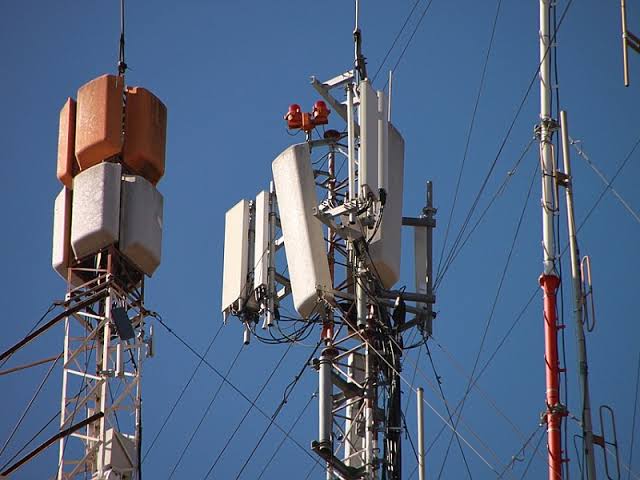
Nigeria and Republic of Niger have signed a bilateral agreement in Abuja for coordination of frequency utilisation along their borders to ensure seamless deployment of services around within the two countries.

The agreement signing ceremony was one of the highlights of the two-day Digital Economy Regional Conference, hosted by the Nigerian government and facilitated by the Federal Ministry of Communications and Digital Economy, which ended at the Transcorp Hilton Abuja.

Nigeria’s Minister of Communications and Digital Economy, Prof. Isa Ali Ibrahim Pantami, signed on behalf of Nigeria, while his Nigerien counterpart, the Minister of Post and New Information Technologies, Mr. Moussa Baraze, signed on behalf of his country.

The Executive Vice Chairman and Chief Executive Officer (EVC/CEO) of the Nigerian Communications Commission (NCC), Prof. Umar Danbatta and Niger Republic’s Chairperson of the National Council for Regulation of Electronic Communications and Post, Mrs. Aichatou Oumani, were witnesses to the agreement, which applies to the co-ordination of frequencies existing in the Nigeria-Niger transboundary areas between 87.5 megahertz (MHz) to 30 gigahertz (GHz).

The agreement indicated it will help in effective coordination and sharing of frequencies and channels in the ‘buffer zone or area’ on borderlines between the two countries and also help to address one of the major issues of signal interference regulation that may arise in telecoms signal transmissions by terrestrial telecoms service providers, as it spells out the procedures for regulating such cases.

The agreement, according to the two parties, provides, in part, that in case of harmful interference affecting one of the parties, the affected party shall inform the other party in writing for necessary action to be carried out.

“Also, the party from whence the interference is originating shall ensure that all necessary means are used to resolve the harmful interference within 30 days of receipt of the notice”, the agreement says.

While the Agreement is without prejudice to the rights and obligations of the parties specified in the Convention, the Constitution of the International Telecommunication Union (ITU) and other inter-governmental arrangements, it states, however, that the land and mobile services whose use is restricted for security, maritime and national defence or for which information is not available, shall not be subjected to the provisions of the agreement.