Last year, Gartner identified the expanding attack surface due to remote work as one of the top concerning security trends. This leaves organisations more vulnerable to attacks and makes security more complex.


Following network security best practice is crucial in this ever-growing threat landscape, says Vernon Naidoo, Head of Networking at local cloud platform provider and VMware specialist, Routed. His top recommendation is to follow a standards-based framework like ISO or NIST. “These frameworks have a risk-based approach to decision-making to prioritise remediation. Implementation audits identify gaps and prevent future occurrences of the same event, while maintenance procedures and patch management policies ensure timeous updates – especially where vulnerabilities are identified. Backup and restore procedures are also tested to ensure you meet your organisation’s specific objectives.”


“When it comes to the human element, these frameworks include role-based access, multi-factor authentication, segregation of duties, encryption of traffic in transit and at rest, and user awareness training.”


Of course, there is no one-size-fits-all approach, he says. “Different organisations face different challenges based on their type of business and the complexity of their networks. Without having an internal team, it would be best to rely on specialist third-party vendors and products.”


VMware’s NSX-T Cloud suite of products, in combination with their Carbon Black security offering, is one example of such a specialised solution. “With this combination, businesses can gain an immense amount of insight into their networks and servers and ensure that proper governance and compliance is enforced. When combined, these products provide a swift response, with instant threat isolation and remedial actions,” says Naidoo.


With such products, zero trust is indeed achievable, he adds – but it relies on selecting the correct tool for the desired outcome and then implementing and configuring it correctly. Again, he recommends specialised third-party products such as VMware’s Secure Access Service Edge, which helps businesses transform their networking and security architecture to allow for a true zero-trust implementation.


Of course, the goal for most security analysts is SOAR (security, orchestration, automation, and response). “Automatic remediation is the ideal, but it is a journey and not an out-of-the-box solution,” says Naidoo. “To achieve this goal, machine learning is critical – but it is only as good as the datasets it uses. This again underpins the importance of network security best practice. When properly implemented, the threat of today’s expanding attack surfaces can be limited – and neutralised immediately should there be a breach.”
International Women’s Day is celebrated each year on 8 March to recognise the unique roles and achievements of women, and to promote and assess progress towards gender equality and women’s empowerment. This year, the commemoration theme focuses on innovation, technology and gender equality. It provides a further opportunity to celebrate women and girls who champion innovation; to explore solutions to ongoing gender gaps relating to economic and social inequalities; and to shine a light on the need to actively protect the rights of women and girls on a continuous basis.


Ireland has a strong track record as a champion of gender equality and women’s empowerment. Under the current Mission Strategy 2022–2026, Ireland is committed to supporting marginalised women and girls in Tanzania to manage stresses, realise their rights and fulfil their potential. In collaboration with partners, we work to ensure that Tanzanian women and girls have more sustainable and resilient livelihoods, more capacity to adapt to climate change and to benefit from a sustainable blue economy (contributing to SDGs 1, 5, 10, 13, 14) through a range of programmes.

Four innovative start-up ocean ventures supported through the Blue Economy Incubator have created more than 100 new blue jobs with the majority (over 75%) going to women and girls

One of these programmes is Bahari Mali, which supports women’s economic empowerment and leadership by unlocking sustainable livelihoods in the blue economy, traditionally a male-dominated sphere. The programme aims to support over 20 women-led community groups in the next 3 years through a Blue Economy Incubator (BEI) initiative in Tanga region and Pemba-Zanzibar.

The groups, consisting of both young women and men, receive training on blue entrepreneurship skills, governance and leadership, and are provided with seed funding to accelerate and scale-up their ocean ventures, whilst also protecting natural resources in their local environment. These innovative, women-led ventures have built high levels of confidence, knowledge and skills, positive attitude and practices that have been translated into increased income and improved livelihoods.

During the pilot phase of Bahari Mali, four innovative start-up ocean ventures supported through the Blue Economy Incubator have created more than 100 new blue jobs with the majority (over 75%) going to women and girls:

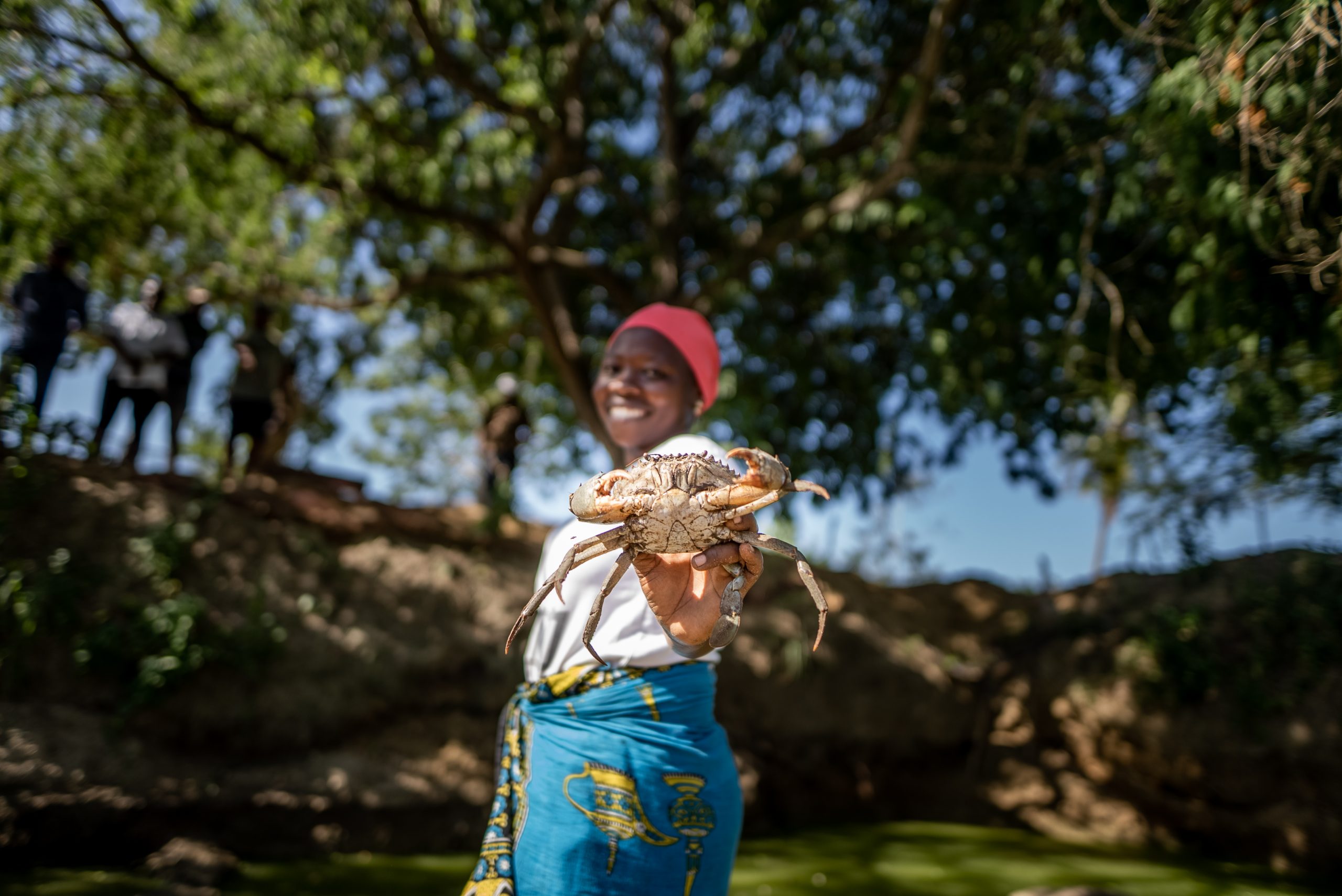
  • Jifute Community Group, undertaking an innovative crab fattening venture in Pangani District, Tanga, has increased monthly profits by 80% in the last 12 months through improved production – from 80kgs to more about 400kgs per month – whilst protecting local mangroves.
  • Mapape Cooperative are farming sea cucumbers in Mkoani District, Pemba, and have increased production – from 100 to more than 3,000 sea cucumbers in a year. This has resulted in increased annual revenue from TSh 4.32million (€1,814) to TSh 36million (€15,120). The group is engaging in mangrove beekeeping with a double benefit of generating additional revenue for the group and protecting mangroves habitats.
  • Uvumbuzi Cooperative, undertaking salt production in Mkoani District, Pemba, has increased production capacity from 4 to 20 tons, in a year, through improved infrastructure. This has also increased their revenue by 80% in just one year. The group is also engaged in fish farming in some salt ponds whilst support restoration and conservation of mangroves and coastal vegetations around the ponds and production area.
  • Foundation for Trees have established a tree nursery in Pangani District, Tanga, supporting agro-forestry and restoration of mangroves. Currently, the group has more than 20,000 seedlings with a total value of TSh 20,000,000 (€8,400). The group has worked with communities and other small local groups to restore 4 acres of mangroves during the 12 month period.


The programmes have also enhanced participation in the governance of the coastal and marine resources that has resulted in the restoration of more than 4 hectares of mangroves along the Tanga-Pemba seascape. Finally, and very importantly, these projects have helped to demystify some of the stereotypes associated with women engaged in sea farming and other marine activities. They have started questioning those restrictive social norms that limit women to roles as carers with men as producers. Other Embassy partners, including UZIKWASA also working in Tanga, are focused on identifying and tackling these social norms in conjunction with our work supporting sustainable livelihoods. We look forward to seeing more exciting results in the second year of Bahari Mali, and more innovation through these high-potential start-up ventures led by women.

International Women’s Day (IWD) is celebrated on March 8th every year, to recognize and celebrate the achievements of women worldwide. The day also serves as a call to action for gender equality and women’s empowerment. As we mark the 2023 edition of IWD, it is important to reflect on the progress made so far and the work that still needs to be done to achieve gender equality.

Over the past few years, there have been many positive developments towards gender equality. Women have broken barriers in different fields, and their voices are being heard loud and clear. For instance, the #MeToo movement, which gained momentum in 2017, has brought to light the prevalence of sexual harassment and abuse experienced by women in different spheres of life. This movement has spurred conversations about the need to address gender-based violence and to create safe spaces for women to thrive.

Additionally, we have seen more women occupying positions of leadership and influence, including in politics, business, and the arts. In the United States, Kamala Harris made history as the first woman and person of color to be elected as vice president. Other countries have also made strides in electing women to high political office. This is a positive step towards breaking the glass ceiling that has held women back for so long.

However, despite these positive developments, there is still much work to be done to achieve gender equality. Women continue to face barriers to their advancement, including gender-based violence, discrimination, and lack of access to education and economic opportunities. Women’s rights are often violated, and their voices are silenced in different spheres of life. The COVID-19 pandemic has also highlighted the inequalities that women face, including the disproportionate impact of the pandemic on women’s health, livelihoods, and access to education.

As we celebrate IWD 2023, it is important to renew our commitment to gender equality and women’s empowerment. We need to address the systemic issues that perpetuate gender inequality, including patriarchal norms and practices, discriminatory policies and laws, and unequal power relations. We must also create opportunities for women to thrive, including access to education, healthcare, economic opportunities, and political participation.

Finally, we need to amplify women’s voices and perspectives in different spheres of life. Women’s experiences and perspectives are often marginalized, and their voices are not heard. We need to create safe spaces for women to speak out and participate in decision-making processes. This includes ensuring that women are represented in all areas of life, including politics, business, media, and the arts.

In conclusion, IWD 2023 is an opportunity to celebrate the achievements of women worldwide, but also a call to action to work towards gender equality and women’s empowerment. We need to address the systemic issues that perpetuate gender inequality and create opportunities for women to thrive. We must also amplify women’s voices and perspectives in different spheres of life. By working together, we can create a world that is fair, just, and equal for all.


Political and community leaders in President Muhammadu Buhari’s native Katsina State have continued to pour into his private residence in Daura to express their happiness, following the emergence of the candidate of the All Progressives Congress, APC, Asiwaju Bola Ahmed Tinubu as the country’s next president.

Receiving Governor Aminu Bello Masari and the Emir of Daura, Dr. Umar Faruk Umar, who led members of their cabinets on separate visits, President Buhari reiterated what he had often said about the President-elect that “Bola Tinubu truly believes in Nigeria and is genuinely committed to the progress and sustainable future of Nigeria.”

He thanked the electorate for their massive support for the APC in the Presidential and the National Assembly elections, asking them to further mobilize for the upcoming gubernatorial and Houses of Assembly elections.

President Buhari profusely thanked the people for supporting him for two terms in office, which he will complete on May 29, 2023.

The Emir said they had visited the President to congratulate him on the outcome of the elections, and commended him for preserving Nigeria as an indivisible entity.
He described the preservation of the country as historic achievements.

The Emir said he was proud of his people in Daura who did not fail the President and his party in the elections.

“APC won everywhere,” the Emir said.

On his part, Governor Masari said he felt happy that projections by pundits that Katsina would not vote for the APC turned out to be false, saying that he was proud of what was achieved.

Garba Shehu


President Muhammadu Buhari joins Nigerian women in celebrating the International Women’s Day (IWD), observed on March 8, recognizing the invaluable role women have played in advancing the progress of the country since independence.

The President salutes the hardwork and dedication of Nigerian women working tirelessly and achieving results in different fields of endeavor, from those sacrificing daily in the markets and farms to train the next generation of leaders, to those breaking limits in education, sports, medical field, arts, entertainment and even in politics, where they are still largely under-represented.

The President is proud to have worked and associated with some of Nigeria’s brightest women in his cabinet, government and the international community.

He thanks the amazons who have served meritoriously as partners in the progress witnessed on the political, economic and social fronts.

He notes that, against all obstacles, these women in leadership positions have delivered in a society still largely dominated by men.

President Buhari welcomes the contributions of role models and women who have demonstrated that through hardwork, dedication and honesty, greatness can be achieved.

He pledges the commitment of government to promoting gender equality, respect for the rights of women and working conscientiously to remove all barriers that prevent Nigerian women from realising their universal rights.

On the theme of IWD 2023, “DigitALL: Innovation and technology for gender equality”, President Buhari believes that his administration has leveraged on the creation of a ministry dedicated to digital economy to promote the importance of digital skills, innovation and entrepreneurship for the girl-child.

As Nigeria builds on the successes of the digital economy sector, which is the most successful in the diversification of the nation’s economy, and the Start-up Act, which creates endless opportunities to Nigerians in the technology space, the President trusts that women and girls in the country will have access to equal opportunities, live their dreams and contribute immensely to the development of the country.


On March 1, the Big Circle Line (Bolshaya Koltsevaya), designed to expand and modernize the subway system, mainly to relieve traffic congestion on the Circle Line (Koltsevaya Line) and reduce traffic jams in Moscow, finally became fully operational. The Big Circle Line is 70 kilometers long, with 31 stations and three electric depots.


The longest circular subway line was built in record time. The first section was opened in 2018, followed by several in 2021, including the longest metro section in Moscow’s history, 21 km long with 10 stations.

Unique design and engineering solutions allowed the seamless integration of the subway circle line into the unified city infrastructure

Unique design and engineering solutions allowed the seamless integration of the subway circle line into the unified city infrastructure. The Big Circle Line integrates all existing and prospective radial lines of the subway and provides interchanges to other modes of transport. Alternative routes were created, including 47 connections to other lines, allowing passengers to get from one point of the city to another, bypassing the need to transfer to the center,” said Sergey Melikov, Head of the International Relations Department of Big Circle Line. He added, “Used architectural solutions are consistent with the times: traditional, modern, simple, complex, serious, and ironic.”

All high-tech services of the Moscow Metro will be available to the passengers of the Line, including the most convenient ways to pay: the Moscow Metro ticketing system was twice recognized as the world’s smartest by the prestigious international Transport Ticketing Award (2020, 2021). Each turnstile on the Line accepts travel and bank cards, and two turnstiles in each lobby will accept biometric payments.

The Big Circle Lane also features well-equipped trains that create a comfortable environment for work and tourism. They have wide doors, passages between the cars, USB sockets for charging, informational displays, and air conditioners with an air disinfection system. Comfort is also provided by improved noise insulation and adaptive lighting, which changes color temperature depending on the time of day.

The Big Circle Line is a project that will significantly improve travel for all residents and guests of the capital. The Line extends through 34 districts, home to 3.3 million people – 30% of Moscow’s population. 1.2 million Muscovites now have a new subway station within walking distance. New transportation links between districts will save people up to 45 minutes daily.

The rise in finance and accounting cybercrime through phishing and Business Email Compromise (BEC) has made headlines with massive implications for South African companies with gaps in their payment systems. “However, robust financial controls together with strong server, IT, and email monitoring processes aren’t enough if staff aren’t savvy to the psychological tricks scammers use to manipulate people, making them more vulnerable to tricker and deception,” says Ryan Mer, CEO at eftsure Africa, a Know Your Payee™ (KYP) platform provider.

Mer says it’s a myth that only gullible, unskilled professionals are susceptible to scams. “The misconception that only foolish individuals fall victim to cybercrime and payment fraud is dangerous because it leads to complacency in the highly educated who occupy senior positions within organisations. Criminals engaging in payment are often well-skilled, well-resourced and armed with enough industry knowledge to appear legitimate.”

Manipulating trust and competence

Scammers rely on human impulses to be helpful, avoid conflict, and problem-solve quickly and effectively to extract information or manipulate targets into taking action.

A common modus operandi is an attempt to win the trust of a potential victim by impersonating a known or trusted figure. Examples include an employee receiving a mail from an organisation’s financial director instructing them to arrange urgent payment to a supplier or an HR manager receiving a polite email from a member of staff requesting their bank details be changed for payroll purposes.

“An employee’s desire to perform their duties swiftly and competently, especially for a trusted figure of authority, is manipulated by criminals who rely on an instruction being actioned without question for a scam to be successful. In such instances, only an automated system for detecting red flags in outbound payments can offer the level of protection organisations really need to counter human error,” says Mer.

Banking on urgency

While scammers become increasingly inventive, an age-old tactic cybercriminals routinely rely on is creating a sense of urgency in their victims. Mer says phishing messages and business email compromise scams are designed to make employees more likely comply with a potential threat that they know they should report. “Scammers lure victims into acting quickly before they have time to think rationally about the activities they’re undertaking. Implementing processes that require staff to slow down and double-check any actions that involve payments is vital.”

He adds that a sudden change in customer or supplier business practices, such as a new point of contact, change of email address or banking details should be viewed with caution and thoroughly verified before complying with an urgent request. “In many organisations, there is a concerning disconnect between the theoretical controls in place and what actually happens in everyday business contexts. Cybercriminals often rely on the herd principle in which people in organisations adopt the behaviour of those around them. The risk that one person in a team complies with a scammer may result in others being deceived in the same way. Sound business processes and educated staff, while essential, can only protect a business so far as sophisticated phishing and BEC scams can defeat the internal controls of even the most vigilant teams,” says Mer.

Extra, automated protection

Cybercrime is constantly evolving which makes it a moving target. Interpol’s last African Cyberthreat Assessment Report published in 2021, placed South Africa as having the third-highest number of cybercrime victims in the world, costing the country a staggering R2.2-billion annually. “Ongoing education on the latest scams and the tactics used to execute them is crucial for South African companies. In addition, independent third-party verification systems like eftsure can offer a much-need extra layer of protection by automating payment checking and supplier verification, saving time on manual processes and reducing human error,” notes Mer.

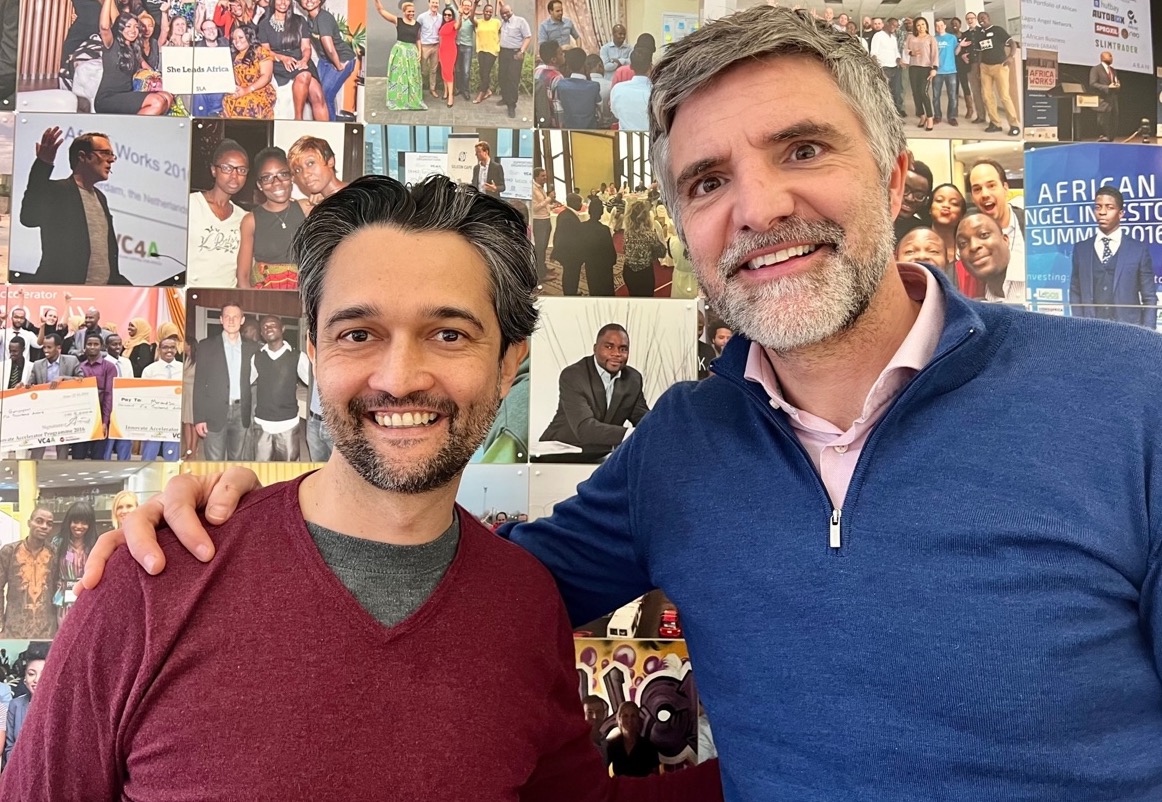
VC4A (https://VC4A.com/) is excited to announce that Abu Bakr Cassim has joined the organization as Acceleration Team Lead. A highly regarded thought-leader in the South African startup ecosystem, it is without doubt that Abu’s experience and reputation for excellence will contribute to the continued growth of the company.


As Acceleration Team Lead, Abu will oversee all acceleration support services within VC4A, in which we provide in-depth technical assistance and hands-on support to selected startups and scaleups in emerging markets. One of his core responsibilities will be to lead VC4A’s flagship program, the Venture Showcase.


Abu is widely recognized as a leading authority in the African startup ecosystem, having gained numerous notable accomplishments throughout his 20+ year professional career. Prior to joining VC4A, Abu has achieved significant success through his work as founder of Additiv Capital and Jozi Angels which is now one of the most active early-stage investor networks on the African continent. Abu is also a board member of the African Business Angel Network (ABAN). He was recently voted as one of Africa’s 500 most influential people by Tropics lifestyle magazine.

His reputation precedes him, and his leadership and expertise will be invaluable as we continue to grow and innovate


“We are very grateful to welcome Abu to our team,” said Vincent Hoogduijn, CEO of VC4A. “His reputation precedes him, and his leadership and expertise will be invaluable as we continue to grow and innovate. There’s a lot we can learn from Abu, where he’ll be adding a lot of complementary skills and knowledge to the team”.


A long-term friend of the organization, Abu is no stranger to the work VC4A does. He is excited to join the team, working alongside colleagues to advance the company’s mission.


“I am thrilled to be joining the incredible team at VC4A! Over the years, VC4A has built a fantastic foundation for supporting innovation and entrepreneurship in Africa and beyond. I am honored to be a part of this dynamic organization that is making a real difference in the world. I can’t wait to see what we can achieve together.” – Abu Cassim.


As the cloud landscape grows and sprawls, it’s becoming increasingly complex for users to keep up with all the moving parts, processes, and new developments.


The cloud ‘ecosystem’, as it’s called, refers to all these multiple building blocks that make up a cloud operating model, encompassing people, processes, and technology, from vendors to service providers and end users. And, just like a natural ecosystem, the cloud ecosystem is constantly evolving.


The latest trend in this evolutionary process will hopefully make the environment less complex for end users, says Andrew Cruise, Managing Director of Routed, a local cloud platform provider and VMware specialist. “Historically, vendors approached the market in a siloed fashion. As complexity has increased, and options have become much more varied for partners and end users, vendors have started integrating their products more. It’s not a new trend or approach, but it is maturing quite rapidly at the moment.”


In short, vendors are learning to play nicely together, because the market is forcing them to. “Previously, vendors had a lot more power. Now, there’s more choice, and vendors are having to up their game. Microsoft is a good example of this. Historically, they wouldn’t go anywhere near an operating system that wasn’t Microsoft Windows, but they’ve now developed a version of Microsoft SQL Server for Linux. And this is happening right across the market, with big and small vendors,” says Cruise.


“Other similar examples include VMware, traditionally an on-premises hypervisor software, branching out into a more multi-cloud approach. Or Veeam, traditionally on-premises backup software, branching out into cloud-based backup and utilising the cloud. Everyone is casting the net a bit wider.”


But, as in any ecosystem, some organisms evolve more slowly than others. Cruise says customers should think carefully about how whatever piece of hardware or software is being sold to them fits into the bigger picture. “While vendors should be working together, and most are, customers should be wary of resellers who aren’t telling this ecosystem story. It could mean getting stuck in a silo, restricted by, or locked in with one vendor, if they don’t consider how that vendor’s products fit into the cloud ecosystem. Before buying into anything, it’s important to consider how the solutions you choose integrate with others and fit into the bigger picture, and to feel confident that your vendors are talking to each other.”


The added bonus is that customers benefit from more skill sharing and a higher level of expertise in this evolving environment. “In South Africa, as in many other countries, we’re seeing a skills drain – experts in the field are moving to international territories or companies because they can offer more competitive packages. But, in this case, it means that customers and partners are in good hands when looking to resellers, service providers and vendors for support. Major vendors are snapping up the best people and centralising the expertise – but this can be beneficial for all the stakeholders in the ecosystem. Whether the provider is VMware, Veeam, or Routed, customers can feel confident that these vendors are talking to each other, and to their partners and providers.”

Liquid Intelligent Technologies (https://www.Liquid.Tech/), a business of Cassava Technologies, announced a new collaboration to deliver internet access to 20 million underserved people in Africa by the end of 2025, with Microsoft Corp. (Nasdaq “MSFT” @microsoft). Working together through Microsoft’s Airband initiative, the new collaboration will initially target regions that include but are not limited to the Democratic Republic of Congo, Tanzania, and Zambia. Additionally, the partnership will allow for increased proliferation of high-speed connectivity to the farthest parts of Nigeria, Kenya and South Africa.


Working together, the companies will empower individuals and businesses in some of the United Nations’ least developed countries to help bridge the digital divide and assist in transitioning more African countries into the digital economy.

This new collaboration with Liquid Intelligent Technologies builds upon our existing collaboration to catalyse economic growth and development in Africa

“Access to high-speed connectivity is no longer a luxury, it is a necessity. With a fibre backbone of over 100,000 km across the continent, Liquid is uniquely positioned to bring high-speed connectivity to the remotest of communities. Our vision is to create a digitally connected future that leaves no African behind, and this is just one more investment from us to realise the vision,” said Nic Rudnick, Group Deputy Chairman of Liquid Intelligent Technologies.

The effort will be discussed during a panel discussion at the Fifth United Nations Conference on the Least Developed Countries (LDC5). According to the International Telecommunication Union, roughly 2.7 billion people globally remain unconnected because it’s either unavailable or they can’t afford it. Rural areas around the world are especially disadvantaged, as traditional telecom infrastructure fails to go the final mile in low-density regions.

“Internet access is a fundamental right, enabling economic opportunity and development. This new collaboration with Liquid Intelligent Technologies builds upon our existing collaboration to catalyse economic growth and development in Africa, enabling us to accelerate our efforts to extend high-speed internet to a quarter of a billion people by the end of 2025, including 100 million in Africa.” said Vickie Robinson, General Manager of Microsoft’s Airband Initiative. “We know strategic partnerships are key to advancing access to connectivity and digital equity, especially in the world’s most critical markets.”

Microsoft’s Airband Initiative partners with a wide-ranging ecosystem of organisations to design, implement and support programs that deliver unique connectivity solutions designed for local communities and their challenges. This includes working with broadband providers, local ISPs, energy partners, international organisations and local governments to deliver internet access in unserved or underserved communities worldwide.

While the accelerated adoption of digital technologies on the continent has increased exponentially, it has also exacerbated the digital divide in Africa, as none of these technologies can be optimally used unless Africans have access to high-speed connectivity. These efforts by Microsoft and Liquid will play a critical role in helping to secure the future of Africans on the continent, thus paving the way for a true, digitally inclusive economy.