Mike Sangster, Senior Vice President for Africa at TotalEnergies, will deliver a keynote address at the Invest in African Energy (IAE) Forum in Paris this May. Sangster will also participate in an exclusive fireside chat, offering critical insights into the company’s vision for Africa’s energy future, its ongoing projects and the evolving role of oil and gas in the continent’s energy mix.


TotalEnergies continues to drive oil and gas development across Africa, with a strong focus on both emerging and mature markets. In Namibia, the company is advancing its Venus-1 discovery, targeting first oil by the decade’s end, with an FID expected in early 2026 for a development producing 150,000 barrels per day. TotalEnergies is also exploring additional prospects in the Orange Basin, having recently drilled the Marula-1X and Tabmoti-1X wells. In the Republic of Congo, the company is investing $600 million to expand deepwater production at the Moho Nord field, while in Libya, it plans to complete an onshore exploration project and lead new drilling campaigns in the Waha and Sharara fields in 2025.


IAE 2025 (www.Invest-Africa-Energy.com) is an exclusive forum designed to facilitate investment between African energy markets and global investors. Taking place May 13-14, 2025 in Paris, the event offers delegates two days of intensive engagement with industry experts, project developers, investors and policymakers. For more information, please visit www.Invest-Africa-Energy.com. To sponsor or participate as a delegate, please contact sales@energycapitalpower.com.


Meanwhile, TotalEnergies is expanding its gas processing and midstream infrastructure across Africa, strengthening its role in the continent’s evolving energy landscape. In Mozambique, the company is progressing with the Mozambique LNG project, a $20 billion development expected to secure renewed financial backing from export credit agencies. I Uganda, TotalEnergies is gearing up for first oil from its Tilenga field in 2025, with crude transported via the East African Crude Oil Pipeline (EACOP). Once operational, EACOP will be the longest heated crude oil pipeline globally, significantly enhancing East Africa’s ability to monetize its hydrocarbon resources and attract further investment into the region’s energy sector.


TotalEnergies is also expanding its renewable energy footprint in Africa through strategic investments in solar, wind, hydropower and green hydrogen. The company is advancing its 500 MW Sadada solar project in Libya and acquired Scatec’s hydropower portfolio on the continent in July 2024, including the 250 MW Bujagali Hydropower Plant in Uganda and stakes in projects in Malawi, Rwanda and the DRC. In South Africa, TotalEnergies is constructing a 216 MW solar plant with battery storage, along with a 140 MW wind farm and a 120 MW solar facility, set to supply green electricity to Sasol’s industrial operations. In Morocco, the company is developing the Chbika project, a 1 GW wind and solar farm designed to produce 200,000 metric tons of green ammonia annually for export to Europe. These initiatives align with TotalEnergies’ strategy to integrate renewables into its portfolio while supporting Africa’s energy transition.


Sangster’s participation at IAE 2025 comes at a pivotal time for Africa’s energy sector, as investors and policymakers navigate a shifting global energy landscape. His keynote address and fireside chat will provide valuable perspectives on the role of private investment in African energy, strategies for unlocking new upstream opportunities and how TotalEnergies is adapting to the continent’s long-term energy needs.


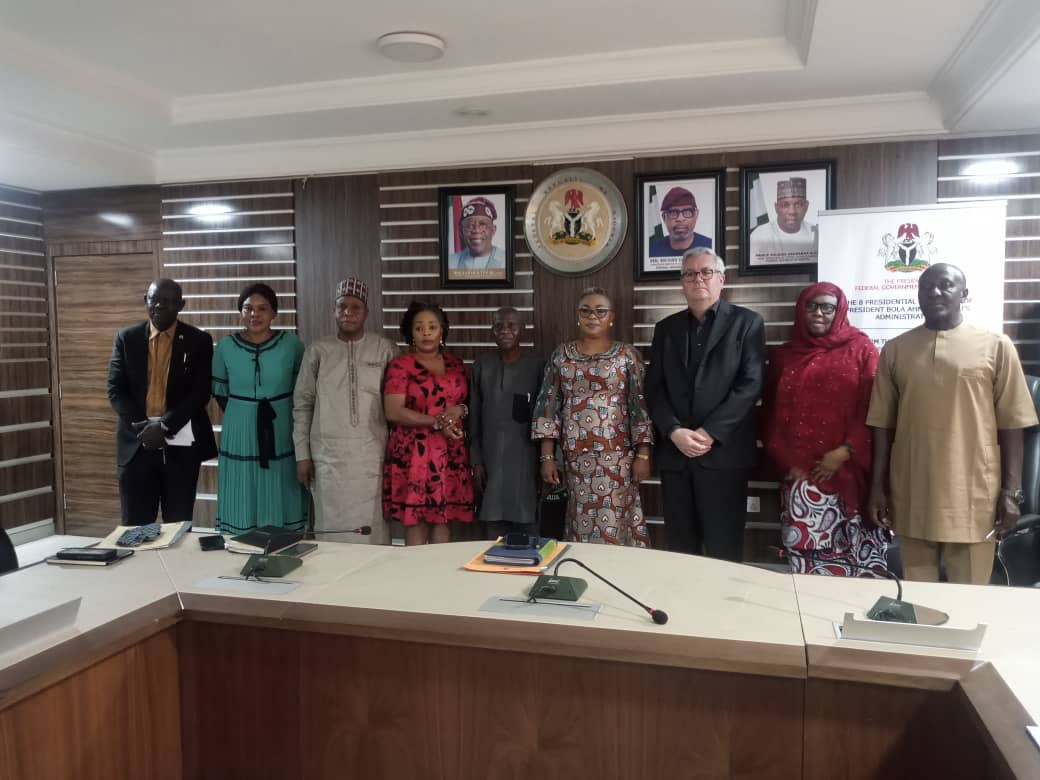
In a significant demonstration of its commitment to fostering collaboration with security agencies, the Nigerian National Petroleum Company Limited (NNPC Ltd.) today hosted a delegation from the National Institute for Security Studies (NISS). The visit, led by the Commandant of the Institute, Mr. J.O. Odama, fsi+, fdc, included participants of the Executive Intelligence Management Course 18, who were received by the Group Chief Executive Officer (GCEO) of NNPC Ltd., Mr. Mele Kyari, at the company’s headquarters in Abuja.

The meeting underscored NNPC Ltd.’s dedication to working closely with security agencies to ensure the delivery of its energy security mandate to Nigerians. Addressing the delegation, Mr. Kyari reiterated the company’s resolve to sustain its collaboration with security stakeholders in safeguarding the nation’s energy infrastructure and resources.

Strengthening Collaboration for Energy Security
Mr. Kyari emphasized the critical role of security agencies in enabling NNPC Ltd. to fulfill its mandate of ensuring energy security for the nation. He highlighted the challenges posed by pipeline vandalism, oil theft, and other security threats to the oil and gas sector, noting that these issues have significant implications for Nigeria’s economy and energy sustainability.

“Energy security is a cornerstone of national development, and NNPC Ltd. is fully committed to working with security agencies to address the challenges in our sector,” said Mr. Kyari. “We recognize the invaluable contributions of the National Institute for Security Studies and other security stakeholders in equipping personnel with the skills and knowledge needed to tackle these threats effectively.”

National Institute for Security Studies: A Pillar of Security Excellence
The National Institute for Security Studies (NISS), an institute under the Directorate of State Services (DSS), is renowned for its role in training senior security personnel from various agencies across Nigeria and other African countries. The Executive Intelligence Management Course (EIMC) is one of its flagship programs, designed to enhance the strategic and operational capabilities of security leaders.

During the visit, Mr. J.O. Odama, Commandant of the NISS, commended NNPC Ltd. for its efforts in ensuring energy security and expressed the institute’s readiness to continue supporting the company in addressing security challenges in the oil and gas sector.

“The National Institute for Security Studies is committed to producing well-trained security personnel who can address the complex challenges facing our nation,” said Mr. Odama. “We are proud to collaborate with NNPC Ltd. and other stakeholders in safeguarding Nigeria’s critical energy infrastructure.”May be an image of 8 people, dais, newsroom and text

A Shared Vision for National Development
The meeting between NNPC Ltd. and the NISS delegation highlighted the importance of interagency collaboration in addressing the multifaceted security challenges facing Nigeria’s energy sector. Both parties reaffirmed their commitment to working together to protect the nation’s oil and gas assets, which are vital for economic growth and national development.

The visit also provided an opportunity for the course participants to gain firsthand insights into the operations of NNPC Ltd. and the critical role of energy security in national development. The participants, drawn from various security agencies, expressed their appreciation for the company’s efforts in ensuring a stable and secure energy sector.

Looking Ahead
As Nigeria continues to navigate the complexities of energy security, the collaboration between NNPC Ltd. and security agencies remains a key priority. The visit by the NISS delegation underscores the importance of fostering strong partnerships to address the challenges in the oil and gas sector and ensure the sustainable delivery of energy resources to Nigerians.

NNPC Ltd. remains steadfast in its commitment to leveraging collaboration, innovation, and strategic partnerships to achieve its mandate of energy security and contribute to the nation’s economic prosperity.

About NNPC Ltd.:
The Nigerian National Petroleum Company Limited (NNPC Ltd.) is the state-owned oil corporation responsible for the exploration, production, and distribution of petroleum products in Nigeria. The company plays a pivotal role in ensuring energy security and driving the nation’s economic growth.

About NISS:
The National Institute for Security Studies (NISS) is a premier institute under the Directorate of State Services (DSS) dedicated to training senior security personnel from Nigeria and other African countries. The institute’s programs are designed to enhance the strategic and operational capabilities of security leaders.


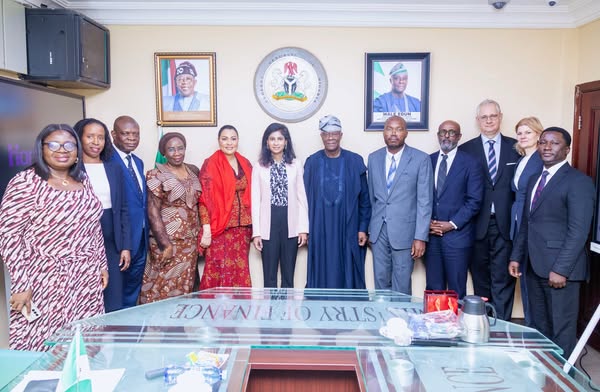
Abuja, Nigeria – In a pivotal meeting aimed at bolstering Nigeria’s economic resilience and global financial standing, the Honourable Minister of Finance and Coordinating Minister of the Economy, Mr. Wale Edun, today held high-level discussions with Gita Gopinath, the First Deputy Managing Director of the International Monetary Fund (IMF). The meeting, held in Abuja, focused on critical economic reforms, private sector investment, and Nigeria’s role in global financial affairs.

The discussions underscored Nigeria’s commitment to implementing transformative economic policies to address current challenges and unlock sustainable growth. Minister Edun highlighted the government’s ongoing efforts to enhance social investment programmes, including the transition to a biometric-based system designed to improve transparency, efficiency, and accountability in the delivery of social services.

“We are committed to ensuring that our social investment programmes reach the intended beneficiaries effectively,” said Edun. “The adoption of biometric technology is a game-changer in this regard, as it eliminates leakages and ensures that resources are allocated where they are needed most.”

Economic Reforms and Revenue Mobilisation
The Minister outlined several key reforms aimed at strengthening Nigeria’s fiscal position. These include advancing tax reforms, implementing revenue assurance mechanisms, and accelerating digitalisation efforts to enhance domestic resource mobilisation. He also noted the significant increase in crude oil production, which has risen from 1.2 million to 1.7–1.8 million barrels per day, providing a much-needed boost to national revenue.

“Our focus is on creating a robust and resilient economy that can withstand global shocks,” Edun stated. “By improving revenue collection and expanding our revenue base, we are laying the foundation for sustainable economic growth.”May be an image of 4 people, dais and text

Private Sector Investment and Renewable Energy
A major highlight of the discussions was the role of private sector investment in driving economic growth. Minister Edun emphasised the government’s policy shifts aimed at attracting investments in renewable energy, particularly solar power, and promoting service exports. He also addressed ongoing reforms in the electricity sector, advocating for expanded metering to improve efficiency and reduce losses.

“The private sector is a critical partner in our economic transformation agenda,” Edun said. “We are creating an enabling environment for investments in renewable energy and other key sectors to diversify our economy and create jobs.”

Global Financial Engagement and Credit Ratings
On the international front, the meeting explored Nigeria’s participation in global financial policy and efforts to secure fairer and improved credit ratings for African economies. Minister Edun stressed the importance of enhancing fiscal data transparency to strengthen Nigeria’s credit profile, attract foreign investors, and reduce borrowing costs.

“Improving our credit rating is essential for accessing affordable financing and attracting investments,” Edun explained. “We are working closely with international partners to ensure that our fiscal data is transparent and credible, which will enhance investor confidence in our economy.”

IMF’s Commitment to Supporting Nigeria
In her remarks, Gita Gopinath acknowledged the economic challenges facing Nigeria and reaffirmed the IMF’s commitment to supporting the country’s efforts to achieve sustainable growth. She highlighted the importance of targeted social interventions to address the high cost of living and improve the welfare of citizens.

“We discussed Nigeria’s economic outlook and the need to accelerate social support programmes to mitigate the impact of rising living costs,” Gopinath said. “The IMF remains committed to working with Nigeria to implement policies that promote economic stability and inclusive growth.”

A Path to Sustainable Growth
The meeting concluded with a reaffirmation of Nigeria’s commitment to pursuing economic stability, investment-friendly policies, and deeper regional trade integration. These efforts are expected to pave the way for sustainable growth and prosperity, positioning Nigeria as a key player in the global economy.

As Nigeria continues to navigate complex economic challenges, the collaboration with the IMF and other international partners is expected to play a crucial role in driving reforms, attracting investments, and improving the livelihoods of millions of Nigerians.

About the IMF:
The International Monetary Fund (IMF) is a global financial institution that works to ensure monetary cooperation, secure financial stability, facilitate international trade, promote high employment and sustainable economic growth, and reduce poverty worldwide.


In a significant move towards reclaiming abandoned mining sites in Plateau State, the Honourable Minister of Solid Minerals Development, Dr. Dele Alake, has called for robust collaboration among stakeholders to ensure the success of a newly launched Geographic Information System (GIS) database project. The initiative, spearheaded by ImPPPact Nigeria Alliance, aims to address the environmental and economic challenges posed by derelict mining sites while unlocking new opportunities for sustainable development.

Dr. Alake made the call during a courtesy visit by Mr. Olushola Ajayi, Managing Director of ImPPPact Nigeria Alliance, to the Ministry’s headquarters in Abuja on Monday. Represented by Dr. Ijeoma Idika, Director of Human Resources, the Minister commended ImPPPact Nigeria Alliance for its pivotal role in repositioning Nigeria’s mining sector and expressed confidence in the project’s potential to transform Plateau State.

“This project is a critical step towards addressing the environmental degradation caused by abandoned mining sites and unlocking their potential for economic use,” said Dr. Alake. “I urge ImPPPact Nigeria Alliance to leverage technical advice from the Ministry and collaborate closely with state officials, relevant agencies, and local communities to ensure its success.”

GIS Database Project: A Game-Changer for Plateau State
Mr. Olushola Ajayi, during his presentation, revealed that the GIS database project is part of a Memorandum of Understanding (MoU) signed between ImPPPact Nigeria Alliance and the Ministry in 2023. Plateau State has been selected as the first beneficiary of this reclamation initiative, which seeks to provide accurate spatial and environmental data essential for effective planning and execution.

“Currently, there is no comprehensive GIS data available for abandoned mining sites in Plateau State,” Ajayi explained. “This data is critical for site identification, environmental assessment, and land-use planning. Without it, rehabilitation efforts are significantly hampered.”

The project will be executed in two phases. The first phase involves the collation of GIS data to create a detailed database of abandoned mining pits. This data will help identify and characterize the sites, providing a foundation for their rehabilitation. The second phase will focus on reclaiming the sites and repurposing them for sustainable uses, such as solar energy generation, agriculture, tourism, or other economic activities based on their suitability.

Leveraging Advanced Technology and Expertise
To ensure the accuracy and efficiency of the project, ImPPPact Nigeria Alliance is collaborating with Intomatics, a Germany-based company specializing in geomatic services. Intomatics will employ satellite imagery techniques to gather data, which will be cross-referenced with on-the-ground realities in Plateau State.

Andreas Kuhnen, Director of Geospatial Data at Intomatics, elaborated on the technical aspects of the project. “The GIS data generated will be processed using artificial intelligence programs to extract specific information from satellite images. This will create a stable workflow for the reclamation process, ensuring precision and efficiency,” he said.

A team of experts, government officials, and local communities will work together to validate the collected data, ensuring its accuracy and relevance. The finalized data will be presented to the mining cadastre for future reference, with the aim of attracting major investors to the sector.

Transforming Abandoned Sites into Economic Assets
One of the most ambitious aspects of the project is its focus on repurposing reclaimed sites for renewable energy generation. Plateau State is poised to become a hub for solar energy, with abandoned mining sites being transformed into solar farms. This initiative aligns with global efforts to combat climate change and promote sustainable energy solutions.

“The second phase of the project will not only address environmental concerns but also create new economic opportunities for Plateau State,” Ajayi stated. “By repurposing these sites for solar energy, agriculture, or tourism, we can turn what was once a liability into a valuable asset for the state and its people.”

A Collaborative Effort for Sustainable Development
The GIS database project underscores the importance of collaboration between the federal government, state authorities, private sector players, and local communities. Dr. Alake emphasized the need for all stakeholders to work together to achieve the project’s objectives, which align with the Ministry’s broader vision of revitalizing Nigeria’s mining sector and promoting sustainable development.

As Plateau State takes the lead in this groundbreaking initiative, the project is expected to serve as a model for other states grappling with the challenges of abandoned mining sites. By leveraging advanced technology, fostering stakeholder collaboration, and prioritizing environmental and economic sustainability, the GIS database project represents a significant step forward in Nigeria’s journey towards a more prosperous and sustainable future.

About ImPPPact Nigeria Alliance:
ImPPPact Nigeria Alliance is a leading organization dedicated to driving sustainable development through public-private partnerships. The Alliance works closely with government agencies, private sector players, and local communities to implement innovative solutions for economic and environmental challenges.

About Intomatics:
Intomatics is a Germany-based company specializing in geomatic services, including GIS data collection, satellite imagery, and artificial intelligence-driven data processing. The company provides cutting-edge solutions for environmental and infrastructure projects worldwide.


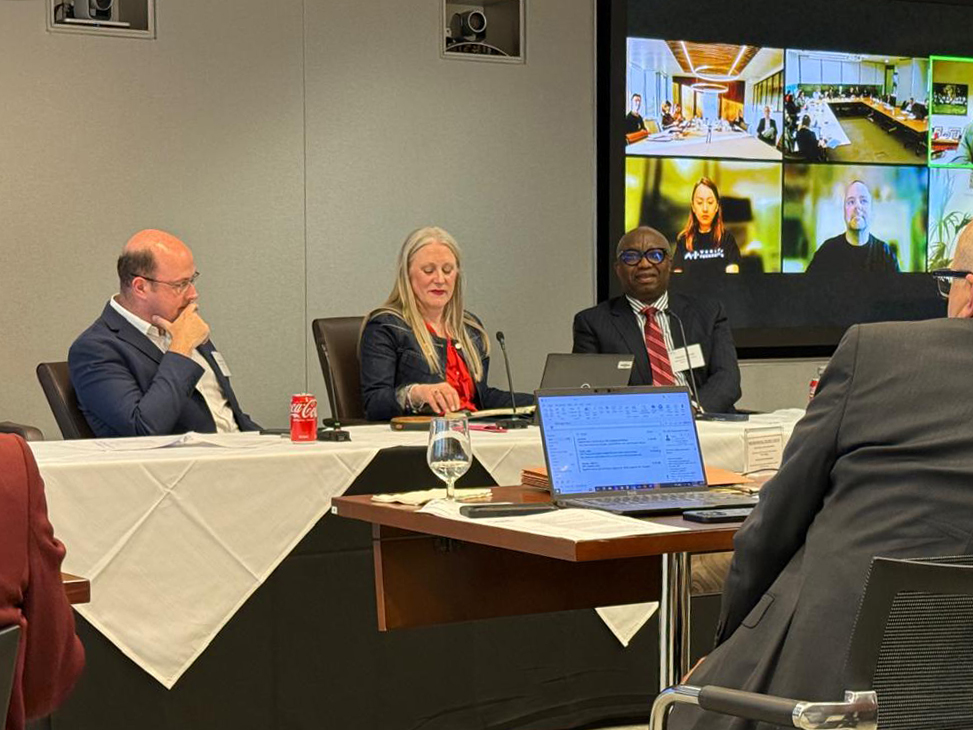
Dr. Vincent Olatunji, the National Commissioner and CEO of the Nigeria Data Protection Commission (NDPC), represented Nigeria on a high-profile panel of global data protection regulators at the Centre for Information Policy Leadership (CIPL) Annual Members’ Summit 2025. The event, held in the United States capital, brought together leading voices in data privacy and technology regulation to discuss the future of effective oversight and enforcement in the digital age.

The panel session, titled “The Future of Effective Technology and Data Regulation, Oversight, and Enforcement,” featured in-depth discussions on the challenges and priorities facing regulators worldwide. Panelists explored how to strike a delicate balance between protecting individual privacy rights, ensuring compliance with evolving data protection laws, and fostering innovation and the beneficial use of data and technology.

Dr. Olatunji, a key figure in Africa’s data protection landscape, shared insights on Nigeria’s approach to these critical issues. He emphasized the importance of collaboration among global regulators to address the complexities of data governance in an increasingly interconnected world.

During the session, Dr. Olatunji extended a formal invitation to global privacy leaders to attend the upcoming Network of African Data Protection Authorities’ (NADPA – RAPDP) Conference and Annual General Meeting (AGM). The event, scheduled for May 2025, will be hosted by Nigeria and is expected to draw data protection experts, policymakers, and stakeholders from across the continent and beyond.

The panel also featured other distinguished regulators, including Stephen Almond, Executive Director (Regulatory Risk) at the Information Commissioner’s Office, UK; Guido Scorza, Member of Garante, Italy; Wojciech Wiewiórowski, European Data Protection Supervisor; and Denise Wong, Deputy Commissioner of the Personal Data Protection Commission (PDPC), Singapore. Each panelist shared their unique perspectives on the evolving regulatory landscape, highlighting the need for harmonized approaches to data protection in a rapidly changing technological environment.

The CIPL Annual Members’ Summit 2025 served as a platform for fostering dialogue and collaboration among regulators, industry leaders, and policymakers. Dr. Olatunji’s participation underscored Nigeria’s growing influence in the global data protection arena and its commitment to advancing privacy rights while supporting innovation.

As the world grapples with the challenges of regulating emerging technologies such as artificial intelligence, big data, and the Internet of Things, the insights shared at the summit are expected to shape the future of data protection policies and practices worldwide.

With Nigeria set to host the NADPA Conference in 2025, the event is poised to be a landmark gathering for African data protection authorities and their international counterparts, further solidifying the continent’s role in the global data privacy discourse.

About the Nigeria Data Protection Commission (NDPC):
The NDPC is the regulatory body responsible for overseeing data protection and privacy in Nigeria. Under the leadership of Dr. Vincent Olatunji, the commission has been at the forefront of advancing data protection laws and practices in Africa, ensuring compliance with global standards while promoting innovation and economic growth.

About CIPL:
The Centre for Information Policy Leadership (CIPL) is a leading global privacy and data policy think tank that works with industry leaders, regulators, and policymakers to develop innovative solutions for emerging data protection challenges.

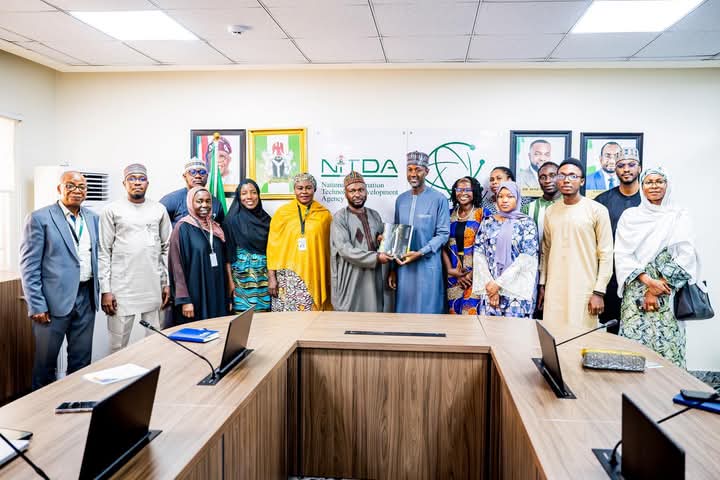
The Director-General of the National Information Technology Development Agency (NITDA), Kashifu Inuwa CCIE, has reaffirmed the agency’s commitment to strengthening cybersecurity through artificial intelligence (AI) and locally developed digital security solutions.

Inuwa made this known during a courtesy visit by Dr. Kabiru Adamu, the lead of Beacon Security and Intelligence Ltd, and his team at NITDA’s Corporate Headquarters in Abuja.

Discussions during the visit focused on fostering collaboration in AI-powered intelligence solutions, enhancing Nigeria’s cybersecurity capabilities, and developing indigenous tools for monitoring and mitigating digital threats.

Dr. Adamu highlighted the growing need for proactive intelligence solutions in the face of evolving cyber threats, emphasizing the importance of leveraging AI to safeguard national digital assets. In response, Inuwa reiterated NITDA’s commitment to innovation and strategic partnerships that align with Nigeria’s digital transformation agenda.

The meeting underscored the need for a multi-stakeholder approach to cybersecurity, with both parties exploring potential areas of synergy to strengthen Nigeria’s digital resilience.


Vertiv to offer Tecogen’s natural gas-powered chiller to customers leveraging alternative energy sources to reduce grid reliance


Vertiv (NYSE: VRT), a global provider of critical digital infrastructure and continuity solutions, and Tecogen Inc. (OTCQX: TGEN), a clean energy company providing ultra-efficient and clean on-site power, heating, and cooling equipment, are pleased to announce a collaboration that enables Vertiv to offer Tecogen’s advanced natural gas-powered chiller technology to data centres worldwide, addressing power constraints and facilitating the deployment of AI at scale. The Tecogen solution will expand Vertiv’s industry-leading portfolio of cooling solutions.


As the power required for Artificial Intelligence computing and its supporting critical digital infrastructure increases, the strain on the power grid is showing, with increased demand exceeding supply in some regions. Tecogen’s solutions, proven over 40 years in demanding 24/7 applications such as healthcare and process cooling, help to reduce grid strain through natural gas-powered chiller technology. Vertiv has more than 60 years of experience in providing cooling, power and IT management for data centres of every size. This global partnership underscores Vertiv and Tecogen’s commitment to delivering cost-effective and resilient infrastructure solution options that leverage alternative energy resources.


“We are excited to partner with Tecogen to bring innovative cooling solutions to our customers,” said George Hannah, senior director of chilled water systems at Vertiv. “Integrating Tecogen’s technology into our portfolio allows data centre operators to overcome power constraints, optimise energy usage, and confidently expand their AI capabilities.”


“This relationship is advantageous for both parties,” said Abinand Rangesh, Chief Executive Officer at Tecogen. “For Tecogen, having a world-renowned partner like Vertiv enables us to scale rapidly in the data centre market. By combining Vertiv’s expertise in end-to-end data centre thermal systems with Tecogen’s proven natural gas-powered chiller technology, the collaboration offers a compelling value proposition for data centres aiming to enhance performance while managing energy consumption effectively.”


For more information on Vertiv’s portfolio of cooling, power and IT management technologies, visit Vertiv.com. For more information about Tecogen’s clean energy solutions, visit Tecogen.com.


inDrive (www.inDrive.com), the ride-hailing app known for its transparent and fair pricing model, has secured its position as the second most downloaded app in its category globally, and it continues to make waves in Africa, where it ranks as the third-largest ride-hailing service in South Africa, second in Nigeria, and number one in Zimbabwe and Botswana and North African countries.


inDrive’s success story in Africa reflects its remarkable growth trajectory, driven by its unique approach to mobility. With an innovative, peer-to-peer pricing model and a mission to challenge the traditional fare structures in the ride-hailing industry, inDrive is setting new standards in customer-centric mobility.

The inDrive Advantage: Why It’s the Most Downloaded Ride-Hailing App

What sets inDrive apart is its unwavering commitment to creating an ecosystem that benefits both riders and drivers. Unlike other ride-hailing platforms, inDrive empowers users by allowing them to negotiate the fare before confirming the ride, giving both drivers and passengers the freedom to agree on a price that works for them. This model fosters trust, increases satisfaction, and has contributed to record-breaking app downloads in 2025.

InDrive’s approach goes beyond just competitive pricing; it has built an environment where driver welfare is prioritized. The company operates with the lowest commission structure in the market, enabling drivers to keep more of what they earn, which in turn has fostered strong loyalty from local drivers across Africa.

Record Growth in Africa: inDrive’s Expanding Footprint

  • South Africa: Ranked as the third-largest ride-hailing app in the country, inDrive’s innovative model has gained a dedicated user base. Its growth has been accelerated by its focus on affordability, transparency, and safety, catering to the needs of both urban commuters and those in smaller towns. As competition intensifies, inDrive is proving that a user-focused approach is the key to long-term success.
  • Nigeria: Holding the second spot in the market, inDrive’s rapid expansion has been fueled by its distinctive no-commission fare model in most cities, creating better earning opportunities for drivers while providing affordable rides for passengers. Nigeria’s diverse population and urban landscape have proven to be a strong foundation for inDrive’s sustained success.
  • Zimbabwe & Botswana: inDrive’s number-one ranking in both countries is a testament to its ability to create localized solutions tailored to meet the unique challenges of each market. By providing access to its services where traditional public transport falls short, inDrive bridges crucial mobility gaps, ensuring more people can commute conveniently. With a strong focus on job creation, affordable transportation, and social impact, inDrive has quickly become the go-to ride-hailing app for millions.


Why Africa Chooses inDrive

inDrive’s approach is rooted in equity and inclusivity. The app’s growth in Africa is not just a result of its innovative pricing structure, but also its deep understanding of the diverse needs of African consumers and drivers. As the most downloaded ride-hailing app globally, inDrive’s popularity is fueled by its customer-centric model, empowered drivers, and fair pricing system.

By offering a solution that works for everyone, inDrive is reshaping the future of mobility across the African continent. Whether it’s ensuring driver safety, fair compensation, or increased access to affordable transportation, inDrive is positioning itself as the most reliable, convenient, and transparent ride-hailing option in Africa.


Network International (Network) (www.Network.ae), a leading enabler of digital commerce across the Middle East and Africa (MEA), has been appointed as a Payment Processor – Issuing partner for MTN Group Fintech, Africa’s leading mobile financial services provider. This partnership marks a significant extension of Network’s portfolio of issuer processing collaborations throughout the African continent.


With a footprint spanning over 50 countries and serving over 250 financial institutions, Network International brings its expertise to this partnership which will enhance MTN Fintech’s cutting-edge mobile services and provide even greater value to stakeholders and customers across Africa.

Our collaboration with MTN Group Fintech marks a major milestone for our outsourced payments services in Africa

The partnership will focus on rolling out card issuance products across key MTN Fintech markets, starting with Rwanda which is already operational. Soon   Uganda, Ivory Coast, and Nigeria will also be covered under this collaboration.  Network International will provide a comprehensive range of services, including transaction processing, card management and online fraud prevention. MTN Fintech users will benefit from a seamless experience accessing both traditional mobile services and innovative digital payment solutions.

Dr. Reda Helal, Group Managing Director – Processing, Africa and Co-Head Group Processing at Network International commented: “Our collaboration with MTN Group Fintech marks a major milestone for our outsourced payments services in Africa. It demonstrates our ability to successfully serve Mobile Network Operators (MNOs) via our fully-fledged processing solutions and our continued dedication and commitment to the African region. We are excited to support MTN Group Fintech’s growth strategy, and its business development plans across the continent.”  

Cedric N’guessan, Executive for Payment and E-commerce at MTN Group Fintech added, “This collaboration with Network International is pivotal in enhancing financial inclusion across Africa and beyond. It enables our customers to actively engage in the global economy, aligning perfectly with our strategic goals alongside Mastercard to broaden access to digital financial services across the continent.” Read More (https://apo-opa.co/43aKuII)

MTN Group provides voice, data, fintech, enterprise wholesale and API services to more than 288 million customers in 14 African markets.

The European Investment Bank (EIB) has committed to join Africa Finance Corporation (AFC) (www.AfricaFC.org) in financing a $750 million Infrastructure Climate Resilient Fund (ICRF). This landmark initiative will accelerate climate adaptation and sustainable infrastructure across Africa.


As part of this commitment, the EIB today confirmed it will invest $52.48 million in the Fund, which is managed by AFC Capital Partners (ACP), the asset management arm of AFC. ACP has already secured a $253 million commitment from the Green Climate Fund (GCF), marking GCF’s largest-ever equity investment in Africa. In addition, the Nigeria Sovereign Investment Authority (NSIA) and two private African pension funds have also committed to the Fund, demonstrating robust institutional backing on the continent and internationally.

The Infrastructure Climate Resilient Fund aims to accelerate climate adaptation in Africa by embedding resilience measures at every stage of infrastructure development—from design and construction to operation. Using blended finance to de-risk private investment, the Fund also integrates innovative tools such as climate risk parametric insurance to enhance protection against climate-related risks and losses. In addition, the Fund will provide technical assistance to enhance the capacity of countries seeking climate risk assessment and adaptation, aligning with the European Union’s Global Gateway initiative and the UN Sustainable Development Goals.

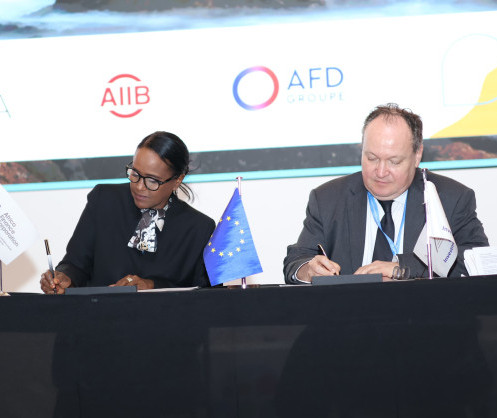
The EIB formally signed the agreement at the Finance in Common Summit (FICS) in Cape Town today, demonstrating the close collaboration between the EIB, AFC, and other strategic partners.

“The EIB is committed to supporting private sector investment in climate-resilient infrastructure, especially in regions most vulnerable to climate change,” EIB Vice-President Ambroise Fayolle stated at the ceremony today. “This partnership with the Africa Finance Corporation and the launch of ACP’s Infrastructure Climate Resilient Fund are a significant step towards accelerating Africa’s green and digital transition and ensuring a sustainable future for all. The EIB’s investment is not just about the initial capital injection; it is also intended to have a multiplier effect by attracting more investors, reducing risk, showcasing successful projects, and promoting best practices in climate finance.”

ACP’s fund aims to demonstrate that Africa can pursue a climate-resilient and sustainable development path by addressing market failures, mitigating environmental risks, strengthening logistics, trade, and industrialization, and accelerating the continent’s digital and energy transition.

“This Fund is crucial for bridging the funding gap for climate adaptation in Africa,” Samaila Zubairu, AFC’s President & CEO, said at the launch event today. “By focusing on climate-resilient infrastructure, we are not only securing our economic future but also creating opportunities for sustainable growth, and supporting job creation across the continent. We are glad to partner with the EIB and other investors who are committed to increasing the impact of climate finance.”

Developing Climate-Resilient Infrastructure

The ICRF focuses on Africa, the world’s most climate-vulnerable continent, by investing in infrastructure that can withstand the impacts of climate change while reducing carbon emissions. The Fund prioritizes resilient, low-carbon solutions across transport and logistics, clean energy, digital infrastructure, and industrial development, ensuring sustainable growth.

ACP’s investment strategy evaluates climate risk across both physical and transition dimensions, including emissions and climate governance. The Fund is committed to ensuring that infrastructure assets are designed, built, and operated to withstand and adapt to evolving climate conditions. To achieve this, ACP will conduct rigorous climate risk screenings and assessments for every investment, establishing a new benchmark for selecting and implementing the most effective adaptation solutions.

The Fund leverages a powerful partnership between three major institutions—EIB, AFC, and GCF—uniting their expertise, capital, and commitment to climate resilience. Aligned with the EIB’s Climate Bank Roadmap, ACP will draw on the proven track records and deep technical expertise of both EIB and AFC in infrastructure investment, creating a compelling platform to attract additional investors. Through this strategic collaboration, the $750 million fund is poised to unlock up to $3.7 billion in financing, accelerating the deployment of climate-resilient infrastructure across Africa.

The GCF will play a critical role by providing technical assistance for due diligence and climate resilience monitoring while also covering the first-loss tranches on new investments, effectively de-risking projects and attracting private capital.

Once operational, the Fund aims to invest in a diversified portfolio of 10 to 12 projects across Africa. It will also assist countries and entities in capacity building and deployment of climate risk assessment and adaptation solutions.

Further Information

Leveraging Partnerships

The Fund is built on a powerful partnership between three major institutions: the European Investment Bank (EIB), Africa Finance Corporation (AFC), and the Green Climate Fund (GCF). Through its asset management arm, AFC Capital Partners (ACP), AFC is collaborating with the EIB to deploy the Fund, leveraging both institutions’ proven track records and technical expertise in infrastructure investment to attract additional investors. The partnership is further strengthened by the GCF’s critical role in providing first-loss protection and technical assistance, ensuring a robust framework for scaling climate-resilient infrastructure across Africa.


Mobilizing Climate Finance

The EIB’s $52.48 million commitment is a strategic step toward the Fund’s $750 million target, aimed at catalysing additional investments from both private and public sector partners into climate-resilient infrastructure. This commitment is expected to help mobilize approximately $3.7 billion in total financing, driving tangible, on-the-ground impact across Africa.

The EIB is committed to supporting private sector investment in climate-resilient infrastructure, especially in regions most vulnerable to climate change


Focusing on EIB’s core priorities agreed by ECOFIN

The EIB investment will support the climate bank ambition to accelerate international action on adaptation and resilience. With an expected climate action and environmental sustainability contribution of about 80%, the operation will contribute to EIB’s objectives to dedicate (i) 50% of its financing toward climate action and environmental sustainability and (ii) 15% of its financing toward to climate adaptation by 2025. The Fund supports three of the five EU Global Gateway thematic priorities: i) climate and energy, ii) transport and iii) digital.


Addressing Market Failures

The EIB investment in ACP’s Infrastructure Climate Resilient Fund is intended to address the scarcity of equity capital for greenfield infrastructure projects, and to help overcome other market failures such as the lack of incentives for green energy solutions or market failures related to transport accessibility and digital connectivity. The Fund also aims to improve the efficiency of logistics and trade corridors and contribute to the digital and energy transition.

Supporting the Green and Digital Transition

By investing in clean energy and digital infrastructure, the Fund aims to support the broader green and digital transition in Africa and contribute to diversification and security of energy supply, as well as improved access to digital connectivity.

Enhancing Capacity for Climate Risk Management

ACP’s Infrastructure Climate Resilient Fund will provide technical assistance to build capacity for climate risk assessment and adaptation, with a focus on integrating climate risk considerations into project design and construction.

Creating Jobs and Economic Opportunities

Projects backed by ACP’s Infrastructure Climate Resilient Fund will contribute to job creation, economic growth, and improved quality of life in the target regions. These projects are expected to generate significant temporary employment during construction as well as permanent jobs during operation.

Key projects in the ICRF pipeline, such as the Lobito Corridor, underscore AFC’s pivotal role in driving transformational and climate-resilient infrastructure investments across Africa. As the lead developer of the project, AFC is spearheading efforts to enhance regional connectivity and economic integration through the corridor, which is set to become a critical trade and logistics route linking Angola, the Democratic Republic of Congo (DRC), and Zambia.

The Lobito Corridor is expected to unlock vast economic opportunities by facilitating efficient transportation of critical minerals, agricultural goods, and other commodities, reducing dependency on other congested export routes and fostering industrial development along the wider corridor. Alongside partners including the European Union, the United States Government, the African Development Bank and the governments of Angola, the Democratic Republic of Congo and Zambia, AFC is working to ensure the corridor is developed with climate resilience in mind, integrating sustainable infrastructure solutions that can withstand environmental challenges while promoting long-term economic growth.

Beyond Lobito, the ICRF pipeline includes other strategic projects across transport, clean energy, and digital infrastructure, all designed to attract institutional investment and address Africa’s pressing infrastructure gap. Through these initiatives, ACP continues to highlight its commitment to mobilizing capital for projects that deliver both financial returns and lasting developmental impact.

The investments backed by the Fund will actively promote the adoption of Environmental, Social, and Governance (ESG) best practices, including gender equality, protection, and anti-discrimination policies.


De-risking Investments

The Fund’s structure, with support from the EIB and other institutions like the Green Climate Fund (GCF), aims to de-risk climate investments.

The GCF is providing grant funding to help with due diligence and monitoring of climate resilience, which can make the investments more attractive to other investors. Additionally, the Fund will integrate innovative climate risk insurance to complement traditional indemnity programs.

Aligning with Global and Regional Objectives

The EIB investment aligns with EU strategies, the African Union’s Agenda 2063, and the UN Sustainable Development Goals, and aims to support the implementation of Nationally Determined Contributions.