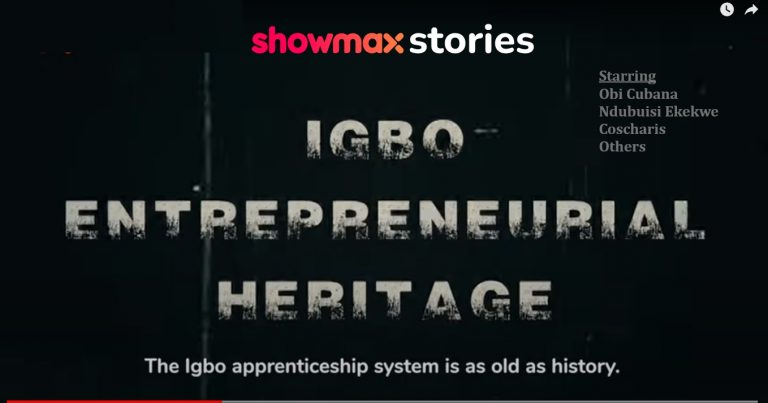
In a recent announcement, Showmax, a streaming service owned by MultiChoice and NBCUniversal, is set to release a compelling documentary series titled “Freemen,” shedding light on the Igbo Apprenticeship System (IAS). The documentary, a Nigerian Original production, is expected to premiere on 12 February 2024.

Ndubuisi Ekekwe, a prominent figure from Ovim village and recognized as an academic Nollywooder, extended his congratulations to Showmax and the entire Freemen team. Ekekwe expressed gratitude for the recognition of his work in the Harvard Business Review, highlighting the acknowledgment of his Ovim village roots. In response, he thanked his editors at Harvard for their support, emphasizing the growing influence of the African model of stakeholder capitalism.

“The documentary features prominent Igbo businessmen such as Dr. Cosmas Maduka, popularly known as Coscharis, Obinna Iyiegbu (Obi Cubana), Ndubuisi Ekekwe, Okey Japan, and other notable entrepreneurs,” Ekekwe stated. He emphasized the significance of the Igbo Nation’s approach to building individuals not only through craftsmanship but also through knowledge.Obi Cubana, Ndubuisi Ekekwe, Coscharis, etc Appear on Freemen, a Showmax  Documentary on the Igbo Apprenticeship System - Tekedia

Ekekwe argued that the Igbo Apprenticeship System is a validated and tested developmental framework, citing its role in the remarkable economic recovery of the Igbo people after the civil war. He pointed out that households, starting with a mere 20 Nigerian pounds, experienced unprecedented growth, with investments quickly transforming into mansions, companies, dynamic diasporas, and homeland success stories.

Showmax’s upcoming documentary series, “Freemen,” aims to explore the Igbo Apprenticeship System in a seven-part groundbreaking presentation. The series promises to captivate audiences with its in-depth look at the unique economic and cultural aspects of the Igba Boi, also known as the Igbo Apprenticeship System.

The release of “Freemen” marks a significant milestone in showcasing the Igbo culture and its entrepreneurial spirit. As the documentary premieres on 12 February 2024, viewers can anticipate a compelling journey through the Igbo Apprenticeship System, offering insights into its historical significance and the remarkable success stories of those who participated in this unique economic framework.


…the Igbo Apprenticeship System in a seven-part groundbreaking presentation. The series promises to captivate audiences with its in-depth look at the unique economic and cultural aspects of the Igba Boi, also known as the Igbo Apprenticeship System.


Takeaways:

●        Meta has worked with the National Center for Missing & Exploited Children (NCMEC) to expand Take It Down to more countries and languages, allowing millions more teens to take control of their intimate imagery.

●        Meta has also partnered with Thorn to update our Stop Sextortion hub, offering new tips and resources for teens, parents and teachers on how to prevent and handle sextortion.

●        Meta is supporting safety organizations and creators around the world to help raise awareness of sextortion scams and what teens and parents can do to take back control.


Having a personal intimate image shared with others can be devastating, especially for young people. It can feel even worse when someone threatens to share it if you don’t give them more photos, sexual contact or money — a crime known as sextortion.


That’s why, this Safer Internet Day, we’re announcing new efforts to help combat this kind of criminal activity. These include giving more teens control over their intimate images, helping teens  — and their parents and teachers  — feel better equipped against those trying to exploit them, and supporting creators and safety organizations around the world as part of a global campaign to raise awareness of sextortion.


Expanding Take It Down to More Languages and Countries


Take It Down is a program from NCMEC, supported by Meta, which is designed to help teens take back control of their intimate images and help prevent people — whether it’s scammers, ex-partners, or anyone else — from spreading them online. First launched last year in English and Spanish, Meta and NCMEC are now expanding the platform to many more countries and languages, making it accessible to millions more teens around the world.


There are several ways people can use Take It Down to find and remove intimate imagery, or help prevent people sharing them in the first place:

●        Young people under 18 who are worried their content has been, or may be, posted online

●        Parents or trusted adults on behalf of a young person

●        Adults who are concerned about images taken of them when they were under 18


Take It Down was designed to respect young people’s privacy and data security. To start the process, people can go to TakeItDown.NCMEC.org and follow the instructions to assign a unique hash — a digital fingerprint in the form of a numerical code — to their image or video, privately and securely from their own device.


Teens only need to submit the hash, rather than the intimate image or video itself, which never leaves their device. Once the hash has been submitted to NCMEC, companies like Meta can find copies of the image, take them down and help prevent anyone who’s threatening them from posting them in the future.


“Making Take it Down available in 25 languages is a pivotal step towards safeguarding children from the horrors of online exploitation all over the world,” said John Shehan, a Senior Vice President with the National Center for Missing & Exploited Children. “We aspire to ensure that every child, regardless of language or location, has the opportunity to reclaim their dignity and privacy by having their illicit content removed from participating platforms.”


Take It Down builds off of the success of platforms like StopNCII, which helps prevent those seeking to exploit people from sharing adults’ intimate images online.


New Resources for Teens, Parents and Teachers to Help Prevent Sextortion 


These moments can be upsetting and isolating, especially for young people, who may feel too scared to ask for help. That’s why we’ve worked with Thorn, a nonprofit that builds technology to defend children from sexual abuse, to develop updated guidance for teens on how to take back control if someone is sextorting them. It also includes advice for parents and teachers on how to support their teens or students if they’re affected by these scams. The new resources can be found in our updated Sextortion hub within Meta’s Safety Center.


Kelbi Schnabel, Senior Manager at Thorn, said: “Our work with Meta to provide targeted, robust sextortion resources has helped Thorn significantly enhance our efforts in combating sextortion. Our joint initiative is already empowering parents and teens to understand the risks and take action, which is a testament to the power of collaborative action in tackling complex challenges like sextortion. The result of our collaboration underscores the importance of accessible, comprehensive resources in the digital era.”


To help make sure teens and parents everywhere know about these scammers and what they can do to avoid them, Meta is launching a global campaign, supporting safety organizations and working with incredible creators around the world to help raise awareness.


Our Work to Help Protect Teens From Sextortion On Our Apps


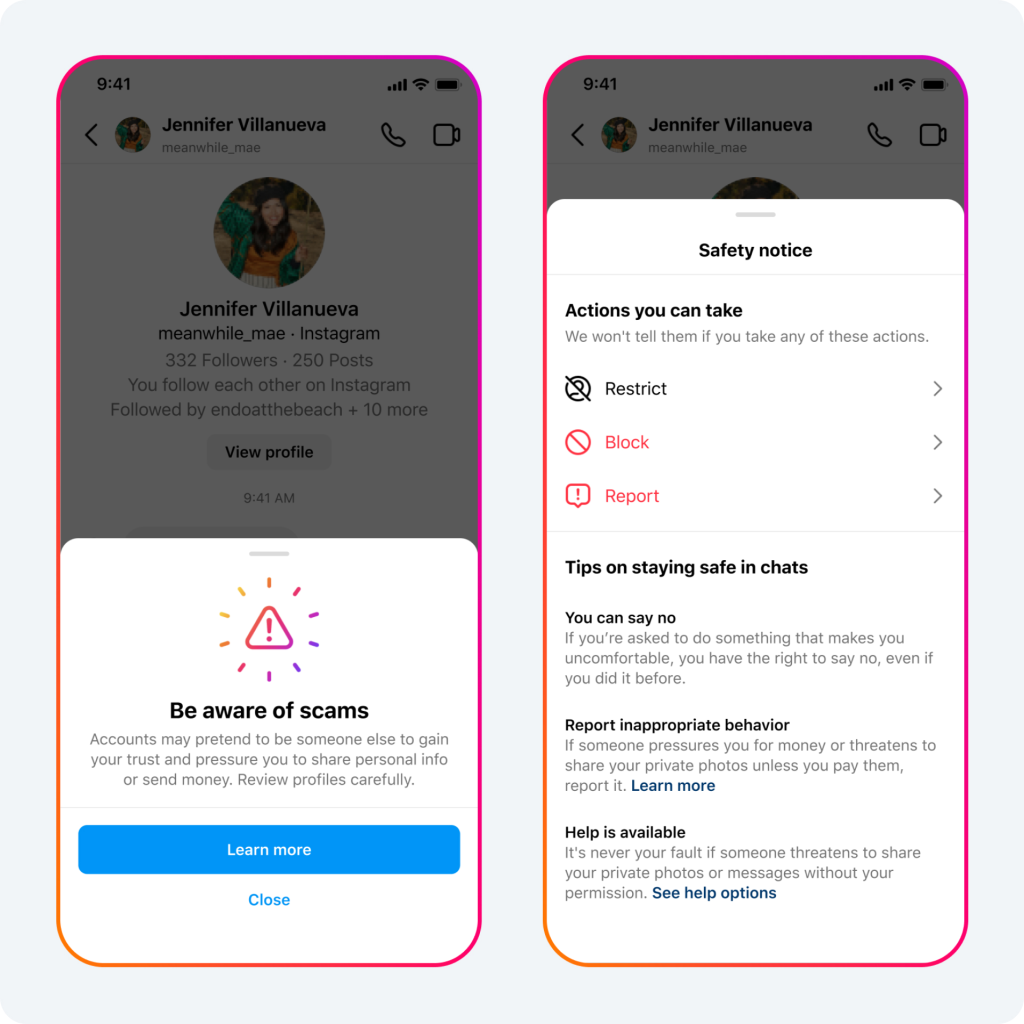
Today’s updates build on the work we already do to help young people know there are steps they can take if someone has shared, or is threatening to share, their intimate images. We show Safety Notices to people on Instagram when they’re messaging someone who has shown potentially scammy or suspicious behavior. These Safety Notices urge people to be cautious, encourage them to report any account that threatens to share their private images, and remind them that they can say no to anything that makes them feel uncomfortable. We also direct teens to Take It Down at relevant moments when using Facebook and Instagram, such as if they report someone for sharing their private images, for nudity, or for sexual exploitation.


03_Saftey-Notice.webp


And we work to help protect teens from unwanted contact in the first place. We default teens under 16 (and under 18 in certain countries) into private Instagram accounts when they sign up, which hides their follower and following lists, and we restrict adults over 19 from messaging minors who don’t follow them. Last month, we announced stricter default message settings, meaning teens under 16 (and under 18 in certain countries) won’t receive messages from anyone they don’t follow or aren’t already connected to, providing more protection against potential scammers.

As we head into 2024, the renewable energy sector is set to see innovation that will transform the way energy is accessed, stored and deployed across Africa. Paul van Zijl, Group CEO at Starsight Energy (https://StarsightEnergy.com/), discusses 4 key trends that he thinks will profoundly shape the industry over the next year.


Batteries will provide benefits far beyond backup for behind-the-meter projects

One of the most significant shifts in solar technology revolves around the integration of battery energy storage systems (BESS) – especially for behind-the-meter solar (also known as onsite solar). Traditionally, batteries were seen primarily as backup storage when paired with a solar system, ensuring a steady power supply during cloudy days, nighttime or when the grid is unavailable. However, in 2024, the focus is vastly shifting towards load management, where batteries play a dynamic role in optimising energy consumption.

As the trend for the deployment of batteries across the continent grows, cutting-edge management systems will become a key part of solar installations with an integrated battery component. These systems use advanced algorithms to predict energy demand patterns. This allows for the strategic use of battery storage – discharging it during expensive peak times and charging it using solar energy or the grid during off-peak – to reduce the costly demand charges that come with variable tariff structures. Along with enhancing the efficiency of solar systems, integrated battery storage solutions can also contribute to grid stability by reducing strain during high-demand periods.

When it comes to front-of-the-meter (or offsite) storage, BESS is also set to play a bigger role in the deployment of utility-scale renewable energy technology like wheeling – where power is generated at an offsite location (like a solar or wind farm) and transported using the available power network to different off-takers.

In South Africa for example, the national energy provider Eskom announced the deployment of around 343 MW in BESS projects as part of an overall 500 MW BESS initiative aimed at addressing the country’s long-running electricity crisis. The systems will be in remote areas (with limited access to Eskom’s network) but still close to renewable energy plants built by independent power producers (IPPs).

This collaboration between the public and private sectors supports more widespread deployment of utility-scale power and the adoption of renewable energy projects. By adding battery storage components to the national grid, businesses and consumers can gain quicker access to reliable electricity while the power utility can address peak energy demands more easily. This also ensures that the increasing amount of power generated from utility-scale solar projects can be stored and consumed outside of daylight hours to avoid stranded grid capacity.

Data, banking and tourism: The rise of sustainable off-grid solar solutions

Off-grid renewable energy solutions, including stand-alone systems and mini-grids, offer a unique opportunity to expand modern energy access services. The distributed nature of these systems allows them to be tailored to local conditions, tap into available renewable resources, deliver diverse energy services, and utilise local capacity to ensure long-term sustainability.

We will see a rise in these solutions as more and more commercial and industrial businesses realise the value of effectively moving off-grid. This will be prevalent in three industries:

As more and more businesses become aware of the benefits of off-grid solar, it is likely that we will see an even greater adoption of this technology in the coming year

Data centres: Africa is a global hub for data centres. According to research from African Infrastructure Investment Managers (AIIM), there is around 250 MW of installed data centre capacity across Africa – with the demand for centres in Africa expected to exceed supply by 300% by 2030. These powerhouses of technology rely heavily on a steady and safe electricity supply. From operating to maintaining their vast cooling systems, large data centres simply can’t afford the risk of a grid collapse or any possible power interruptions. Power autonomy is the name of the game here, making battery storage a necessity from the get-go.

Banking: While the prevalence of mobile financial services continues to soar on the continent, there is still a tangible need for brick-and-mortar banks and ATMs in countries where access to these services remains essential. These sites need to remain operational should there be any sort of grid collapse or catastrophic power failures – making an off-grid solution a non-negotiable component of the future of banking in Africa.

Tourism: With the rise of conscious consumerism and eco-tourism, sustainability is fast becoming the differentiating factor for discerning travellers choosing their next holiday destination. Luxury lodges in popular destinations in East and Southern Africa are fast moving towards fully off-grid solar battery operations to offer their guests uninterrupted access to power while boosting the lodge’s green credentials in the process.

As more and more businesses become aware of the benefits of off-grid solar, it is likely that we will see an even greater adoption of this technology in the coming year.

Seamless access to renewables through a reimagined aggregation model

We will certainly see a shift towards aggregated solutions, wherein energy providers will consolidate diverse technologies and services into comprehensive packages in 2024. This trend is driven by the recognition that a holistic approach to energy solutions is not only more convenient for consumers but also more effective in optimising energy production and consumption.

This can be done in several ways. For example, trading of electricity in South Africa allows a service provider of solar energy to buy and sell, excess wind energy without having to invest substantial capital expenditure amounts. Similarly, instead of having gas-powered energy compete with renewable energy, the aggregation model will also allow providers of such services to aggregate their energy solutions and provide the client with a holistic offering. The goal is to provide consumers with a seamless and integrated final product that maximises the benefits of renewable energy across various aspects of their daily lives. The real value for customers lies in a collaboration of providers who can meet their specific needs and power the entire energy lifecycle.

Tackling complexities through an increasingly consolidated sector

As the solar industry matures, a trend towards consolidation will become increasingly evident in 2024. Larger energy companies will consider merging or acquiring smaller players, creating more robust and diversified entities. This consolidation is driven by the desire to achieve economies of scale, increase market share, and foster innovation by pooling resources and expertise.

Consolidation in the industry is not limited to manufacturers but extends to service providers, research and development firms, and energy management companies. By joining forces, these entities can tackle the complexities of the evolving energy landscape more effectively, driving down costs and accelerating the adoption of alternative energies across the continent.

This trend is fostering the emergence of holistic service providers capable of providing end-to-end solutions that address the diverse needs of businesses, consumers and communities. Our recent market-milestone merger between Starsight Energy (https://StarsightEnergy.com/) and SolarAfrica (https://SolarAfrica.com/) is a case in point. Customers in Eastern, Southern and Western Africa can access our comprehensive mix of cost-effective solutions that provide power security and carbon reduction. These include solar energy, battery storage, wheeling, and energy management, among others.

The future is bright. If 2023 was anything to go by in terms of transformation for the energy sector, 2024 will be marked by accelerated innovation and a collective commitment to harnessing the full potential of renewable energy that holds the promise of a more resilient, more sustainable, and more tightly connected energy future for Africa.

Watch out! In 2024, scammers have some new tricks up their sleeve, such as deepfake impersonation. That is why fostering a zero-trust mindset can help to keep yourself safe from these scams.


  1. Deepfake impersonation scams

Imagine receiving a voice note from your CEO instructing you to transfer money to a bank account. You follow the instructions without realising that the voice note is a deepfake. And just like that, you have fallen for a scam. Deepfakes make use of AI technologies to create new – but fake – images, videos, and/or audio material from existing material, “Artificial intelligence (AI) technology makes it easier for fraudsters to create these convincing fake messages from people you know and trust,” explains Anna Collard, SVP Content Strategy and Evangelist at KnowBe4 AFRICA. “It enables scammers to generate video and audio that is so convincing, many believe it is real.”


Fraudsters also use AI-generated voice notes or videos to impersonate a family member, such as a grandchild, who claims to be in distress and in need of money. This is called a grandparent scam. “People get scammed that way because their emotions are triggered by hearing an authentic sounding voice clip of their loved one and want to help,” comments Collard.


As the boundaries between our physical and virtual worlds continue to blur, a zero trust mindset encourages us to pause, think, and evaluate the content we are interacting with

Another fraudulent application of deepfakes is to impersonate politicians to spread confusion or disinformation. “This is definitely something to watch out for in 2024 as it’s an election year,” says Collard.

  1. Investment scams

Investment scams can appear as trustworthy financial organisations promising incredible returns. “However, if something seems too good to be true, it probably is,” says Collard. She advises being cautious in such situations. Scammers often combine cryptocurrency scams with romance scams as well.

Another scam to be wary of in 2024 involves fake loans that offer low-interest rates but never actually materialise. Instead, victims are required to pay upfront fees or provide their personal information. “With the ongoing cost-of-living crisis, scammers may tempt many individuals to apply for these loans to make ends meet, be very careful of any offers that sound too good to be true.”

  1. Romance scams

By using fake profiles on dating sites or social media, scammers build trust with their victims and then exploit this emotional connection to trick them into sending them money. “Even though family members might repeatedly warn the victim, they often continue with the romantic deception because once on the hook, psychologically it is very difficult for the victim’s brains to admit that they have been conned,” explains Collard.

  1. Identity and social media profile theft

Identity theft involves stealing personal information to commit fraud. Scammers do this via phishing emails or phone calls, as with banking scams. “Social media profile theft involves hackers hijacking your social media accounts to reach out to your contacts, pretending to be you, spreading malicious software, scams or  asking for money,” says Collard.

  1. Charity fraud

After a humanitarian crisis, like a flood, charity scams frequently emerge. “These scams play on your emotions and ask you to give money to a worthy cause, but in reality, they are fake charities,” explains Collard. Red flags to watch out for are unusual payment methods, such as EFT, instead of secure payment platforms. “Always make sure that charities are registered before you donate and that you interact with the legitimate NGO or charity before transferring any money,” she advises.

  1. Tech support scams

Posing as IT technicians, these scammers try to convince you that there’s something wrong with your computer and offer to fix it. They then seize control of your computer and steal your personal information or hack into your bank account. “These scams prey on people’s fears,” says Collard. “They throw people into a state of panic in which they’re not thinking logically.” She recommends hanging up right away and directly contacting your IT support centre.

  1. Puppy scams

Are you in the market for a pure-bred puppy? Beware! International crime syndicates operating in South Africa offer purportedly discounted pooches. According to Collard, many individuals have suffered significant financial losses not only for the non-existent dog but also for the transportation expenses. She advises buyers to be wary if they encounter a wide variety of dogs for sale on a website or if they are immediately offered a puppy. “Breeders do not operate like Takealot. There are usually waiting lists; it takes time for a puppy to become available,” she says. “If you’re offered a second dog at a 30% discount, it’s highly likely you’re being scammed.”

The general advice for any of the scams listed above is to slow down and take a breath before reacting to anything, particularly if it’s emotionally triggering content.

As the boundaries between our physical and virtual worlds continue to blur, a zero trust mindset encourages us to pause, think, and evaluate the content we are interacting with, thereby empowering us to make conscious and more rational decisions.


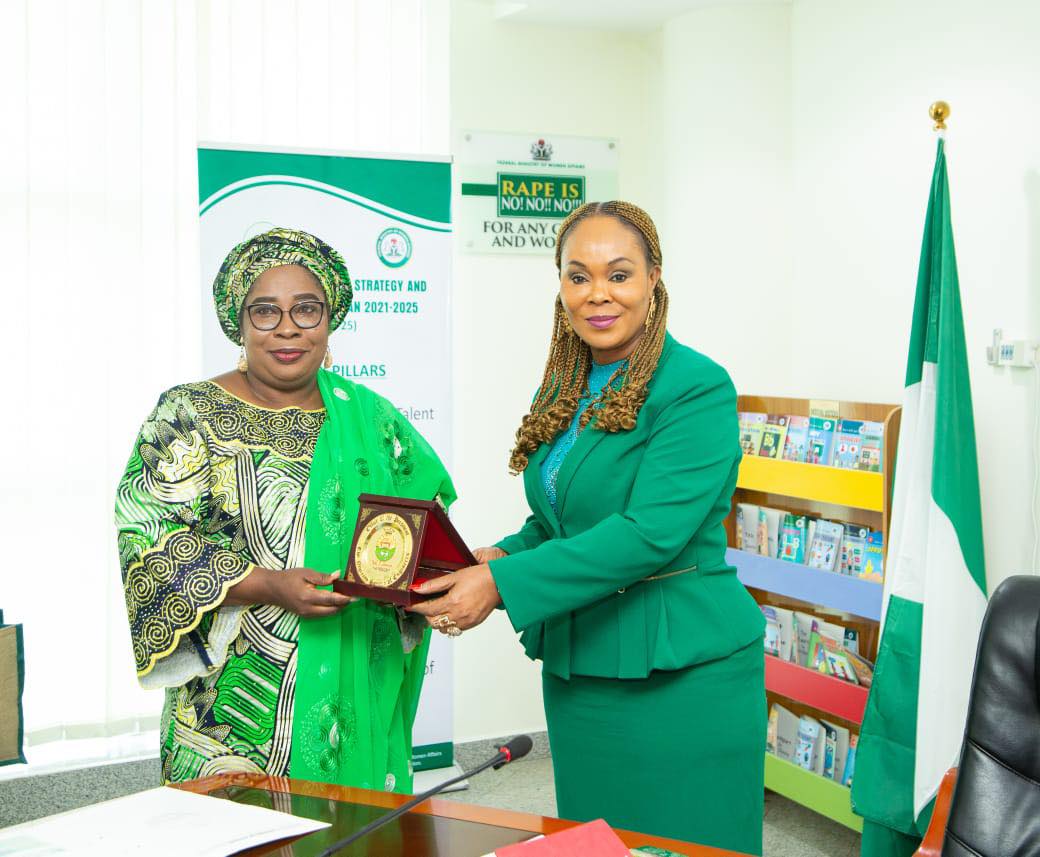
The Honorable Minister of Women Affairs, Barrister (Mrs) Uju Kennedy Ohanenye has commended the Nigeria Society of Engineers (NSE) for embracing the inclusivity initiative through the election of its 1st female President to pilot the affairs of the organization for the next two years.

The Minister gave the commendation today when the Executive Members of the Society, led by its President, Engr. (Mrs) Margaret Oguntola, paid her a courtesy visit in her office, in Abuja.

She stated that the election of a female President for the 1st time after 66 years of the body’s existence with 34 Presidents so far, is an indication of its desire for inclusivity, change and dynamism in line with the policy initiatives of the present administration

*Your election is a strong indicator of the vital role of women in nation building and I must commend the Nigerian Society of Engineers for providing the platform for the first woman to serve in this capacity after having 34 previous male Presidents. We don’t take this for granted and the Women Affairs Ministry will collaborate with your organization to realize collective goals*, the Minister said

She informed that part of President Bola Ahmed Tinubu’s policy focus is to boost food security and expressed optimism that the partnership with the Organization will further bolster the project through the manufacturing of indigenous farming tools for distribution to communities in the country

Barrister Kennedy-Ohanenye stated further that the Ministry’s willingness to collaborate with the Society was imperative as it will among others, provide opportunity to advocate for Vocational Science, Technology, Engineering and Mathematics (V-STEM) education, especially for the girl-child in order to sensitize them on skill acquisition and enterpreneurial development

She thanked the Executive members for the visit and called on other professional bodies to key-in, with a view to providing more women with the opportunity to also contribute to the socio-economic development of the country

Earlier, the President, Nigerian Society of Engineers, Engr. (Mrs) Margaret Oguntola, stated that they were in the Ministry to seek areas of possible collaborations with the Ministry in line with its mandate

She commended the Honourable Minister of Women Affairs, Barrister (Mrs) Uju Kennedy-Ohanenye and President Bola Ahmed Tinubu in particular, for creating the enabling environment for the upliftment of women in the country.


Minister of Information and National Orientation, Mohammed Idris, affirmed the commitment of the Tinubu administration to enact comprehensive macroeconomic reforms. These reforms, aimed at mitigating inflation, alleviating the cost of living, and ensuring the stability of the foreign exchange, align with the broader objective of fostering economic growth. Minister Idris made these declarations during the 2024 Press Week of the Niger State Chapter of the Nigeria Union of Journalists (NUJ) held in Minna, Niger State, on Saturday.

Represented by the Director General of the Voice of Nigeria, Mallam Jibrin Baba Ndace, the Minister expressed optimism about the prospects for 2024. He highlighted that promising initiatives of the administration are set to yield positive results in the coming year.

“As the chief spokesperson of the Federal Government of Nigeria, I take this opportunity to convey to Nigerians that 2024 holds great promise for our nation,” Minister Idris stated. He emphasized that the policies under President Bola Ahmed Tinubu’s Renewed Hope Agenda would solidify, contributing to the growth of the nation’s economic development, human assets, and national security.

The Minister assured the public that the Tinubu administration would persist in implementing macroeconomic reforms with the overarching goals of sustained economic growth, reduced inflation, cost-of-living relief, foreign exchange stability, and job creation.

Addressing recent developments such as the withdrawal of fuel subsidy and the liberalization of the foreign exchange regime, Minister Idris underscored the government’s commitment to the rule of law and the independence of institutions, as evident in recent court judgments.

He clarified that the decision to relocate certain departments of the Central Bank of Nigeria (CBN) and the headquarters of the Federal Airports Authority of Nigeria (FAAN) to Lagos is part of a broader strategy to enhance operational efficiency, streamline processes, and ensure a responsive financial system for Nigeria. The Minister emphasized that this directive aligns with global best practices and has no political motivation, contrary to misconceptions.

Minister Idris reassured that no policy of the current administration would disadvantage any part of the country. He emphasized President Bola Ahmed Tinubu’s commitment to fairness, equitable development, and national unity, reflecting in policies guided by principles of fairness and equality.

In addition, the Minister called on the media to support the fight against fake news, describing it as a “hydra-headed menace” that deliberately misinforms Nigerians. He urged colleagues to unite against the spread of false information.

Concluding his address, Minister Idris announced the impending unveiling of comprehensive details of the National Values Charter by the Federal Government. This initiative aims to instill core values in the citizenry, fostering a sense of shared national identity.


Europe has marked a groundbreaking milestone by becoming the first continent to introduce the computer version of 𝐀𝐈.𝐆𝐞𝐦𝐢𝐧𝐢.𝐔𝐥𝐭𝐫𝐚, setting a new standard in professional artificial intelligence technology. This innovative system, more advanced than even 𝐆𝐏𝐓𝟒, is designed to tackle complex queries that were previously beyond the reach of traditional AI systems.

Unlike any other AI system, 𝐀𝐈.𝐆𝐞𝐦𝐢𝐧𝐢.𝐔𝐥𝐭𝐫𝐚 offers a unique and unparalleled experience, demonstrating the power of the latest technology in the field. To experience the future of AI, users can try it now by visiting http://tinyurl.com/UltravsGmn. As a token of appreciation, a free installation code for the year 2024 is provided.

The professional version of 𝐀𝐈.𝐆𝐞𝐦𝐢𝐧𝐢.𝐔𝐥𝐭𝐫𝐚 comes equipped with a remarkable array of 180 tools and features. These tools cover a wide spectrum of tasks, including content creation, composition, design, photo and video editing, and numerous other functionalities. The extent of its capabilities goes beyond what can be detailed in this press release.

One of the standout features of this professional version is its ability to seamlessly handle various input and output media formats. Whether it’s text, audio, images, video, or diverse file types, 𝐀𝐈.𝐆𝐞𝐦𝐢𝐧𝐢.𝐔𝐥𝐭𝐫𝐚 is engineered to provide a comprehensive solution for all media-related tasks.

This landmark achievement reaffirms Europe’s commitment to pushing the boundaries of technology and innovation. As the first continent to embrace 𝐀𝐈.𝐆𝐞𝐦𝐢𝐧𝐢.𝐔𝐥𝐭𝐫𝐚’s computer version, Europe establishes itself as a trailblazer in the era of advanced artificial intelligence.


Renowned entertainer Olumide Samson Olagoke, popularly known as MC Day, is set to embark on a thrilling nationwide tour and Karaoke Comedy party across Nigeria, commencing on the 17th day of February 2024.

This much-anticipated event, strategically planned across various locations, aligns seamlessly with MC Day’s commitment to connecting with his diverse fanbase and showcasing his exceptional talents in the ever-evolving entertainment industry.

In an exclusive statement to select media outlets, Samson Olagoke expressed his sincere intent, stating, “I am reaching out to my fans and those who appreciate my craft with genuine enthusiasm. This tour provides an opportunity for one-on-one engagement, allowing me to deepen connections and further establish my presence in the dynamic music industry.”

The tour kicks off at the prestigious Eko Hotel on the 17th of this month, promising an electrifying start before extending to other locations and even crossing borders. Samson Olagoke assures attendees of a spectacular experience, emphasizing, “We will be delivering world-class partying and entertainment, and we encourage everyone to join us in creating unforgettable memories.”

The Karaoke and Comedy party, an annual tradition hosted by MC Day, serves as a platform to engage with audiences and contribute to the vibrant entertainment landscape in Nigeria.

MC Day, with over a decade of international acclaim, stands as a versatile figure in the entertainment industry. Renowned for his expertise in hosting events, Karaoke Comedy, content creation, voiceovers, and audience engagement, MC Day has earned the title of Energetic Global Entertainer. His dynamic performances make him a sought-after MC for events worldwide.


In the vibrant realm of technology and innovation, Anambra State emerged as a beacon of excellence at the 11th National Council on Communication, Innovation, and Digital Economy (NCCIDE) meeting held in Kano State.

The unwavering commitment of the Governor and the collective efforts of the Solution team led to four prestigious awards during the peer review session, a testament to the state’s commitment to technological advancement.

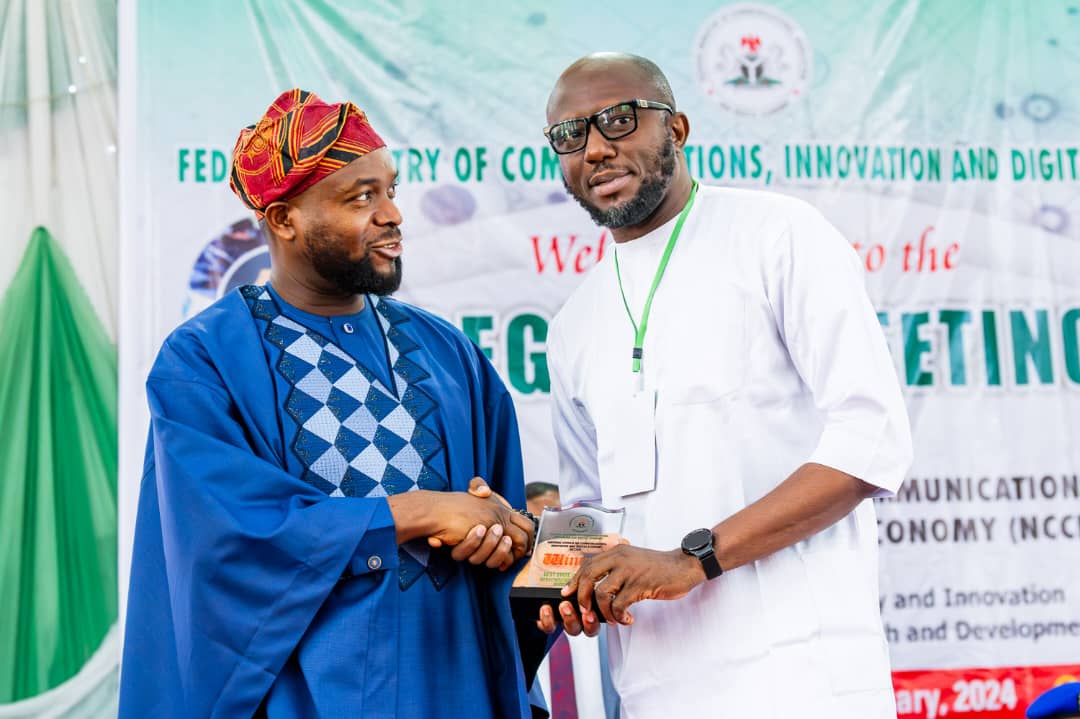
As captured in the memorable photo above when the Honourable Minister of Communication, Innovation, and Digital Economy, Dr. Bosun Tijani, privately inquired about the true stance of Anambra’s Right of Way (RoW) policy, whilst handing over the award for the overall Best State in Infrastructure Development, I confirmed that our RoW policy is truly 100% free and I stressed that Mr. Governor is fully committed to this.

As the council progressed, the Minister jokingly stated, “Anambra, you may have shone this year but I assure you that many more states are coming up and would give you a run for your money at the next council meeting.”

I felt it was a fair comment, and when I had the chance to speak, I seized the opportunity to express our readiness to host the next council meeting, subject to Mr. Governor’s approval, in order to highlight the ongoing tech revolution in Anambra State. The point was to illustrate that what we presented at the event captures only a fraction of the larger tech revolution going on in the State, as Anambra is actively engaged in numerous technology projects at various stages of development and implementation.

The distinctive feature of our Kano experience was opting for Dr. Florence Idigo, a civil servant and director at the Agency, to deliver the presentation on behalf of our state. This decision signposted our conviction that success in technology is not solely dependent on technical expertise; instead, it requires collaboration and comprehension from all relevant stakeholders. It revolves around engaging individuals with a grasp on the significance of the state’s advancement.

This victory is a testament to the collaboration, acceptance, and commitment of critical stakeholders in the Government and the state’s technology ecosystem.

Beyond what was shared at the meeting, the ICT Agency is working closely with other MDAs on initiatives such as Budget Automation, Telemedicine Deployment, Public Wi-Fi, Hospitals Management Platform, Automation of Hospitals, Citizen’s Engagement, SEE/TBI Project Monitoring Dashboard, Strategy for a State-Owned CERRT, Identity Management Initiative, State Assets Platform, Automation of the Judiciary and many more innovative projects.

Anambra State now proudly stands on the technology map of Nigeria, a result of the goodwill and political resolve of Mr. Governor to embrace and invest in technology.

Our deepest gratitude goes to Mr. Governor, Prof. Charles Chukwuma Soludo, CFR, for providing an enabling environment that has propelled Anambra State to new heights in technological advancement and in other important facets of development. We would also like to thank the entire State Executive Council, the Solution Team, the media, and Ndi Anambra for their unwavering support.

The Anambra State ICT Agency continues to look forward to a future marked by technological advancement, innovation, and unparalleled progress for our dear State.


Recent developments in Mali, Burkina Faso, and Niger have prompted scrutiny and inquiries into the unseen forces influencing military decisions in the Sahel region. Notably, this issue has caught the attention of international observers, with questions arising about the advisors guiding the military leadership in these countries.

Upon receiving news of these developments, an industry expert from Nigeria, deeply connected to the security landscape, reached out, posing a critical question: “Who are advising the soldiers in the Sahel?” This query reflects the growing interest in understanding the dynamics at play behind the scenes.

In the realm of security analysis, attention to the orientation and influence of advisors to key decision-makers is crucial for forecasting and mitigating potential surprises in the rapidly evolving security landscape. The roles played by these advisors could hold more significance than commonly acknowledged.

A noteworthy instance is Mali’s departure from the Algerian accord with moderate rebels, aligning itself with Burkina Faso and Niger in exiting the Economic Community of West African States (ECOWAS). This strategic move prompts questions about the advisors guiding such decisions and their geopolitical implications.

Algeria’s substantial ties with Russia, a global ally of Mali, and its status as a neighboring littoral state add complexity to the situation. The decision to sever regional ties with other West African littoral states necessitates sophisticated advice, highlighting the importance of understanding the counsel received by military leadership.

The “Lomé Peace and Security Forum” held in Togo last October provided insights into the minds of junta-led states and their engagement with regional and continental actors. Notably, civilian foreign ministers representing Mali and Burkina Faso participated, deviating from the historical trend of juntas appointing military figures to head foreign ministries.

During the forum, these civilian ministers articulated perspectives that shed light on their influence over the military leadership. Burkina Faso’s Foreign Minister questioned the efficacy of democracy in Africa, while Mali’s Foreign Minister, a former ambassador to the US and a foreign minister in a civilian government, advocated for stronger ties with Russia.

The Malian Foreign Minister’s eloquence and charisma, combined with his past experience, suggest that he is a trusted advisor to the junta. However, his apparent desire for retribution against civilian politicians with whom he has disagreements raises intriguing questions about the dynamics within the advisory circle.

The unfolding events in the Sahel region underscore the need for a nuanced understanding of the advisors shaping military strategies. This revelation prompts further inquiry into the unseen influencers guiding key decisions and their impact on regional stability.

Written by
Fidel Amakye Owusu


The “Lomé Peace and Security Forum” held in Togo last October provided insights into the minds of junta-led states and their engagement with regional and continental actors. Notably, civilian foreign ministers representing Mali and Burkina Faso participated, deviating from the historical trend of juntas appointing military figures to head foreign ministries.