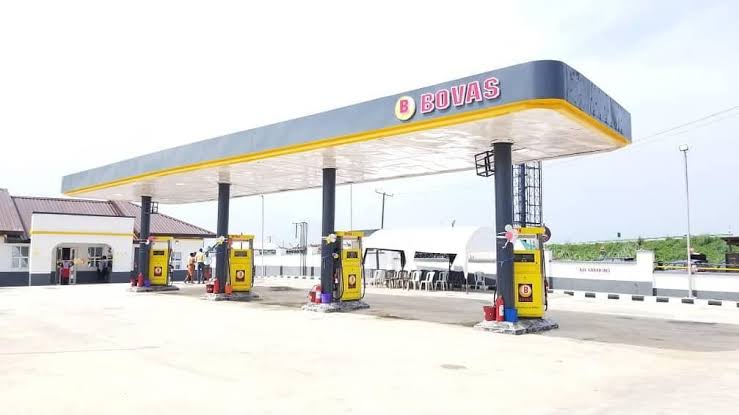
In a testament to the power of perseverance and entrepreneurship, Mr. Bamidele Samson and his wife, Mrs. Victoria Samson, have transformed their modest beginnings into a thriving conglomerate known as BOVAS & Company Ltd.

Their journey commenced with humble career starts; Mr. Samson as an architect at Design Nigeria and Mrs. Samson as a marketing staff member at Mobil Nigeria. However, fueled by ambition and determination, they embarked on a joint venture, establishing a petroleum products brokerage business. Starting small, they meticulously catered to client orders, procuring from major marketers and supplying with modest markups.

Their breakthrough came in 1980 when they ventured into the petrol station business, registering their station under the Texaco franchise, now MRS Oil. This marked the inception of BOVAS & Company Ltd, named after its founders – “Bamidele Olusegun & Victoria Adunola Samson.”
Despite facing financial challenges, including difficulties in securing loans, the couple persevered. They operated on credit, buying and transporting petroleum products, gradually expanding their operations. Their reliability and integrity earned them trust, leading to larger deals and accolades, such as the Texaco Best Dealer Award for the West Africa Region in 1990.

By 1991, they erected their first petrol station under the BOVAS brand, obtaining licenses as independent petroleum marketers. Overcoming financial constraints, they diversified their operations, engaging in bulk purchases with NNPC and expanding their retail network.

Today, BOVAS & Company Ltd has evolved into a formidable group, boasting a fleet of 300 trucks for product distribution and ownership of tank farms with a total capacity of 73,000,000 liters. They provide a wide range of petroleum products and services, including premium motor spirit, automated gas oil, and lubricants, catering to various sectors, including power generation and the rail industry.

With 185 wholly-owned petrol stations and 119 LPG stations nationwide as of January 2023, BOVAS & Company Ltd continues to expand its footprint. Their recent achievement includes the completion of a lubricant blending plant with a production capacity of 40,000,000 liters per annum.

From their modest beginnings, Mr. and Mrs. Samson, affectionately known as Baba and Mama BOVAS, have ascended to become multi-billionaires, yet maintaining a low profile in the public eye.

Reporter: Dan Madu
 

The evolution of the internet and its accompanying technologies has ushered in a new era of possibilities, profoundly impacting human expression and freedom. Over the past decade, these advancements have extended the boundaries of communication and engagement, presenting both opportunities and challenges in political discourse.

Digital platforms, particularly social media, have emerged as influential tools in shaping political participation and elections. The widespread adoption of social media, coupled with increased internet access, has made the connection between these platforms and electoral processes more apparent, evident in recent electoral cycles across the globe, including the United States, Europe, and Nigeria.

The 2008 US presidential election marked a turning point, with the widespread use of platforms like Facebook, MySpace, YouTube, and mobile messaging revolutionizing political communication. Dr. Ibietan’s groundbreaking book, “Cyber Politics: Social Media, Social Demography, and Voting Behaviour in Nigeria,” delves into this transformative phenomenon, examining the intersection of social media networks and voting behavior in Nigeria’s political landscape.

Drawing insights from a comprehensive study of Nigeria’s 2015 presidential election, Dr. Ibietan explores the impact of social and demographic factors, digital social mediation, and the remarkable influence of these variables on voter behavior. The book highlights how social media platforms played a significant role in shaping public discourse and influencing electoral outcomes, particularly in mobilizing political opposition and controlling public debates.

In today’s digital age, the prevalence of data underscores the profound impact of social media on political engagement and elections. With increasing social and economic upheavals worldwide, social media is poised to play an even more significant role in driving electoral choices.

Dr. Ibietan’s research underscores the shifting demographics of voting, favoring digital natives whose engagement with social media is reshaping traditional media approaches. Through tested theoretical models and research methods, the book scrutinizes the evolving landscape of political communication, proposing innovative approaches like the Channel-Factor Model.

“Cyber Politics: Social Media, Social Demography, and Voting Behaviour in Nigeria” offers valuable insights into the dynamic relationship between politics, social media networks, and voter behavior in Africa. Dr. Ibietan’s contribution to political communication scholarship is commendable, shedding light on a crucial aspect of modern democracy.

The book has garnered praise from scholars and professionals alike, with accolades from prominent figures such as Aminu Maida, Ph.D., Executive Vice Chairman/CEO of the Nigerian Communications Commission, and Prof. Peter Esuh, Dean of the Faculty of Communication and Media Studies at the University of Uyo.

In conclusion, “Cyber Politics” is a significant addition to the discourse on political communication in Africa, offering a comprehensive analysis of the impact of social media on electoral behavior. As the digital landscape continues to evolve, Dr. Ibietan’s work serves as a timely exploration of the complex interplay between technology and democracy.


ANTHONY EMEKa nwosu

The African Development Bank (www.AfDB.org) and the Inter-Governmental Action Group against Money Laundering in West Africa (GIABA) on Thursday officially launched a three-year support project to combat money laundering and terrorism financing in their member countries.

The project, titled “Capacity Development for Anti-Money Laundering and Countering the Financing of Terrorism in GIABA Member States in Transition,’’ will be backed by a $5 million grant from the African Development Bank Group.

The launch ceremony, held in Dakar, Senegal, was attended by staff from the two institutions, representatives of beneficiary countries which are GIABA member countries, and Senegal’s Financial Intelligence Unit. Mohamed Cherif, African Development Bank Country Manager for Senegal and Edwin Harris, Jr., GIABA Director General, represented their institutions.

The project will be financed through a grant from the Transition Support Facility of the African Development Bank to the tune of 3.5 million UA (about $5 million). The project will contribute to resilience in the West African region, by improving anti-money laundering/terrorism financing regimes, and by developing the capacity of GIABA member states, with a particular focus on countries in transition.

The grant complements the Bank Group’s strategic and operational engagements at country and regional levels. It also aligns with its policy and action plan on the Prevention of Illicit Financial Flows, as well as with the Bank’s group Strategy for Economic Governance in Africa.

Cherif commended the long-standing collaboration between GIABA and AfDB which includes training sessions for its member countries and technical assistance.

The GIABA director in turn expressed his satisfaction about the financing, which he said, “comes at a pertinent time, to support the implementation of GIABA’s ongoing Strategic plan for 2023 – 2027 and to contribute to effective interventions on anti-money laundering and terrorism financing regimes in its member countries.”

The African Development Bank is an observer member of GIABA, and also regularly consults this organization as a key stakeholder in the development of  Bank policies, strategies and action plans related to illicit financial flows, anti money-laundering and economic governance.

In a rapidly evolving entertainment landscape, traditional cable television providers like DStv are facing existential threats as consumers embrace new technologies and streaming services. With over 200 million people, the Nigerian market has been a significant stronghold for DStv, but recent trends suggest a looming decline in its dominance.

One of the biggest indicators of this shift is the reluctance of consumers to invest in outdated technologies. The decision to increase the cost of DStv decoders has been met with criticism, as many argue that such devices should be more accessible or even provided for free in order to remain competitive. This sentiment echoes the downfall of once-dominant companies like RIM (Blackberry) and Nokia, who failed to adapt to market forces and technological advancements.

The advent of streaming platforms like Netflix and Amazon Prime has fundamentally changed how people consume media. Rather than recharging DStv subscriptions for outdated content, consumers are opting for smarter alternatives. The ubiquity of smart televisions and devices like Chrome Box allows users to access a wide array of content directly from the internet. Furthermore, the rise of set-top box technology, which integrates high-speed internet access, presents a compelling alternative to traditional cable services.

The affordability of internet subscriptions further exacerbates the challenges faced by cable TV providers. With the cost of data becoming increasingly cheaper, consumers are gravitating towards internet-based entertainment options that offer greater flexibility and variety. For as little as ₦650 (approximately 50 cents), users can access ample entertainment content through streaming services on their flat-screen TVs.

According to Haivision, a set-top box enables users to access video content from specific internet providers, revolutionizing the way people consume media. This shift underscores the importance of adapting to changing consumer preferences and technological advancements.

In light of these developments, companies like DStv and Startimes must recognize that the future of entertainment lies in internet-based platforms. Failure to embrace this reality could lead to their eventual obsolescence as consumers increasingly prioritize convenience, variety, and affordability in their entertainment choices. As such, the onus is on these companies to innovate and evolve in order to remain relevant in an ever-changing landscape.

By Anthony Emeka Nwosu


GOD BLESS OKPOGHO PEOPLE IN EZEAGU LGA OF ENUGU STATE – THE RED GOLD OF AFRICA!!!!!!

By: Ikenna Ezeakor

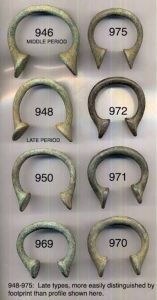
Okpogho in Ezeagu LGA, Enugu State is an ancient city of Igbo land and an iron-smelting community in Ezeagu LGA that gave West Africa the first metallic currency known as Okpogho Manila.

The innovation of this ancient metallic currency: “Ego Igwe/Ego-Onah” was attributed to a great “Wawa man” from the present Ezeagu Igbudu LGA.

The word “Okpogho” which is the Efik fishermen’s term for money or brass was given to this wawa iron maker; when one of the the fishermen noticed that those precious bangles which he fashioned for his daughter “Mgbolie” could be used as a means of exchange of goods and services.

The early Portuguese explorers of the 1470s observed that Copper Bangles “Okpogho Manila” were the principle money and means of exchange all along the West Africa coast.

The people of Okpogho will dig iron out of the ground and melt copper out of the stones to make a Okpogho Bangles.

Through this process, the first metallic currency was introduced.

Thus, the ancient monetization of the precolonial Ezeagu economy by Okpogho people brought international trade to Ezeagu area earlier than the 15th century.

Since Okpogho Manila became the means of exchange, marketing activities took place among Ezeagu communities themselves and went to far countries like Mali, Cameroon, Burundi and Congo where Okpogho Manila had sphere of influence.

In its inception, these bangle or Okpogho were predominantly made from copper as copper was referred to as ” THE RED GOLD OF AFRICA “.

The name Manila is derived from Spanish for a bracelet “Manella”, the Portuguese for Hand-Ring or after the Latin “Manus”(hand) or from “Monilia”, plural of “Monile” (Necklace).

HRH Igwe Apostle Chimereze Linus Pius!

Christian Chris Okpoko Isiakwu 1 of Okpogho!

(c) IGBO HISTORY (IGBOS SINCE 3000BC)

The Ubabukoh family of Ngo Village in Igbo-Ukwu, Aguata Local Government Area of Anambra State, has announced April 25, 2024 as the burial date for their patriarch, brother and uncle, Mr. Ifeanyi John Ubabukoh, who passed on to glory on February 18, 2024.

The deceased was a columnist and former Chairman of the Editorial Board, Champion Newspapers. He had worked with The Mail, where he edited both the Sunday and daily editions of the newspaper.

The frontline journalist enriched his resume at the National Concord, where he rose from the position of Chief Correspondent to News Editor.

As part of the pioneer staff of New Nation, Ubabukoh’s dexterity earned him special bonus twice from the Publisher, Gbolabo Ogunsawo, and promotion from Feature Writer to Features Editor.

Ozioma Ubabukoh - Principal - Plexus Media Interlinks | LinkedIn
Ozioma Ubabukoh – Principal – Plexus Media Interlinks | LinkedIn

Upon retiring from Champion Newspapers, he served as Senior Special Assistant on Communication to then Anambra State Governor, Mr Peter Obi, between June 2009 and June 2012.

According to a statement by his son, Mr Ozioma Ubabukoh, on behalf of the family, there will be a Service of Songs on Wednesday, April 24, 2024 at the late journalist’s residence (John Ubabukoh’s compound) in Ngo Village.

The remains, the statement added, will leave Apex Mortuary, Igbo-Ukwu, on Thursday, April 25 for lying-in-state at Ubabukoh’s compound in Ngo.

“Funeral service will commence by 10a.m. and interment will take place by noon at Ubabukoh’s compound,” he stated.

Ozioma Ubabukoh, who is the Principal Consultant at Plexus Media Interlinks (Plexus), a brand management consulting firm, and spokesperson to former presidential candidate, Dr Obiageli Ezekwesili, said his late father would be remembered for his engaging wit, humility and generosity, regretting that “death called him when his wealth of knowledge and experience was mostly needed.”

The late Ubabukoh is survived by his wife, sons, daughters, in-laws, siblings, grandchildren, and other relations, he noted, adding that Outing Service for the patriarch would hold on Sunday, April 28, 2024 at the Holy Trinity Anglican Church, Igbo-Ukwu.


As part of the pioneer staff of New Nation, Ubabukoh’s dexterity earned him special bonus twice from the Publisher, Gbolabo Ogunsawo, and promotion from Feature Writer to Features Editor….Upon retiring from Champion Newspapers, he served as Senior Special Assistant on Communication to then Anambra State Governor, Mr Peter Obi, between June 2009 and June 2012.


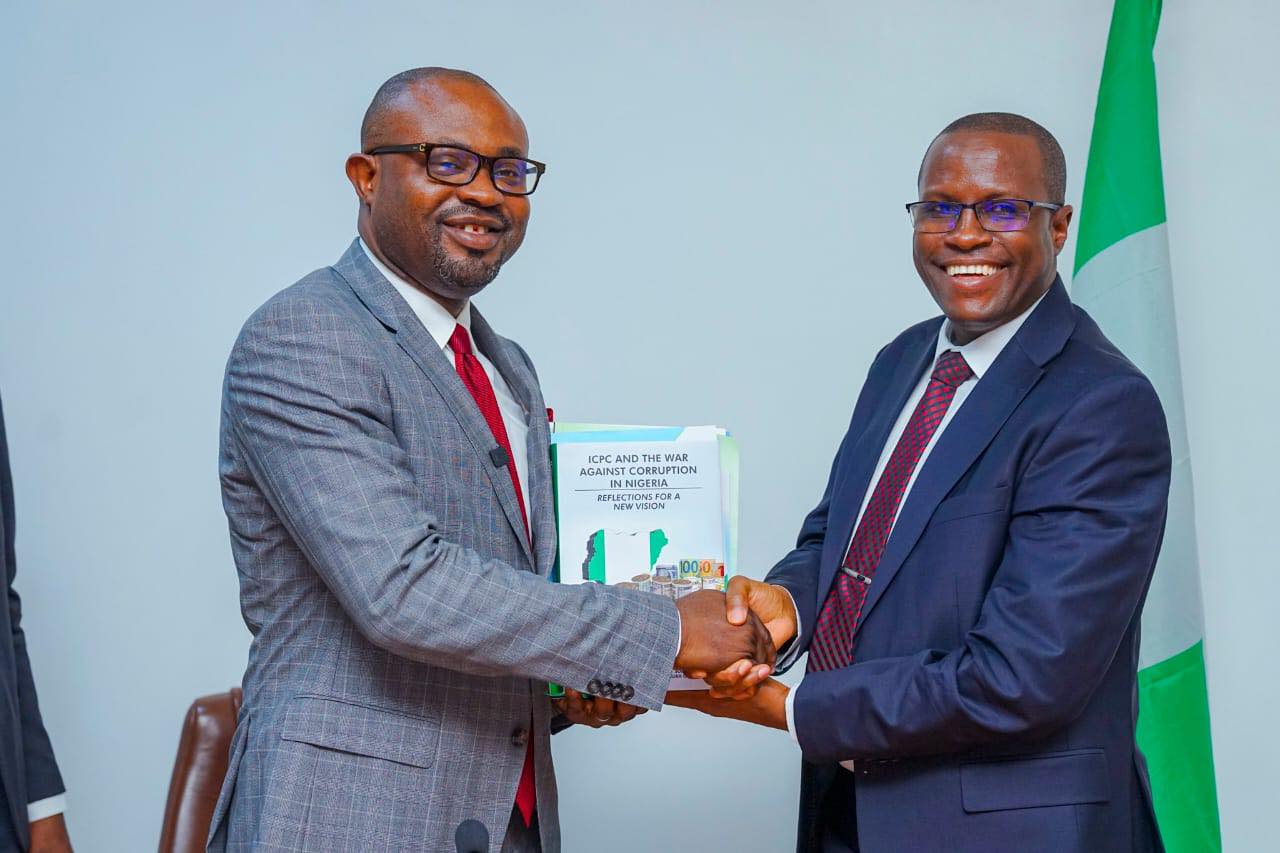
The Minister of Interior, Dr. Olubunmi Tunji-Ojo, has underscored the pressing need to confront corruption as a significant threat to security. In a proactive move, he has initiated a strategic partnership with the Independent Corrupt Practices and Other Related Offences Commission (ICPC) to address corruption head-on.

This strategic partnership took shape during Dr. Tunji-Ojo’s courtesy visit to the ICPC Headquarters on Tuesday. Accompanied by the Permanent Secretary, Dr. Aishetu Gogo Ndayako, as well as top officials from the Ministry and its Agencies, the Minister laid the groundwork for collaborative action against corruption.

Dr. Tunji-Ojo reiterated the imperative for proactive measures in combating corruption, stressing the importance of strategies not only for detection but also for prevention. He emphasized the critical role of capacity building and advocated for knowledge transfer in alignment with ICPC’s objectives.

In response, the Chairman of the ICPC, Dr. Musa Adamu Aliyu, acknowledged the Ministry’s indispensable role in Nigeria and pledged unwavering support towards shared goals. Dr. Aliyu also underscored the importance of leveraging technology in anti-corruption efforts, highlighting its potential to enhance effectiveness and efficiency in combating corruption.

This partnership between the Ministry of Interior and the ICPC signifies a concerted effort to tackle corruption comprehensively. By combining resources, expertise, and a commitment to leveraging technology, they aim to strengthen Nigeria’s anti-corruption initiatives and safeguard national security.

Through collaborative action and innovative approaches, the Ministry of Interior and the ICPC are poised to make significant strides in the fight against corruption, contributing to the promotion of transparency, accountability, and good governance in Nigeria.


By Sampson Ikemitang

Water is indispensable to life, holding a unique significance among natural resources. While survival might be possible without others, it’s inconceivable without water. Managing water resources involves considerations of quantity, quality, and future variability, vital for societal sustenance and economic development.

Nigeria’s industries are acknowledging the nation’s water scarcity, prompting cultural and technological shifts towards water-wise practices. Therefore, the application and granting of water use licenses are crucial steps towards fostering more sustainable water usage.

To address this, the Federal Executive Council established the Nigeria Integrated Water Resources Management Commission (NIWRMC) in May 2007. The Commission plays a pivotal role in regulating, protecting, and conserving water resources to ensure equitable socio-economic development and environmental integrity.

Operating under the delegated power of the Minister of Water Resources, the Commission defines standards, regulates water resources development, and ensures adherence to international best practices. A significant regulatory function includes issuing water use licenses to raw bulk water users, specifying effective locations, purposes, and durations, along with attached conditions.

But what exactly is a water use license? It’s a written permit authorizing water abstraction for various activities, governed by the Water Resources Act 2004. This license stipulates usage conditions, such as permissible water abstraction volumes during irrigation seasons.

Certain activities require licensing under the Water Resources Act, including surface and groundwater abstraction, construction of hydraulic structures, irrigation systems, mining-related water usage, and waste discharge management.

Furthermore, the Commission oversees Water Use License Applications (WULA), a process essential for commercial-scale water withdrawals. Contrary to general authorization, WULA involves site visits, public participation, and impact assessments, ensuring comprehensive scrutiny of proposed activities.

Through these processes, the Commission has issued 89 water use licenses across various sectors, including hydropower generation, irrigation, industrial usage, and water quality analysis centers, among others.

Regulating water abstraction and related activities is vital for sustainable resource management and economic growth. Water use licenses have the potential to significantly impact Nigeria’s economy, particularly amid declining crude oil revenues.

As Nigeria navigates economic diversification, revenue generation from the water resources sector becomes increasingly crucial. The Commission remains steadfast in its commitment to this goal, recognizing the imperative of robust regulations and oversight in harnessing water resources for national development.

Sampson Ikemitang writes from the Nigeria Integrated Water Resources Management Commission, Abuja.


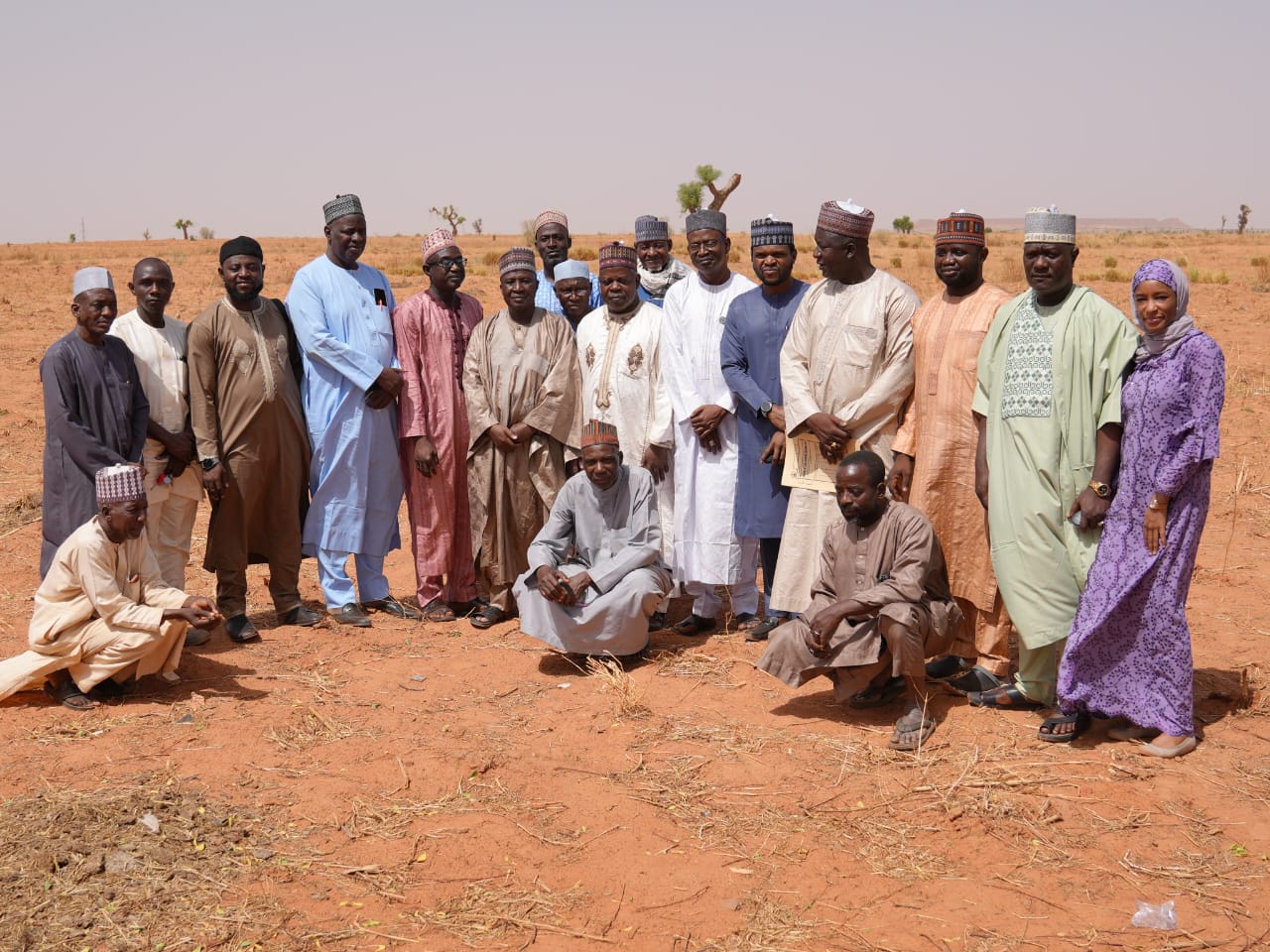
The Kebbi State Government has handed over ten hectares of land to the National Agency for Science and Engineering Infrastructure (NASENI) for the establishment of Agricultural Machinery Development Institute (AMEDI) today in Birni Kebbi.

This was in line with the Federal Government’s directive that the six geopolitical zones in the country should host one AMEDI each.

The document of the 10 hectares of land situated along Birnin Kebbi-Argungu road was handed over to the Executive Vice Chairman /CEO of the Agency Mr Khalil Suleiman Halilu by the Permanent Secretary of Kebbi State Cabinet Office, Alhaji Dahiru Zaki.

The Permanent Secretary led a delegation of Kebbi State Government officials including the Perm Sec, Ministry of Lands and Housing, Alhaji Abukar Ahmed; Representative of Perm Sec, Ministry of Agriculture, Alhaji Adamu Dankawu; Special Adviser, Special Duties to the Governor, Alhaji Shafiu Zauro and the representative of the District Head of Zauro, (the host community) to the event.

Kebbi State got the nod of the Federal Government because of its vast arable land in rice production and other farm produce among the seven states of the North-West geopolitical zone.

The handing over of the land documents was done on the permanent site of the proposed institute. NASENI’s Director of Procurement, Dr. Mohammed Mohammed, received the documents on behalf of the EVC /CEO of the Agency.

Alhaji Zaki said that Kebbi State people are grateful to the Federal Government for citing the Institute in the state saying it will accelerate development and create job opportunities for the teeming youths in the state. He added that Kebbi State was chosen as the site of the new AMEDI due to its agrarian capacity in rice production and other cash crops.

He added that, ”This land was earmarked by the state government in the last two years for allocation to NASENI for establishment of AMEDI. We are the leading producer of rice and so many other crops and that is what informed the decision to site this project in Kebbi state.”

Speaking on behalf of the EVC/CEO of NASENI, Dr. Mohammed appreciated Governor Nasir Idris of Kebbi State for giving NASENI the land at a strategic location along Airport road in Birnin Kebbi to start building the Institute. He said the project would commence immediately as the EVC/CEO has put all the necessary machinery in place.


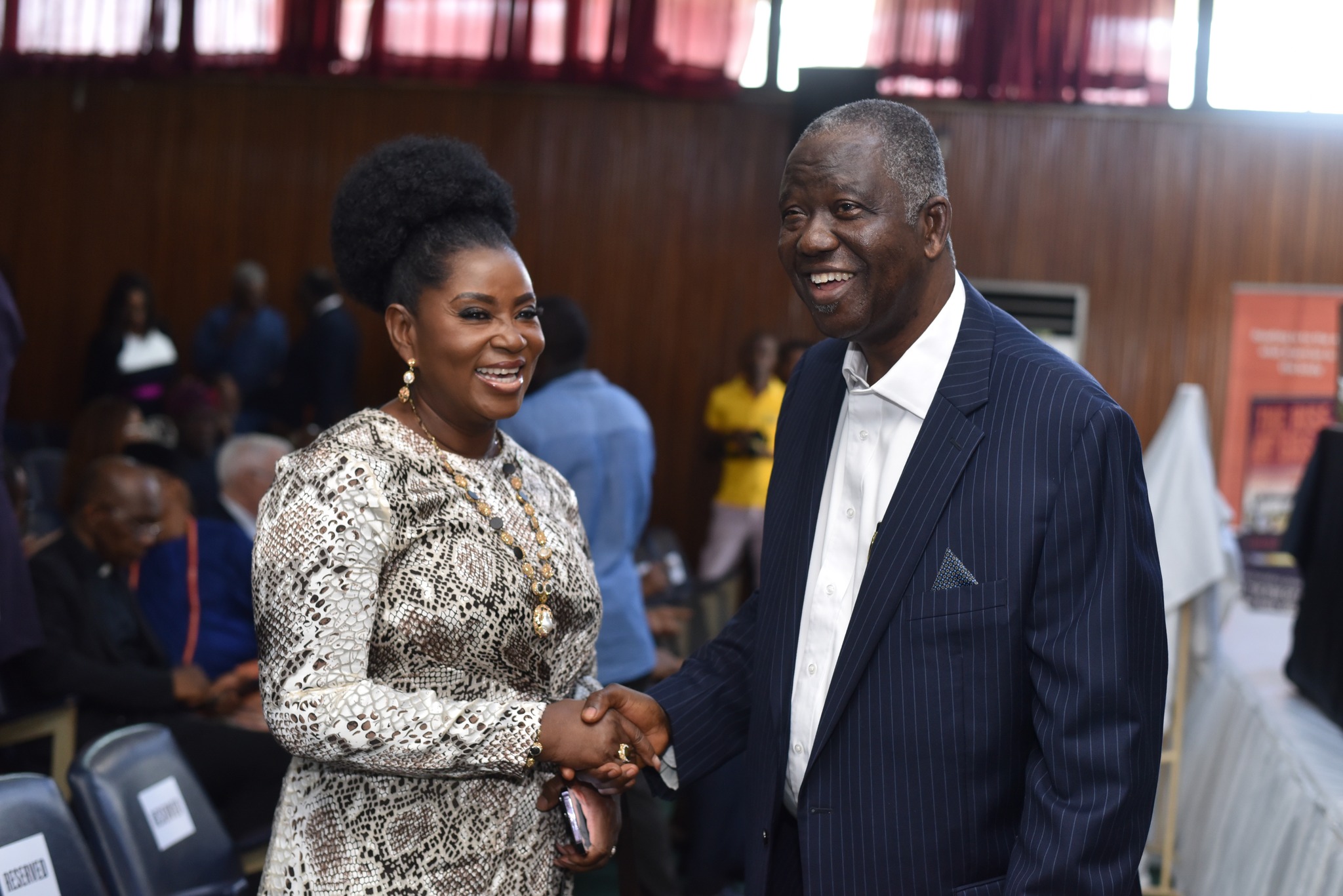
The Group Chief Executive Officer (GCEO) of the Nigerian National Petroleum Company Limited (NNPC Ltd.) Mr. Mele Kyari, has reiterated the crucial role of natural gas in fueling economic growth and industrial development in Nigeria.
Kyari, who was speaking at the public presentation of the book “The Rise of Gas: From Gaslink to the Decade of Gas” authored by Engr. Charles A. Osezua, highlighted gas’ global acceptance as a crucial energy source that sustains economic growth and drives industrial activities.
Represented by NNPC Ltd.’s Head of Relationship and Stakeholder Management, Mrs. Oluwakemi Olumuyiwa, the GCEO also emphasised the importance of documenting Nigeria’s gas sector.
The GCEO underscored the significance of prioritising natural gas production and supply, particularly in the context of geopolitical dynamics and energy security in the global economy.
With Nigeria boasting substantial gas reserves exceeding 200 trillion cubic feet (Tcf) and the potential to reach 600 Tcf, the GCEO said it is pertinent that Nigeria leverages the gas resource for sustainable development, energy security, and job creation.
He noted that the book aligns with the Federal Government’s “Decade of Gas” initiative, aimed at optimising Nigeria’s abundant gas reserves for both domestic consumption and international export.
Kyari added that, as a key stakeholder, NNPC Ltd. has played a leading role in advancing the “Decade of Gas” agenda through strategic investments in critical gas infrastructure such as pipelines and processing facilities.
In his remarks, the author, Engr. Charles Osezua, who described the unveiling of “The Rise of Gas” as his contribution to Nigeria’s energy literature, expressed gratitude to the NNPC Ltd. for its support towards the book launch.
Osezua said NNPC Ltd.’s participation at the occasion underscores the company’s commitment to fostering knowledge sharing and innovation within the gas industry.
Also speaking, Chairman of the Impact Investors Foundation and former Group Executive Director of NNPC, Engr. Afolabi Oladele, lauded the book for its comprehensive insights into the gas value chain, saying it will be relevant to policymakers amid the global energy transition.