
With the increasing reliance on the internet for daily activities, conserving data has become essential, especially in countries like Nigeria where data costs can be relatively high. Here are some effective strategies for conserving internet data on both phones and computers.

#### 1. Utilize Data-Saving Modes and Tools

**On Phones:**

– **Enable Data Saver Mode:** Most smartphones come with a built-in data saver mode that restricts background data usage. For Android, this can be activated via Settings > Network & Internet > Data Saver.
– **Limit Background Data:** Specific apps can consume data even when not in use. Go to Settings > Apps & Notifications > App data usage, then restrict background data for apps that don’t need constant internet access.
– **Use Lite Versions of Apps:** Many popular apps have lite versions designed to use less data, such as Facebook Lite and YouTube Go.

**On Computers:**

– **Browser Data Saver Extensions:** Install browser extensions like Google Chrome’s Data Saver or Opera’s Turbo mode, which compress web pages before they are loaded.
– **Disable Automatic Updates:** Turn off automatic updates for operating systems and applications. For Windows, this can be done via Settings > Update & Security > Windows Update > Advanced options, then choose “Pause updates.”

#### 2. Optimize Streaming Settings

Streaming video and music are among the biggest data consumers. Adjusting settings can significantly reduce data usage.

**On Phones and Computers:**

– **Lower Video Quality:** Platforms like YouTube and Netflix allow you to adjust the streaming quality. Choose a lower resolution such as 480p instead of 1080p or higher.
– **Download for Offline Viewing:** When on Wi-Fi, download videos or music for offline use instead of streaming them repeatedly.

#### 3. Monitor and Manage Data Usage

**On Phones:**

– **Data Usage Apps:** Use apps like My Data Manager or Data Usage to track and manage your data consumption. Android phones also have built-in data usage tracking under Settings > Network & Internet > Data Usage.
– **Set Data Limits:** Set monthly data limits on your phone to receive alerts when you are nearing your data cap. This can be configured in the Data Usage settings on Android.

**On Computers:**

– **Windows Data Usage Meter:** Windows 10 includes a data usage meter that provides an overview of your data consumption. Access it via Settings > Network & Internet > Data Usage.
– **Third-Party Tools:** Tools like NetWorx and GlassWire offer detailed data usage tracking and alerts.

#### 4. Optimize Browsing Habits

**On Phones and Computers:**

– **Ad Blockers:** Ads consume data. Installing an ad blocker can significantly reduce data usage by preventing ads from loading.
– **Use Mobile Versions of Websites:** Mobile versions of websites are often optimized for lower data usage. When browsing on a computer, try using mobile sites if available.

#### 5. Manage Cloud Services

Cloud services like Google Drive, Dropbox, and iCloud can use a lot of data syncing files.

**On Phones and Computers:**

– **Limit Syncing:** Configure cloud services to sync only over Wi-Fi or limit the syncing frequency. For Google Drive, go to the app’s settings and select “Transfer files only over Wi-Fi.”
– **Selective Syncing:** Choose which folders to sync instead of syncing everything. This can be managed in the settings of each cloud service application.

#### 6. Utilize Offline Features

**On Phones and Computers:**

– **Offline Maps:** Apps like Google Maps offer offline maps. Download maps when on Wi-Fi to use them without consuming data.
– **Offline Reading:** Use services like Pocket or Instapaper to save articles for offline reading, reducing the need to be online constantly.

#### Conclusion

By adopting these strategies, Nigerians can make the most of their internet data, ensuring it lasts longer and is used more efficiently. As data costs continue to be a significant consideration, these practices not only save money but also enhance the overall internet experience.
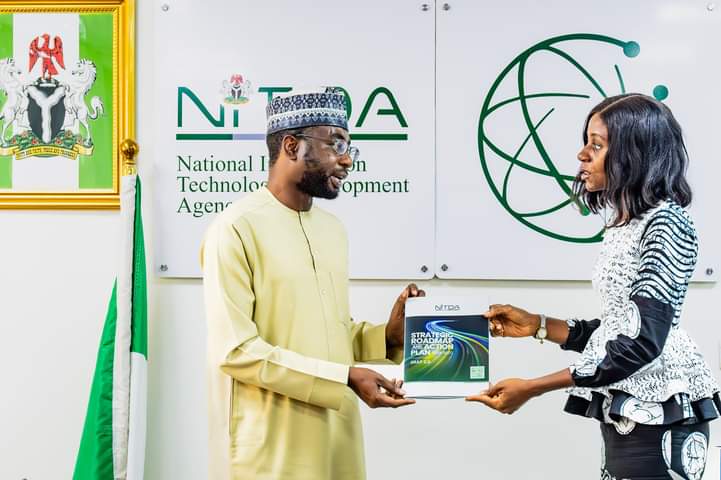
 

The Director General of the National Information Technology Development Agency (NITDA), Kashifu Inuwa Abdullahi, recently hosted a delegation from Afrelib Academy led by the Executive Director of Operations and Programmes, Mrs. Joice Gomina. The meeting focused on exploring potential collaborations aimed at advancing tech development and digital literacy in Nigeria.

Mrs. Gomina proposed several joint initiatives, including teacher training programs, future boot camps, and a Tech & Career Expo, for which she invited DG Abdullahi to serve as the keynote speaker.

Director General Inuwa expressed strong support for the partnership, highlighting that it aligns with NITDA’s Strategic Roadmap and Action Plan (SRAP 2.0), particularly its emphasis on fostering digital literacy and cultivating talent. He also noted that this collaboration supports President Bola Ahmed Tinubu’s priority of accelerating diversification through digitization and innovation.

Inuwa shared details of the ongoing Digital Literacy for All (DL4ALL) Initiative and encouraged the Afrelib Academy team to collaborate with NITDA for a more comprehensive plan and effective implementation.

The National Information Technology Development Agency is committed to implementing policies that drive the development of Nigeria’s IT sector and promote digital literacy across the nation.

About Afrelib Academy: Afrelib Academy is dedicated to empowering individuals through education and technology, providing innovative programs to enhance digital skills and career opportunities.


…As Kyari Lauds FG’s Presidential Executive Order for Fostering Growth in Nigeria’s Oil, Gas Sector

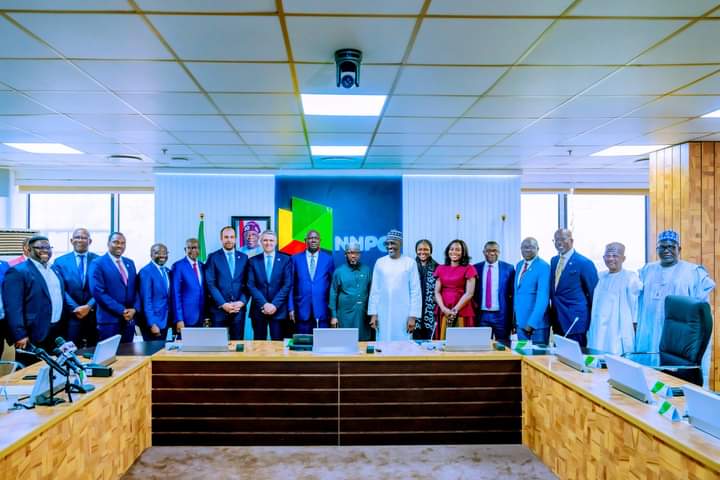
In a major step towards boosting Nigeria’s oil and gas production, the NNPC-TotalEnergies JV has officially announced a 550 million USD Final Investment Decision (FID) on the Ubeta Field Development Project.

The milestone is in line with President Bola Ahmed Tinubu’s Presidential Executive Order on Oil & Gas Reforms aimed largely at improving the investment climate and positioning Nigeria as the preferred investment destination for the Oil & Gas sector in Africa.

The Ubeta field discovered in 1964, North-West of Port Harcourt in the eastern part of the Niger Delta will, once on stream, produce about 350MMScf/day of gas and 10,000 BBLS/day of associated liquids, tapping into the vast gas reserves and contributing towards securing gas supply to Nigeria Liquefied Natural Gas (NLNG) Limited.

At the well-attended signing ceremony held at the NNPC Towers, the Group Chief Executive Officer, NNPC Limited, Mallam Mele Kyari, while appreciating the support from stakeholders, highlighted the continuous support of President Bola Tinubu’s administration in facilitating a conducive operational environment as a major enabler in achieving this success.

“We appreciate Mr. President for supporting us with the appropriate fiscal environment. The Presidential Executive Order is instrumental to us getting to this significant milestone, and we are now seeing the impact of the policy,” Kyari added.

In his remarks, the Senior Vice President Africa, Exploration & Production, TotalEnergies, Mike Sangster, said “Ubeta is the latest in a series of projects developed by TotalEnergies in Nigeria, most recently Ikike and Akpo West. I am pleased that we can launch this new gas project which has been made possible by the Government’s recent incentives for non-associated gas developments. Ubeta fits perfectly with our strategy of developing low-cost and low emission projects and will contribute to the Nigerian economy through higher NLNG exports”.

Earlier in his remarks, the Minister of State for Petroleum Resources (Oil), Sen. Heineken Lokpobiri said President Bola Ahmed Tinubu has significantly rekindled investor confidence in the Oil and Gas Industry, assuring Nigerians that more investments are on the way.

Also speaking, the Minister of State for Petroleum Resources (Gas), Rt. Hon. Ekperikpe Ekpo said the project is a testament to the effectiveness of Government’s policies aimed at creating a conducive environment for investment in the gas sector.

Located in OML58, the Ubeta gas condensate field will be developed with a new 6-well cluster connected to the existing Obite facilities through an 11km buried pipeline. Production start-up is expected in 2027, with a plateau of 300 million cubic feet per day (about 70,000barrels of oil equivalent per day including condensates). Gas from Ubeta will be supplied to NLNG, a liquefaction plant located in Bonny Island with an on-going capacity expansion from 22 to 30 Mtpa, in which NNPC Limited holds a 49% interest.

Ubeta is a low-emission and low-cost development, leveraging on OML58 existing gas processing facilities. The carbon intensity of the project will be further reduced through a 5 MW solar plant currently under construction at the Obite site and the electrification of the drilling rig. TotalEnergies is working closely with NNPC Limited to enhance local content, with more than 90% of manhours which will be worked locally.

The Ubeta FID justifies the effort invested by NNPC Limited, with unyielding Executive support, into tackling the underlying reasons that have plagued the attractiveness of the Nigerian oil and gas industry to foreign investors in recent years.

The Ubeta project has a robust Nigerian Content plan and is poised to stimulate economic activities, create job opportunities, and create significant value for stakeholders.


The Nigerian transport sector is set to receive a significant boost with the opening of a new tricycle assembly plant in Lagos by renowned entrepreneur Obinna Iyiegbu, popularly known as Obi Cubana. This major investment has sparked discussions about the decision to establish the plant in Lagos rather than Iyiegbu’s hometown.

Responding to the queries on his Facebook page, Obi Cubana emphasized the strategic reasoning behind his choice. “Since the news of the tricycle assembling plant broke, many have asked, ‘Why not in the Eastern part of the country?’ Let me tell you, young people – business decisions aren’t driven by emotions, but by strategy and what works,” he stated.

Iyiegbu further explained that the decision to set up the plant in Ikorodu, Lagos, was based on its potential for success and job creation. He hinted at possible future expansions, contingent on the plant’s performance. “If setting up the plant in Ikorodu, Lagos will make it thrive and create jobs, then why not? Maybe with time, the business can expand to other locations, based on proven success and consolidation.”

Urging young entrepreneurs to prioritize informed, strategic decisions over ethnic considerations and public opinion, Iyiegbu added, “Don’t let ethnicity or the fear of what people will say dictate your business decisions. Make informed, strategic choices with the big picture in mind. Remember, when your business fails, opinions won’t save it.”

The establishment of the tricycle assembly plant in Lagos is expected to significantly impact the local economy, creating job opportunities and contributing to the growth of the Nigerian transport sector.


Anthony Emeka Nwosu

Wragby Solutions, a leading indigenous ICT firm based in Lagos, made a significant impact at the recently concluded GITEX Africa, one of the largest technology expos held last month. This participation underscored Wragby’s pivotal role in the Nigerian IT ecosystem and highlighted its evolution into an international player in ICT deployment, collaboration, and partnership.

On the closing day of GITEX, Wragby Solutions expressed their gratitude to attendees. “It’s Day 3 and the finale of GITEX Africa Morocco! We want to extend our heartfelt thanks to everyone who has visited our booth so far. Your enthusiasm for innovation inspires us to keep developing revolutionary solutions,” the company stated.

They further encouraged visitors to explore their cutting-edge technologies, saying, “There is still time to experience the future firsthand! Explore our state-of-the-art technologies designed to streamline operations, enhance efficiency, and propel your business toward success.”

Wragby Solutions was strategically located at Pavilion Hall 4, Booth 4B-25, making it a central hub for attendees interested in innovative ICT solutions. The company invited visitors to maximize their GITEX Africa experience by stopping by their booth.

For more information on how Wragby Solutions can help drive your business forward with the right technology solutions,).

#Microsoft #MicrosoftPartner #Technology #Events2024


Vertiv (NYSE: VRT), a global provider of critical digital infrastructure and continuity solutions, and PEM fuel cell market leader, Ballard Power Systems (NASDAQ: BLDP; TSX: BLDP), have entered into a strategic technology partnership with a focus on backup power applications for data centres and critical infrastructures, scalable from 200kW to multiple MWs.


Collaborating to demonstrate the technical feasibility and customer benefits of hydrogen-powered fuel cell solutions, Vertiv has integrated Ballard fuel cell power modules with Vertiv™ Liebert® EXL S1 uninterruptible power system (UPS) within a successfully demonstrated proof of concept (POC) at Vertiv’s facility in Ohio.


“As the soaring increase in data usage is driving up power demand and expansion of data centre capacity globally, the need to effectively manage electricity consumption and the carbon footprint of this energy-intensive sector is critical to achieve net-zero targets,” said Nicolas Pocard, vice president marketing and strategic partnerships, Ballard. “Ballard and Vertiv’s strategic partnership enables both parties to leverage our respective strengths to offer cost-effective, zero Green House Gas (GHG) emission fuel cell back-up power solutions that are scalable to meet data centres growing power demands.”


Based on industry-ready components, Vertiv’s demonstrated Power Module H2 solution at their Delaware, Ohio facility integrates two Ballard PowerGen 200kW fuel cell cabinets, which power the fully functional decarbonised backup system. The solution encompasses a complete cooling sub-system, power conditioning equipment and hydrogen storage infrastructure integrated with Vertiv™ HPL Lithium-Ion batteries, Liebert® EXL S1 UPS system and the Vertiv™ DynaFlex Energy Management Controller. The Power Module H2 solution is part of the 1 MW Vertiv Customer Experience Center microgrid solution including a 1MW AC Solar PV array and Vertiv™ DynaFlex Battery Energy Storage System (BESS).


Initial validations and tests have demonstrated successful operation of zero GHG emission backup power integrated into an uninterruptible power architecture.


“The unprecedented adoption of artificial intelligence (AI) and high-performance computing (HPC) are driving a need for eco-friendly power solutions for our customers, with a focus on zero-carbon and low-carbon energy alternatives,” said Viktor Petik, vice president of Vertiv infrastructure solutions. “The successful fuel cell proof-of-concept with Ballard provides a viable option for customers strengthening their data centre sustainability strategy, and those moving to a future-ready Bring Your Own Power (BYOP) model.”


Vertiv’s Power Module H2 is an alternative for meeting escalating energy demands of future data centres and zero GHG emission backup power generation. The prefabricated and factory tested system provides a rapidly deployable and scalable power infrastructure for new data centres as well as the capability of retrofitting existing sites without redesign of the electrical infrastructure.


With a geographic focus on North America, Europe and selected opportunities in other geographies, the Vertiv Power Module H2 solution offers several advantages for critical infrastructure applications:

  • Single-supplied complex power infrastructure
  • Zero GHG emission and low noise backup power generation
  • Rapid Dynamic power response
  • Low maintenance compared to diesel generator backup solutions
  • Extended backup (days) – limited only by fuel storage capacity
  • Optimised footprint for MW scale applications
  • Scalable in multi-MW UPS and Fuel Cell applications

The Vertiv Power Module H2 solution broadens the Vertiv power portfolio and is an innovative contribution to the recently revealed the “One Vertiv, One World” plan, part of Vertiv’s responsible business strategy to enable a more sustainable future.


Vertiv and Ballard’s teams will demonstrate and discuss fuel cell powered standby power applications for data centres and critical infrastructures at Smarter E Europe 2024, Europe’s largest alliance of exhibitions for the energy industry, including Intersolar Europe, ees Europe, Power2Drive Europe, and EM-Power Europe. The companies will be at exhibition area B2, Booth B2 436, from 19-21 June.


The National Agency for Science and Engineering Infrastructure (NASENI) is emerging as a crucial driver of Nigeria’s industrial economy, aligning with global models seen in countries like China and Japan. These nations, once less industrialized, invested heavily in research and development (R&D), innovation, and technology, transforming into global economic giants.

Industrial growth and manufacturing are essential for Nigeria’s development, addressing issues of poverty, unemployment, and insecurity. An industrial economy relies on the use of machines and technology across various sectors, producing goods and services for the market. Effective science, technology, and innovation (STI) infrastructures are fundamental to this transformation.

Historically, Japan and China, despite missing out on the initial industrial revolutions in the 17th to 19th centuries, have rapidly industrialized by prioritizing substantial investments in R&D and innovation. Similarly, the Asian Tigers—Malaysia, Singapore, Thailand, and others—achieved economic success by recognizing the importance of science and innovation early on.

For Nigeria, prioritizing engineering, science, technology, and innovation is critical for sustainable economic growth. Nations like Japan, the USA, China, and Germany have become economic powerhouses by dedicating 5-6% of their GDP to STI development. NASENI, established in 1992, was designed to build a dynamic science and engineering infrastructure base, fostering local machine design and manufacturing capabilities.

NASENI’s past R&D efforts have led to significant advancements in sectors such as agriculture, power, water resources, automotive industry, ICT, health, aviation, education, transportation, and manufacturing. However, the agency faced challenges due to low commercialization and lack of local patronage.

Under the leadership of Mr. Khalil Suleiman Halilu, a techpreneur and businessman, NASENI is now focused on full commercialization of its R&D outputs. This shift aims to make NASENI’s products and technologies widely available, boosting the economy. Halilu emphasizes collaboration, creation, and commercialization, partnering with national and international communities to enhance product development and market reach.

Recently, NASENI showcased several technological innovations, including solar irrigation systems, electric vehicles, home solar systems, animal feed milling machines, laptops, smartphones, solar streetlamps, and lithium batteries. These initiatives aim to create jobs and reduce import dependency.

In addition to promoting digital technologies and additive manufacturing, NASENI is developing an electronic voting solution to reduce electoral malpractices and other projects like smart prepaid meters and unmanned aerial vehicles (UAVs) to drive economic development.

Looking ahead, NASENI plans to transition from “Semi-Knocked Down” (SKD) to “Completely Knocked Down” (CKD) assembly, increasing the use of locally-sourced materials and ensuring full transfer of intellectual property and technology for domestic adaptation.

Halilu is committed to keeping the public informed about NASENI’s progress, emphasizing the agency’s role in scaling up local content sourcing and strengthening domestic production capacities. NASENI aims to lead Nigeria’s economic transformation through the development of indigenous solutions, supporting infrastructure, and driving technological advancement.

As Nigeria continues its journey toward industrialization, the National Agency for Science and Engineering Infrastructure remains at the forefront, advocating for continuous investment in science, technology, and innovations to secure a prosperous future.

Mr. Olusegun S. Ayeoyenikan, Director of Information at NASENI Headquarters, Abuja, underscores the agency’s dedication to transforming Nigeria’s economic landscape through strategic STI investments.


Ugi Augustine Ugi, the esteemed Chief Executive Officer of Nugitech and former Co-Founder of Tailorgang, took a moment today to celebrate his wife, Nneotta Sally Ugi, with a heartfelt birthday message. In his touching tribute, Ugi reflected on their 15-year journey together and expressed deep admiration for his wife’s unique qualities and unwavering commitment to their family.

“Happy Birthday to my wife! As we celebrate today, I am reminded of the incredible journey we’ve shared over the past 15 years. You are not just my partner but also my best friend, and your unique qualities make you truly exceptional,” Ugi shared.May be an image of 2 people and grass

Ugi, who also serves as the Group Chair at Nugi Group, highlighted his wife’s strength, kindness, and dedication, describing them as “rare gems in today’s world.” He emphasized his daily gratitude for having Nneotta Sally by his side, acknowledging the significant role she plays in their family.

In his message, Ugi also focused on their twin boys, Adrian and Augustine. He praised Nneotta Sally’s intentional and loving approach to parenting, expressing confidence that her dedication would shape their sons into remarkable young men. “Your love and dedication as their mother will shape them into remarkable young men, and I have no doubt they will inherit your wonderful qualities,” he said.

Ugi concluded his tribute with a reaffirmation of his support and love for his wife, promising to “move mountains” for her. “Know that I am here, ready to move mountains for you, because you are not just the love of my life but also the mother of our two dragons. Here’s to many more birthdays filled with love, happiness, and cherished moments together.”

The message reflects the deep bond and mutual respect between Ugi and Nneotta Sally, highlighting not only their personal relationship but also the strong family values they uphold. As a prominent figure in the tech industry, Ugi’s words resonate with many, showcasing the importance of balancing professional achievements with personal commitments and family life.


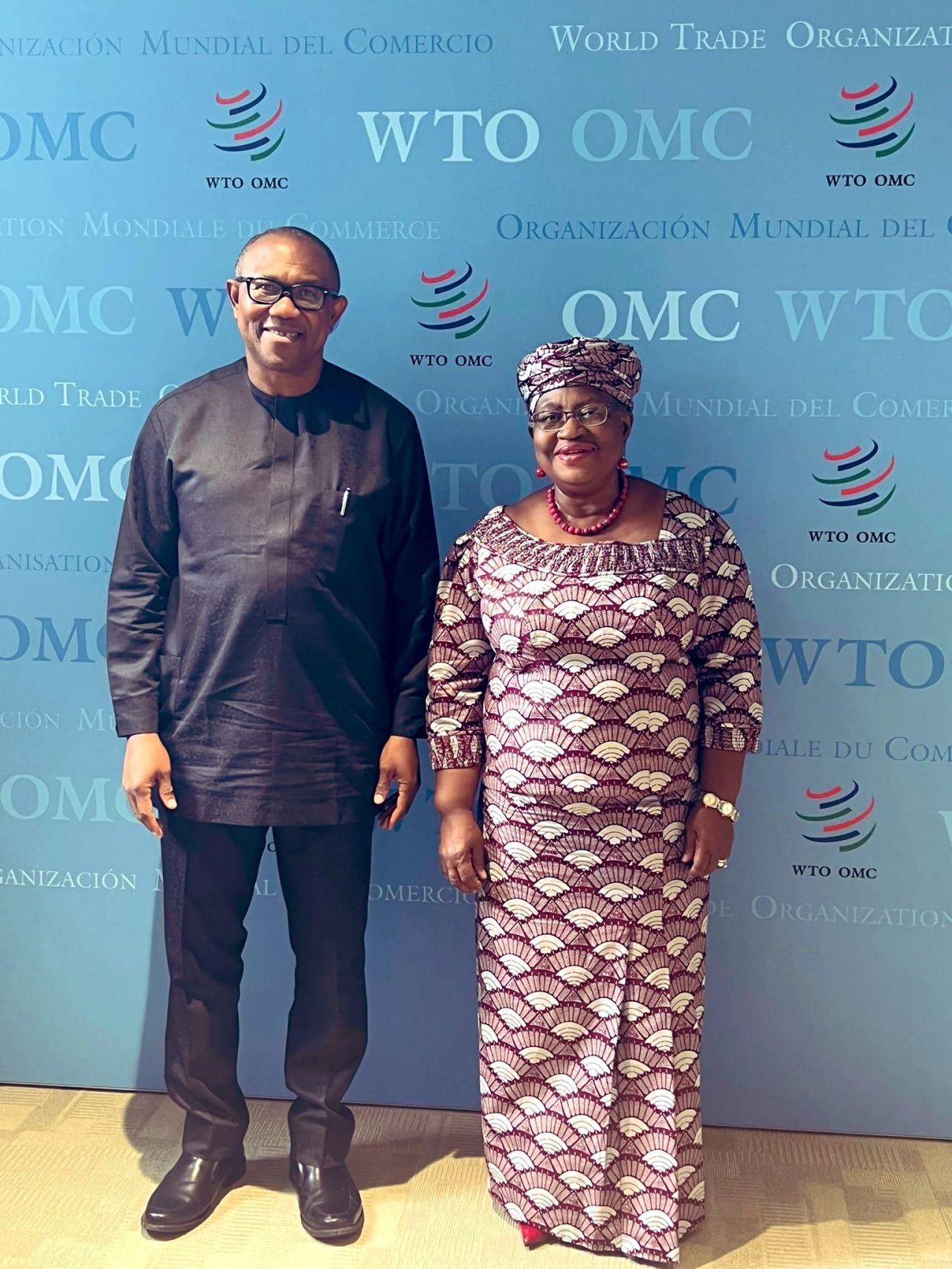
Renowned public figure Peter Obi has publicly extended his heartfelt congratulations to Dr. Mrs. Ngozi Okonjo-Iweala, Director General of the World Trade Organization, on the occasion of her 70th birthday.

“I would like to celebrate my very dear elder sister and Director General of the World Trade Organization, Dr. Mrs. Ngozi Okonjo-Iweala, as she marks her 70th birthday today,” stated Obi.

Peter Obi lauded Dr. Okonjo-Iweala for her substantial contributions both to Nigeria and the international community. He highlighted her tenure as Nigeria’s finance minister, where she played a pivotal role in enhancing the nation’s financial stability and promoting fiscal discipline and transparency through her robust anti-corruption initiatives.

On the global stage, Obi emphasized Dr. Okonjo-Iweala’s groundbreaking achievements as the first woman and first African to lead the WTO. Her tenure is marked by widespread trust and confidence from governments worldwide, attributed to her honesty, integrity, and unwavering dedication to advancing humanity’s cause.

“Today, she stands as a symbol of success and a role model to many youths, inspiring them to greater achievements while contributing to the nation,” Obi remarked. “May God grant her many more healthy and fruitful years as she continues to contribute to a better nation and humanity.”


Despite the global move towards digital transacting, 1.4 billion people worldwide remain unbanked. It’s these individuals that payment service providers like Spenda are empowering through the use of innovative payment solutions that address the financial inclusion gap.

In its latest move to do so, Spenda has integrated Scan to Pay to launch Spenda Scan to Pay. Spenda Scan to Pay aims to address issues of affordability and accessibility, leveraging the largest QR ecosystem in South Africa, in its unique offering. This will allow Spenda, an emerging market player, to benefit from Scan to Pay’s expertise and innovation in digital payments – specifically, its voucher solutions.

Affordability meets accessibility

Spenda’s customers can now purchase vouchers from its platform and use scan-to-pay technology for secure and instant transactions at over six hundred thousand merchant locations that include Shoprite, Checkers, Pick ‘n Pay, Engen, Shell, Takealot, Snapscan, Makro and many others.

Merishka Harilall, Spenda CEO, says integrating Scan to Pay’s technology into its offering has unlocked greater accessibility, flexibility, and convenience for its customers. “Spenda has been able to offer the market incredible value through affordability with its its voucher programmes with Spenda Scan to Pay. This product will not only offer our users real value and an effective mobile payment solution, but it’s also proven to be safe and secure.”

To take advantage of the voucher feature, in the near future users will simply need to log into the Spenda platform, select a voucher amount, and enter the recipient’s cellphone number. Payment options will include EFT, app-linked cards, deposits at Pick n Pay, or Nedbank ATMs. Once the recipient has also registered with Spenda, they can then use the voucher for a wide range of transactions on the Spenda mobile app, from till purchases to bill payments, and online shopping to buying airtime – securely and instantly.

With the introduction of Scan to Pay’s technology into Spenda’s suite, Spenda now offers a comprehensive range of services tailored to meet the diverse needs of its users, aiming to eradicate poverty and hunger through its first market offering. Spenda runs a seamless and secure ecosystem that adapts to the evolving demands of modern life in emerging markets.

Scan to Pay is the largest QR ecosystem in South Africa and is tried and tested by consumers. It is the QR payment platform of choice of more than 600 000 merchant locations, 14 banks and fintech companies and 94 payment service providers as well as six acquirers. And it’s not only convenient but also safe and secure – users can rest assured knowing that their details are safely processed and are not revealed to the person or business processing the voucher at the time of payment.

“Spenda’s growth plans include exciting new market offerings that aim to benefit both customers and businesses by helping to bridge the financial inclusion gap in South Africa and further afield. Our solution enables individuals without traditional bank accounts to participate in digital transactions through innovative and tailored solutions to the underbanked,” says Harilall.

Addressing the cost-of-living crisis

Paul Selibas, Division President at Scan to Pay, says Spenda’s vision aligns with that of Scan to Pay, making this a perfect collaboration. “Spenda’s broader strategic goals include digital inclusion, youth empowerment, and poverty eradication. Scan to Pay aligns with these objectives by providing affordable access to essential goods and services, fostering greater economic participation and empowerment.”

With 19 million underbanked individuals in South Africa, and over one million micro, small, and medium-sized enterprises still transacting exclusively in cash, there’s a lot of work to be done to include the entire population in the digital economy. “It’s clear that making digital transacting accessible to the underbanked and the informal segment is crucial. Not only will it improve financial access and help smaller merchants grow their business, but it will bolster the entire South African economy,” says Selibas.

Spenda aims to help do so through solutions like Scan to Pay, and more to come, says Harilall. “Spenda has built its South African offering as a base and has plans to soon expand its innovative solutions to Nairobi, Kenya, and eventually to the entirety of Africa.

“We want to help confront South Africa’s cost-of-living crisis by empowering individuals and communities through innovative financial solutions and extend these solutions to the broader African market too. We envision a world where financial services are accessible and tailored to meet the diverse needs of every individual, and, with this goal in mind, we’re poised to revolutionise the way individuals access, manage, and utilise financial resources.”

Discover the Spenda Scan to Pay app in the Apple & Google Play stores.