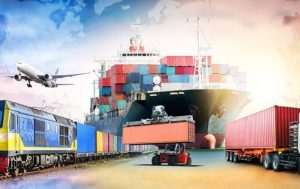

Importation plays a critical role in global trade, allowing countries to access goods and services that they do not produce domestically. However, an overreliance on imports can have devastating effects on a country’s economy and its currency. Nigeria, with its heavy reliance on imported goods, offers a poignant example of how importation can undermine economic stability and devalue the national currency, the Naira.

1. Trade Imbalance and Current Account Deficit

A persistent trade imbalance, where a country imports more than it exports, leads to a current account deficit. For Nigeria, this deficit has been a chronic issue. The nation’s reliance on imports for essential goods such as food, machinery, and pharmaceuticals has not been matched by equivalent exports. This imbalance creates a situation where more foreign currency is leaving the country to pay for imports than is entering through exports. Consequently, there is increased pressure on the Naira as demand for foreign currencies, particularly the US dollar, rises.

2. Depletion of Foreign Reserves

To stabilize its currency, Nigeria relies on its foreign reserves. These reserves are critical for maintaining the value of the Naira and for paying for imports. However, when importation outstrips exports, the central bank must dip into these reserves to meet the foreign currency demand. Over time, this depletion weakens the country’s ability to defend its currency, leading to devaluation. The Central Bank of Nigeria (CBN) has frequently had to intervene in the foreign exchange market to support the Naira, but such measures are not sustainable in the long term if the underlying trade imbalance persists.

3. Inflationary Pressures

Heavy importation can also lead to inflation, which further erodes the value of the Naira. When a country depends heavily on imports, any devaluation of the national currency makes imports more expensive. These higher costs are often passed on to consumers in the form of higher prices for goods and services. In Nigeria, this phenomenon has been evident in the rising cost of living, where basic commodities and essential items have seen significant price increases due to the weak Naira.

4. Impact on Local Industries

An economy flooded with imported goods can stifle local industries. In Nigeria, local manufacturers struggle to compete with cheaper imported products. This competition can lead to factory closures, job losses, and a decline in domestic production capacity. As local industries shrink, the economy becomes even more dependent on imports, creating a vicious cycle that further weakens the currency.

5. Loss of Investor Confidence

Frequent devaluation of the Naira and economic instability can erode investor confidence. Foreign investors are wary of putting their money into economies where the currency is volatile and prone to devaluation. This loss of confidence can lead to capital flight, where investors pull out their investments, further exacerbating the currency’s decline. For Nigeria, attracting and retaining foreign investment is crucial for economic growth and development, but persistent currency instability poses a significant barrier.

Mitigating the Impact

To address these issues, Nigeria must adopt policies that reduce its dependence on imports. Encouraging local production through incentives and support for industries can help build a more self-sufficient economy. Diversifying the export base beyond oil, which has traditionally been Nigeria’s primary export, can also create a more balanced trade scenario. Additionally, implementing policies that promote sustainable economic growth and stability will help in maintaining a stronger Naira.

Conclusion

While importation is necessary for any economy, an overreliance on imported goods can have severe repercussions. For Nigeria, the impact of excessive importation is evident in the weakened Naira, rising inflation, and a struggling local industry. Addressing these challenges requires a concerted effort to diversify the economy, boost local production, and create a more balanced trade environment. Only through such measures can Nigeria hope to stabilize its currency and build a more resilient economy.

TONY EMEKA NWOSU



Importation plays a critical role in global trade, allowing countries to access goods and services that they do not produce domestically. However, an overreliance on imports can have devastating effects on a country’s economy and its currency. Nigeria, with its heavy reliance on imported goods, offers a poignant example of how importation can undermine economic stability and devalue the national currency, the Naira.

1. Trade Imbalance and Current Account Deficit

A persistent trade imbalance, where a country imports more than it exports, leads to a current account deficit. For Nigeria, this deficit has been a chronic issue. The nation’s reliance on imports for essential goods such as food, machinery, and pharmaceuticals has not been matched by equivalent exports. This imbalance creates a situation where more foreign currency is leaving the country to pay for imports than is entering through exports. Consequently, there is increased pressure on the Naira as demand for foreign currencies, particularly the US dollar, rises.

2. Depletion of Foreign Reserves

To stabilize its currency, Nigeria relies on its foreign reserves. These reserves are critical for maintaining the value of the Naira and for paying for imports. However, when importation outstrips exports, the central bank must dip into these reserves to meet the foreign currency demand. Over time, this depletion weakens the country’s ability to defend its currency, leading to devaluation. The Central Bank of Nigeria (CBN) has frequently had to intervene in the foreign exchange market to support the Naira, but such measures are not sustainable in the long term if the underlying trade imbalance persists.

3. Inflationary Pressures

Heavy importation can also lead to inflation, which further erodes the value of the Naira. When a country depends heavily on imports, any devaluation of the national currency makes imports more expensive. These higher costs are often passed on to consumers in the form of higher prices for goods and services. In Nigeria, this phenomenon has been evident in the rising cost of living, where basic commodities and essential items have seen significant price increases due to the weak Naira.

4. Impact on Local Industries

An economy flooded with imported goods can stifle local industries. In Nigeria, local manufacturers struggle to compete with cheaper imported products. This competition can lead to factory closures, job losses, and a decline in domestic production capacity. As local industries shrink, the economy becomes even more dependent on imports, creating a vicious cycle that further weakens the currency.

5. Loss of Investor Confidence

Frequent devaluation of the Naira and economic instability can erode investor confidence. Foreign investors are wary of putting their money into economies where the currency is volatile and prone to devaluation. This loss of confidence can lead to capital flight, where investors pull out their investments, further exacerbating the currency’s decline. For Nigeria, attracting and retaining foreign investment is crucial for economic growth and development, but persistent currency instability poses a significant barrier.

Mitigating the Impact

To address these issues, Nigeria must adopt policies that reduce its dependence on imports. Encouraging local production through incentives and support for industries can help build a more self-sufficient economy. Diversifying the export base beyond oil, which has traditionally been Nigeria’s primary export, can also create a more balanced trade scenario. Additionally, implementing policies that promote sustainable economic growth and stability will help in maintaining a stronger Naira.

Conclusion

While importation is necessary for any economy, an overreliance on imported goods can have severe repercussions. For Nigeria, the impact of excessive importation is evident in the weakened Naira, rising inflation, and a struggling local industry. Addressing these challenges requires a concerted effort to diversify the economy, boost local production, and create a more balanced trade environment. Only through such measures can Nigeria hope to stabilize its currency and build a more resilient economy.


Anthony Emeka Nwosu


Redington, the leading technology aggregator and innovation powerhouse across emerging markets, today announced a strategic distribution partnership with Vertiv, a global provider of critical digital infrastructure and continuity solutions. This collaboration aims to empower channel partners across Africa to leverage the transformative potential of Vertiv’s technology and expand its reseller network.

The partnership leverages Redington’s established presence and expertise in emerging markets, particularly in data centre transformation and artificial intelligence (AI), alongside Vertiv’s industry-leading[1] power and cooling technology, resources, and over 50 years of experience in critical infrastructure services. This powerful combination will unlock new opportunities for Vertiv to extend its reach within the regional channel market. The distributor’s comprehensive reach across Africa, coupled with its strong in-house services team, will provide additional value to Vertiv’s local channel partners and end users.

The partnership encompasses Vertiv’s entire Integrated Solutions portfolio and IT channel product stack, spanning Africa. This comprehensive offering enables Redington to deliver a complete suite of Vertiv’s cutting-edge solutions to its extensive network of channel partners and end users.

“As Vertiv continues to expand its footprint across Africa, this strategic partnership with Redington marks a significant milestone in our journey,” said Wojtek Piorko, Managing Director for Africa at Vertiv. “Africa is a critical region for Vertiv as a business, and we look forward to supporting local customers in meeting their efficiency, scalability and sustainability goals into the future, together with Redington.”

“At Redington, we’re constantly seeking strategic partnerships that fuel innovation and drive growth across Africa,” said Dharshana Kosgalage, Executive Vice President, Technology Solutions Group, Redington Middle East and Africa. “Our collaboration with Vertiv exemplifies this commitment. Vertiv’s industry-leading technology perfectly complements our extensive reach, creating a powerful value proposition for businesses across the continent. We’re confident this alliance will catalyse Africa’s digital revolution.”

The distributor will hold specialised training and partner empowerment sessions to enable its channel network to effectively deliver Vertiv’s portfolio, as well as carefully managing inventory to serve the market without delays and designing solutions to meet customers’ specific requirements alongside partners.


Dr. Vincent Olatunji, the National Commissioner and CEO of the Nigeria Data Protection Commission, has been nominated for the prestigious Giovanni Buttarelli Award 2024. This esteemed accolade, presented by the Global Privacy Assembly, acknowledges individuals who exhibit outstanding leadership and make exceptional contributions to fostering international collaboration in the realm of data privacy and protection.

Dr. Olatunji’s nomination underscores his steadfast dedication to driving innovation, expanding global partnerships, and advocating for a collaborative approach within the data privacy and protection ecosystem. Under his visionary leadership, Nigeria’s data privacy landscape has experienced significant growth, marked by key milestones such as advancing the understanding of data protection across public and private sectors, securing judicial recognition of the adequacy principle in cross-border data transfers, and playing pivotal roles in regional and global data privacy initiatives.

The Giovanni Buttarelli Award celebrates leaders who have demonstrated exceptional leadership and promoted collaboration on regional or international levels in the field of data privacy and protection. Dr. Vincent Olatunji’s nomination is a testament to his profound impact and leadership in advancing data privacy standards both nationally and globally.


The Director General of the National Office for Technology Acquisition and Promotion (NOTAP), Dr. Obiageli Amadiobi, has announced that companies failing to submit their technology transfer agreements for evaluation and registration will soon face severe penalties and prosecution. Dr. Amadiobi revealed this during a recent familiarization visit to Information and Communication Technology (ICT) companies in Lagos, where she led the top management staff of NOTAP.

Dr. Amadiobi emphasized that NOTAP, established to regulate the inflow of foreign technology and promote locally motivated technologies, is committed to ensuring Nigerian companies receive the best contractual terms in acquiring foreign technologies. She highlighted that some companies are evading registration by combining hardware and software agreements, thus bypassing regulatory oversight and shortchanging the system.

The Director General underscored NOTAP’s dedication to collaborating with compliant companies while enforcing strict penalties on those that do not adhere to its rules. “Records indicate that many companies in Nigeria operate on imported technologies worth millions of dollars without mandatory NOTAP registration, undermining the Nigerian economy,” she stated. She reiterated the legal requirement for NOTAP’s involvement in technology negotiations to secure favorable terms for Nigerian entrepreneurs.

Dr. Amadiobi warned that the current administration’s “renewed hope” mantra means no company will be allowed to avoid registering their technology transfer agreements with NOTAP. She pointed out that some firms misleadingly lump foreign hardware with software to claim non-registration, a practice that harms the nation and must cease immediately.

In his welcome address, Mr. Adewale Adeyipo, Managing Director and CEO of Computer Warehouse Group (CWG), praised the new DG’s energy and enthusiasm. He expressed CWG’s willingness to partner with NOT


Anthony Emeka Nwosu

José Mourinho, one of the most renowned football coaches in the world, has shared his profound thoughts on the unpredictability and challenges of penalty shootouts. Despite his illustrious career, Mourinho has experienced significant setbacks in matches decided by penalties.

“I am a coach with a specialty in losing matches that go to penalty shootouts,” Mourinho remarked. “I have lost the Champions League semi-finals twice on penalties and also lost the UEFA Super Cup twice on penalties. I’ve only won once on penalties. I have tried in every possible way to win them but ended up with the conclusion that it doesn’t matter!”

Mourinho’s approach to penalty shootouts has been meticulous and data-driven. He trained his players daily for three months, relying heavily on statistics to determine which players were most effective in penalty shootouts and which side of the goal they had the best success rate. He also studied opponents’ penalty-taking habits to guide his goalkeepers on where to dive. Despite this rigorous preparation, results did not always align with expectations.

“We trained differently and I tried to think outside the box, looking for the players’ psychological comfort so they could shoot in the direction they saw fit without any psychological pressure. I tried this method with wingers and all midfielders,” he explained.

Mourinho recounted specific matches where his teams fell short despite their extensive preparation. With Real Madrid, he lost the Champions League semi-final where even star players like Cristiano Ronaldo, Kaká, and Sergio Ramos missed their penalties. Similarly, during his tenure at Chelsea, his team lost the Champions League semi-final against Liverpool after months of penalty shootout training.

In one instance, Mourinho brought on a player, Jeremy, just five minutes before a penalty shootout due to his impressive statistics. Despite the calculated move, Jeremy missed his shot. Conversely, the only time Mourinho’s team triumphed in a penalty shootout was in the Italian Super Cup against Roma, where the legendary Francesco Totti, who had scored 500 penalties in his career, missed a crucial shot.

Reflecting on these experiences, Mourinho concluded, “Thus, I realized that there’s nothing I can do, and there’s no way to prepare for penalty shootouts in my opinion!”

Mourinho’s candid reflections underscore the inherent unpredictability of penalty shootouts in football, suggesting that sometimes, despite meticulous preparation and strategy, the outcome remains beyond control.


In response to the soaring food prices across Nigeria, President Bola Tinubu’s administration has introduced a series of initiatives aimed at stabilizing the market and ensuring food security.

The administration has announced a 150-day duty-free import window for food commodities. This window will see the suspension of duties, tariffs, and taxes on the importation of select food commodities, including maize, husked brown rice, wheat, and cowpea, through land and sea borders. Imported food commodities will be subjected to a recommended retail price to ensure affordability, while maintaining strict safety standards for all imported items.

In addition to private sector importation, the Federal Government will import 250,000 metric tons of wheat and 250,000 metric tons of maize. These semi-processed food commodities will be distributed to small-scale processors and millers nationwide.

The government will also engage relevant stakeholders to set a guaranteed minimum price and purchase surplus food commodities to replenish the National Strategic Food Reserve. This will help stabilize prices and ensure a steady supply of essential food items.

To enhance agricultural production for the 2024/2025 farming cycle, the administration will provide continuous support to smallholder farmers during the current wet season through existing government initiatives. The government will also strengthen and accelerate dry season farming across the country. An aggressive mechanization effort will be launched to reduce production costs and boost productivity. Additionally, the administration will collaborate with sub-national entities to identify and cultivate irrigable lands and will work with the Federal Ministry of Water Resources and Sanitation to rehabilitate and maintain irrigation facilities.

A strategic engagement for youth and women will promote the immediate greenhouse cultivation of horticultural crops such as tomatoes and peppers, aiming to increase production volume, stabilize prices, and address food shortages. The Federal Government will also fast-track ongoing engagements with the Nigerian Military to rapidly cultivate arable lands under the Defence Farms Scheme, while encouraging other para-military establishments to utilize available arable lands for cultivation.

The Renewed Hope National Livestock Transformation Implementation Committee will be inaugurated on July 9, 2024. This committee will develop and implement policies that prioritize livestock development, aligning with the National Livestock Transformation Plan initiated by the previous administration.

To enhance nutrition security, the administration will promote the production of fortified food commodities and support the scale-up of the Home Garden Initiative by the Office of The First Lady of Nigeria.

These comprehensive measures will be implemented over the next 180 days, with information publicly available to ensure the participation of all relevant stakeholders across the country.

Credit: Nurudeen Adeyemi, Independent Sales Contractor (Nigeria)


Hilda Baci, the popular chef and Guinness World Record holder, continues to face criticism over her social media posts, particularly those showcasing her in tight or revealing clothing. In an exclusive interview with The Cable Lifestyle, Baci shared her thoughts on the backlash and explained why she will not apologize for her fashion choices.

HILDA BACI: “I do not have to look a certain way to be good at what I do—to be smart, to have something upstairs, something to offer, to be successful. That is the perception. And that is why a lot of women do not feel like they can express themselves through fashion and still be capable of excelling in the corporate world, the business industry, or the food industry.

One of the reasons I do this is to let people know that you do not necessarily have to conform to whatever limitations or societal expectations have been set for you.

You can be all these things and so much more. Here I am, a 27-year-old, who loves fashion and likes to look good. Thank God, I am very beautiful as well. I own those things. I am not going to apologize for that. Because, in truth, all these elements are what make me who I am right now.

The fact that I am all these things does not reduce what I am capable of offering. It does not take away from the fact that I actually stood on my feet for 100 hours. It does not take away from the fact that an amazing team of people put something incredible together. It does not reduce my qualifications or my values.

I am still the one putting in the work. I still like to live my life as well, because it is who I am. And I am not going to apologize for it.”

Baci’s words underscore the importance of self-expression and breaking free from societal norms. Her stance highlights that personal style and professional capability are not mutually exclusive and that women can embrace their individuality while excelling in their careers.

Jide Okonjo


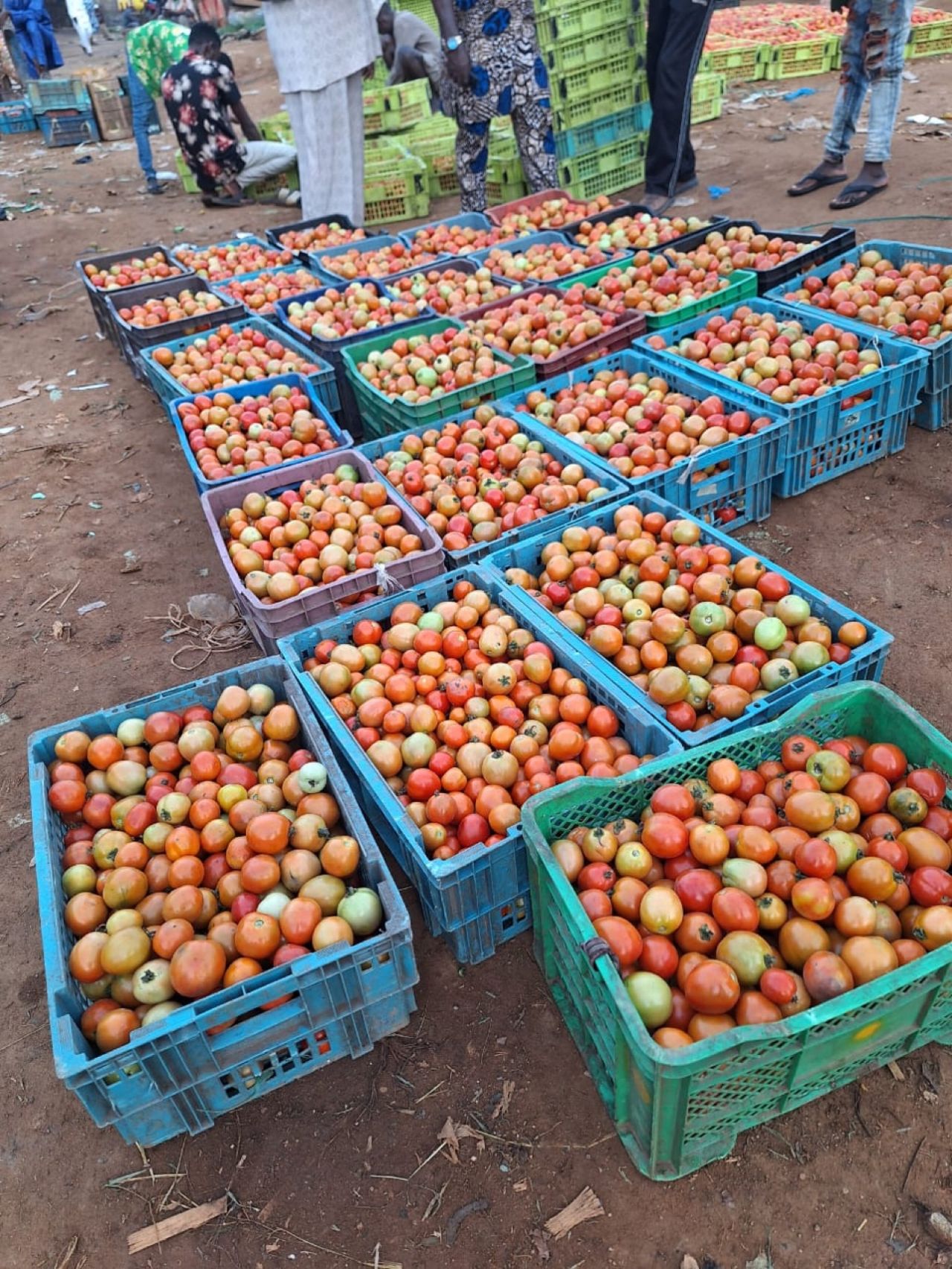
In a recent conversation, Senator Babafemi Ojudu recounted an inspiring story shared by a dear friend from Ondo State. After stepping away from politics two years ago, his friend embarked on a new venture by investing in acres of palm trees. Just five months ago, she expanded her farm by adding tomato plants. The results have been extraordinary. She has been consistently harvesting tomatoes worth over 1.5 million naira each day. “I have consistently harvested 40 crates daily for the past week,” she shared with the senator, expressing her gratitude for the success.

As Senator Ojudu listened to her story, he was reminded of two Yoruba words that hold special significance for him: “Se ko ni” and “Iwa le wa.” These words encapsulate the essence of the Yoruba philosophy of Omoluwabi, emphasizing the importance of hard work and virtuous living.

“Se ko ni”—work so that you can have—and “Iwa le wa”—character is beauty—are more than just words. They are a philosophy to live by, reflecting the ideals of hard work and virtuous living. These principles, according to Senator Ojudu, are essential for anyone striving to be a dignified and honorable individual.

The senator was deeply moved by his friend’s story and her achievements in farming. It resonated deeply with him, demonstrating that there is indeed life outside of politics and public service. “What public service can be higher than feeding the people?” he remarked. This story, he believes, is a remarkable testament to the enduring spirit of hard work and righteousness that should continue to thrive within Yoruba culture and throughout Nigeria.

Senator Ojudu’s reflections highlight the significance of embracing new challenges and the enduring value of the Yoruba principles of hard work and integrity. His friend’s success story is not just about farming; it is about resilience, transformation, and the power of dedication to create meaningful change.


The digital marketing landscape is rapidly evolving, with one of the most exciting trends being the increasing use of artificial intelligence (AI) and machine learning. These technologies are revolutionizing personalized marketing, allowing us to deliver more targeted and relevant content to our audiences. AI enables the analysis of vast data sets, prediction of consumer behavior, and automation of various marketing tasks, thereby enhancing both efficiency and effectiveness.

AI-powered tools such as chatbots and personalized recommendation engines are transforming customer interactions and experiences. For instance, chatbots provide instant responses to customer inquiries, improving service and engagement. Meanwhile, recommendation engines analyze user behavior and preferences to suggest products and content that align with individual interests, driving higher conversion rates.

AI also enhances ad targeting precision. By analyzing user data and behavior, AI algorithms can identify the most relevant audiences for specific ads, resulting in higher click-through rates and return on investment. This precision allows marketers to optimize their ad spend and achieve better campaign outcomes.

In content creation, AI assists in generating personalized and engaging content at scale. Tools like natural language processing (NLP) algorithms can create blog posts, social media updates, and video scripts tailored to specific audience segments. This not only saves time but also ensures that the content resonates with the target audience, fostering stronger connections and brand loyalty.

As AI adoption in digital marketing grows, businesses must stay ahead of the curve. Integrating AI-driven solutions into marketing strategies can provide a competitive edge by delivering more personalized, efficient, and effective campaigns.

How are you adapting to this trend in your business? Are you leveraging AI to enhance your marketing efforts and deliver better results?

Clara Nchekwube