The Nigerian National Petroleum Company (NNPC) Limited has announced its 2023 Audited Financial Statement (AFS), revealing a record-breaking net profit of N3.297 trillion for the financial year ending in December 2023. This marks a significant increase of over N700 billion, or 28%, compared to the N2.548 trillion profit reported in 2022.

During a world press conference held at the NNPC Towers in Abuja on Monday, the Chief Financial Officer, Mr. Umar Ajiya, emphasized that the release of the AFS underscores the company’s dedication to transparency and accountability. “Our fiscal performance reflects both strategic foresight and operational resilience. Despite inherent challenges in our operational and economic environment, we have improved the productivity and financial performance of this great company,” Ajiya stated.

He further highlighted that achieving such impressive returns underscores NNPC Ltd’s ongoing commitment to sustaining profitability while supporting national energy security goals as outlined by the Petroleum Industry Act (PIA) 2021. This commitment, he noted, also meets the expectations of the company’s shareholders.

In response to inquiries about the company’s Initial Public Offering (IPO), Ajiya assured that NNPC Ltd. will announce its IPO once the shareholders and Board reach a decision. He also addressed rumors regarding subsidy payments, clarifying that the company is solely managing the shortfall in PMS importation between itself and the Federation.May be an image of text that says "NNPC 2023 FINANCIAL PERFORMANCE Defying DefyingGravity Gravity 3,297 2,548.0 N BILLION 674.1 287.0 -1.7 -803.0 Possibility Turning Point Assurance Momentum 1977.... 2018 2019 Highest Profit since Inception 2020 2021 2022 2023 အပြိငာငငေ်ဘ်"

Speaking earlier at the press conference, NNPC Ltd. Board Chairman, Chief Pius Akinyelure, attributed the company’s exceptional performance to the reforms introduced by the PIA 2021, as well as the unwavering dedication of the Board, Management, and staff. He also announced that the company’s shareholders have approved a final dividend of N2.1 trillion, in accordance with the provisions of the PIA 2021.

Executive Vice President, Upstream, Mrs. Oritsemeyiwa Eyesan, also spoke at the briefing, highlighting the company’s progress in combating crude oil theft and pipeline vandalism. She expressed confidence that NNPC Ltd. is on track to achieve its target of producing 2 million barrels per day of crude oil by the end of 2024.

Regarding the recent fuel shortages in parts of Lagos and the Federal Capital Territory (FCT), Executive Vice President, Downstream, Mr. Dapo Segun, appealed for patience from Nigerians. He assured that the company is collaborating with relevant stakeholders to resolve the distribution, evacuation, and logistics challenges that have led to the queues.

NNPC Ltd. has been on a remarkable financial journey, transforming from a loss position of N803 billion in 2018 to reporting its first-ever profit of N287 billion in 2020. This upward trajectory continued with a profit of N674.1 billion in 2021, followed by an unprecedented N2.548 trillion profit in 2022. The N3.297 trillion profit declared for 2023 is the highest in the company’s 46-year history, marking a new era of profitability and growth for NNPC Ltd.


Tony Emeka Nwosu

 

Telecommunication stakeholders have commended the Nigerian Communications Commission (NCC) for its recent mandates aimed at significantly improving the quality of service provided by telecom operators in the country. The NCC’s directive, which requires companies like MTN Nigeria and Airtel Nigeria to attend to subscribers within 30 minutes of their arrival at service centres, marks a significant step towards elevating customer satisfaction and operational efficiency within the industry.

This directive is part of the NCC’s newly released ‘Quality of Service Business Rules,’ which came into effect in August 2024. These guidelines, initially drafted in June 2023, aim to set clear benchmarks for service delivery by establishing minimum service standards, associated measurements, and key performance indicators. Industry experts have lauded these rules as essential for maintaining a competitive edge in an increasingly demanding market.Full List Of Airtel Offices In Abuja With Address & Phone Number

From the perspective of industry stakeholders, the NCC’s focus on customer-centric regulations reflects a deep understanding of the challenges faced by both service providers and their customers. The requirement that subscribers must be attended to within 30 minutes of arriving at service centres is seen as a proactive measure that will not only reduce customer frustration but also enhance the overall reputation of telecom operators.

In addition to the 30-minute service window, the NCC has introduced several other customer service improvements that stakeholders believe will drive industry-wide enhancements. For example, the commission has limited the maximum number of call attempts before connecting to customer care lines to three, and mandates that customers must be able to speak with live agents within five minutes. In instances where this is not possible, telecom operators are now required to call the subscribers back within 30 minutes—a move that is expected to significantly reduce the long-standing issue of customer care accessibility.

The swift blocking of lost or stolen SIM cards, which must now be completed within five minutes of a report, has been highlighted as another crucial improvement. Stakeholders agree that this mandate not only protects consumers but also reinforces the integrity of telecom networks by preventing unauthorized usage.

Furthermore, the NCC’s rules stipulate that internet outages should not exceed two hours, except in cases of lawful disconnection. This requirement is anticipated to drive network reliability, a key factor in maintaining customer trust and loyalty. The regulations around the deactivation of subscriber lines also offer a balanced approach, allowing for the deactivation of lines that have not been used for revenue-generating events within six months, while also providing an option for line parking to prevent number loss for subscribers with valid reasons for inactivity.

Stakeholders within the telecom industry view these measures as a win-win for both consumers and service providers. By ensuring that customer service is prompt, efficient, and reliable, the NCC is helping to foster a more competitive and responsive telecom market. Operators are expected to benefit from higher customer retention rates and enhanced brand loyalty, while consumers will enjoy improved service quality.

The NCC’s proactive stance in regulating the telecom industry has set a new standard for customer service in Nigeria, and stakeholders are optimistic that these changes will drive further innovation and growth within the sector.


In a heartfelt celebration, Bonny Mekwunye, the esteemed Vice Chairman of Kecaam Technologies Ltd., an indigenous IT powerhouse in Nigeria’s burgeoning technology ecosystem, marked a special occasion—his daughter Kelly’s birthday. The event was more than just a family gathering; it was a moment of deep reflection and overwhelming gratitude for the blessings that have graced the Mekwunye family.May be an image of 1 person, blonde hair, plaits and eyewear

Kecaam Technologies Ltd., under the leadership of visionary figures like Bonny Mekwunye, has carved out a significant niche in the Nigerian IT sector. The company is known for its commitment to innovation, technological excellence, and the development of homegrown solutions that address both local and global challenges. With a focus on driving technological advancement within Nigeria, Kecaam Technologies has become a beacon of progress in the nation’s tech industry, fostering growth and creating opportunities in a rapidly evolving digital landscape.

During the celebration, Bonny Mekwunye expressed his deep appreciation for his daughter in a touching message. “On your special day, Kelly, our beloved daughter, we are filled with overwhelming gratitude to God for blessing us with a wonderful child like you,” he began, his voice resonating with emotion. “From the moment you came into our lives, you’ve been a source of light, joy, and inspiration.”

His words reflected the same values that have driven his professional journey at Kecaam Technologies—dedication, foresight, and an unwavering commitment to nurturing growth. Bonny continued, “As we celebrate your birthday today, we want to thank God for guiding and protecting you throughout the years. Your growth, wisdom, and achievements are testaments to His grace and love.”

In a world where the lines between personal and professional lives often blur, Bonny Mekwunye’s message to his daughter underscored the importance of faith, family, and the belief that success is not just measured by professional accomplishments but by the love and values we instill in our loved ones.

“We pray that He continues to shower you with His abundant blessings, leading you on a path filled with happiness, good health, and success,” Bonny added, his words resonating with the hope and aspirations any parent holds for their child. “May your faith grow stronger with each passing day, and may you always feel His presence in all that you do. Happy Birthday, Kelly! We love you deeply and are so proud of the person you’ve become.”

This touching tribute to his daughter mirrors the ethos of Kecaam Technologies Ltd., where the nurturing of talent, the pursuit of excellence, and the celebration of milestones—both personal and professional—are woven into the very fabric of the company’s culture. As Kecaam Technologies continues to make strides in the IT sector, the values of its leaders, exemplified by Bonny Mekwunye, serve as a reminder of the importance of balancing the demands of innovation with the enduring commitment to family and faith.

“We pray that He continues to shower you with His abundant blessings, leading you on a path filled with happiness, good health, and success,” Bonny added, his words resonating with the hope and aspirations any parent holds for their child. “May your faith grow stronger with each passing day, and may you always feel His presence in all that you do. Happy Birthday, Kelly! We love you deeply and are so proud of the person you’ve become.”


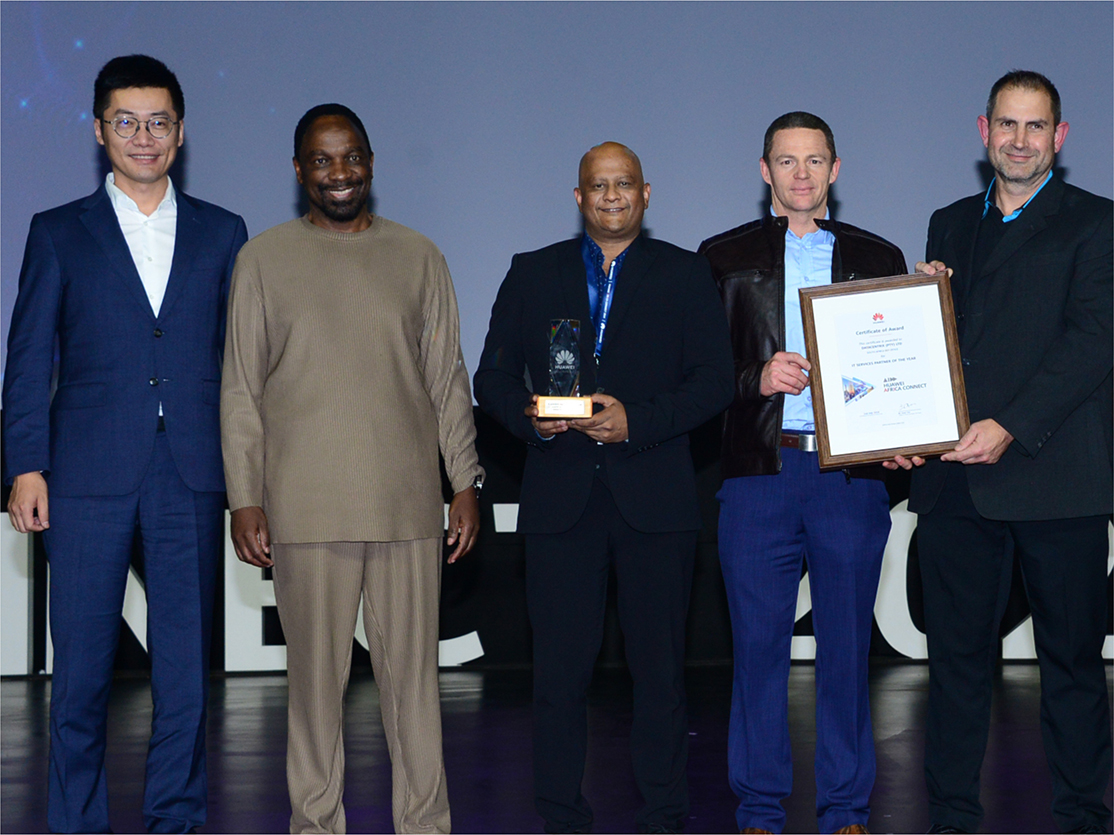
Datacentrix, a leading provider of high performing and secure ICT solutions, has been recognised as IT Services Partner of the Year by Huawei, a global provider of ICT infrastructure and smart devices. The award was presented at the recent Huawei Africa Connect 2024 event.

Taking place at the Sandton Convention Centre in Johannesburg, Africa Connect featured a number of expert Huawei speakers, a 2,500m2 exhibition space and over 2,000 participants.

According to Louis Van den Berg, Business Development Manager at Datacentrix, the company has continued to excel with Huawei locally. “Datacentrix earned the title of IP Services Partner of the Year in 2023 for its prowess on the networking side of the business, in addition to previously being recognised as Cloud Partner of the Year and Energy Partner of the Year,” he explains.

“More recently, Datacentrix has successfully deployed several Huawei storage-related projects, involving national and cross-border datacentre rollouts. These implementations have proven Datacentrix’s storage services deployment capabilities and were the key reasons behind us receiving the ‘IT Services Partner of the Year’ award.

“Huawei was recently named as a Leader in the 2024 Gartner® Magic Quadrant™ for Enterprise Wired and Wireless LAN Infrastructure, the only vendor positioned in the Leaders Quadrant headquartered outside of North America. This acknowledgement proves that Huawei’s strength within the enterprise wired and wireless LAN infrastructure space,” Van den Berg continues. “We look forward to continuing our close collaboration with Huawei in South Africa in order to continue to meet the needs of local businesses.”


The Nigerian stock exchange, coupled with the ongoing pressures on banks to shore up their capital base, has brought to the forefront the challenges faced by investors, prompting prominent figures like Pastor Matthew Ashimolowo to speak out on the risks of investing in bank shares. The volatility of the Nigerian financial market has led to significant losses for many, including Ashimolowo, who has candidly shared his experiences of navigating the unpredictable waters of stock investments.

Ashimolowo’s reflections highlight the precarious nature of banking stocks in Nigeria, where the need for banks to maintain and increase their capital base often leads to fluctuations in stock prices, impacting investors. His personal journey serves as a cautionary tale for others considering similar investments.

“I would mention banks, there’s nothing they can do,” Ashimolowo stated, recounting his experience with First Bank shares, which he purchased for 36 Naira each, totaling 36 million Naira. The stock later plummeted to 12 Naira, resulting in a substantial loss. His narrative underscores the broader issue facing Nigerian banks as they strive to meet regulatory requirements and sustain investor confidence in an often unstable market environment.

In another instance, Ashimolowo borrowed 60 million Naira from Sterling Bank in 2005 or 2006 to invest in Skye Bank shares. Unfortunately, the shares dropped from 14 Naira to a mere 2.50 Naira, effectively wiping out his investment. The aftermath was swift and severe, with Sterling Bank sending four policemen to his office to demand repayment.

The pressure on banks to stabilize their financial footing has led to aggressive measures to recover debts, as evidenced by Ashimolowo’s encounters. This includes a visit from Skye Bank’s risk manager and a team of staff members to his church service, following a loan for a house-building project.

Ashimolowo’s experience with GTB shares, which he bought for approximately 18 Naira only to see them fall to 3.60 Naira, further illustrates the challenges investors face in the Nigerian banking sector. These stories reflect the broader risks associated with investing in a market where banking institutions are under constant pressure to shore up their capital base, often leading to significant financial losses for shareholders.

As the Nigerian banking sector continues to evolve, Ashimolowo’s candid reflections serve as a vital reminder of the inherent risks in stock investments, particularly in an environment where banks are grappling with capital adequacy challenges. His experiences offer valuable insights for current and potential investors, highlighting the need for caution and due diligence in navigating the complex landscape of Nigerian banking stocks.


Meet Nana Otedola, the dynamic wife of billionaire businessman Femi Otedola and the visionary behind Garment Care LTD. Founded in 1999, Nana’s brainchild has grown into Nigeria’s leading dry cleaning business, marking 25 years of unparalleled service and excellence. From its humble beginnings, Garment Care has transformed into the largest garment establishment in the country, setting the standard for quality and reliability in the industry.

Nana’s journey serves as a powerful reminder that there are no shortcuts to success. Her story is a testament to the value of perseverance, consistency, and dedication in the pursuit of excellence. Whether it’s building muscle, losing weight, or establishing a brand, the key lies in showing up and working at it regularly. Success is not an overnight achievement but a result of daily effort and unwavering commitment.

Nana’s rise to prominence in the business world illustrates that, no matter how challenging the circumstances, persistence and hard work will eventually pay off. It’s a lesson that resonates across all aspects of life: If you want to improve at your job, you must work at it daily. If you want to achieve your goals, you must strive for excellence in everything you do.

Her message is clear: No matter how stuck you feel or how tough the situation may seem, keep working hard and stay consistent. The difficult days won’t last forever, and your time to shine will undoubtedly come. Nana Otedola’s story is a shining example that with perseverance, anything is possible.


In a thought-provoking commentary on the evolving role of artificial intelligence (AI) in today’s workforce, Professor Ndubuisi Ekekwe, a distinguished entrepreneur and academic, has shed light on the transformative impact of AI on employment and the inherent risks of job displacement. His insights come on the heels of a significant announcement by General Motors (GM), one of the world’s largest and most influential automakers, which revealed plans to eliminate 1,000 software-related positions as part of its broader strategy to integrate AI more deeply into its operations.

The news from GM marks a critical juncture in the automotive industry, reflecting a wider trend across various sectors where AI is being deployed to enhance efficiency, quality, and innovation. Professor Ekekwe noted that this development is emblematic of the profound shifts AI is catalyzing in the global job market.

“The nature of work is being fundamentally redesigned by AI,” Professor Ekekwe remarked. “We are witnessing an era where companies are not just adopting AI but are embedding it at the core of their operations. This integration is leading to the creation of smarter systems, but it’s also causing significant disruptions in traditional job roles.”

The decision by GM to reduce its software workforce, even as it ramps up efforts to accelerate AI integration, underscores a paradox that many industries are grappling with: the simultaneous creation of new technological opportunities and the displacement of existing jobs. Professor Ekekwe likened this situation to a scenario from a highly effective political advertisement used by former U.S. President Barack Obama during his campaign against Mitt Romney. The ad featured workers who built a stage for a town hall meeting, only to be fired on that very stage by Romney, the new owner. The poignant image was used to highlight the harsh realities of job loss and corporate decisions that affect workers’ livelihoods.Will AI Take Over The World? Or Will You Take Charge Of Your World?

“Think about it,” Professor Ekekwe urged. “How can a company justify laying off a significant number of software engineers while simultaneously pushing for greater AI integration? The answer lies in the efficiency and capabilities that AI brings, which often renders certain roles redundant. It’s a harsh reality of progress—those who helped build and refine AI systems may find their positions obsolete as the technology advances.”

Professor Ekekwe further explained that the widespread adoption of AI is likely to create a ripple effect across multiple industries. As AI systems become more capable, they will not only replace repetitive and mundane tasks but also take over complex roles that were once thought to be the domain of highly skilled professionals. This shift is already evident in sectors like finance, healthcare, and manufacturing, where AI-driven automation is reducing the need for human intervention in tasks ranging from data analysis to customer service.

However, Professor Ekekwe also acknowledged that while AI is causing job losses in some areas, it is simultaneously opening up new opportunities in others. “AI is not just a job destroyer; it’s also a job creator,” he pointed out. “New roles are emerging that require expertise in AI development, implementation, and maintenance. The challenge lies in ensuring that workers are equipped with the necessary skills to transition into these new roles.”

The professor’s comments highlight the dual-edged nature of AI’s rise, where the technology’s ability to streamline processes and increase productivity is often accompanied by difficult decisions regarding workforce reductions. As companies like GM continue to embrace AI, the global workforce must adapt to the changing demands of the job market.

In conclusion, Professor Ekekwe’s remarks serve as a stark reminder of the complexities associated with AI’s integration into modern industries. While the technology holds the promise of unprecedented innovation and efficiency, it also brings with it the need for a thoughtful approach to managing the human impact of these advancements. The future of work, as Professor Ekekwe suggests, will be one where continuous learning and adaptation are essential for both workers and organizations alike.

Tony Nwosu
Professor Ekekwe further explained that the widespread adoption of AI is likely to create a ripple effect across multiple industries. As AI systems become more capable, they will not only replace repetitive and mundane tasks but also take over complex roles that were once thought to be the domain of highly skilled professionals. This shift is already evident in sectors like finance, healthcare, and manufacturing, where AI-driven automation is reducing the need for human intervention in tasks ranging from data analysis to customer service.


In a recent LinkedIn post, Professor Ndubuisi Ekekwe, a renowned entrepreneur and investor, commended the efforts of Nigerian athletes and their coaches at the recently concluded Paris 2024 Olympics. While acknowledging the disappointment of not securing any medals, Professor Ekekwe emphasized the honor and dedication displayed by the athletes in representing Nigeria on the world stage.

“It is a great honor to represent your nation, and a bigger one to do that in the Olympics. Sure, it is a disappointment that we did not bring any medal home, but that does not diminish the fact that these young people served the nation,” Ekekwe stated.

Highlighting the achievements of Rena Wakama, the coach of Nigeria’s women’s basketball team, D’Tigress, Professor Ekekwe recommended that President Bola Tinubu bestow a national honor on Wakama. “Already, she has been recognized as the best coach of women’s basketball at the Paris 2024 Olympics, and Nigeria must cement her role. This woman demonstrated the power of leadership, coaching, mentoring, and inspiring the girls to over-achieve. Losing to the US women’s basketball team does not diminish that accomplishment,” he added.

Professor Ekekwe also reflected on the broader challenges facing Nigerian sports, particularly the lack of long-term planning and support for athletes. He pointed out that nations like China and the USA are already preparing their future Olympians for the 2036 games, underscoring the need for strategic planning in Nigeria.

“Except for Edo, Delta, and Lagos, do we still have a working sports council in Nigeria? The days of Chioma Ajunwa, David Izonritei, Mary Onyali, Olabisi Afolabi, Fatima Yusuf, and many others happened, not because we recruited them from American colleges, but because Nigeria had a functioning sports council system in our state capitals,” he noted.

Professor Ekekwe called for a change in the way sports are managed in Nigeria, urging the government to provide the necessary support and facilities for athletes to succeed. He emphasized that sports is a career and should be treated with the same seriousness as other professions, despite the absence of unions like the Nigeria Labour Congress (NLC) or the Academic Staff Union of Universities (ASUU) to advocate for better conditions.

“This must change; sports is a career and even though they do not have NLC, ASUU, etc., to do strikes for better facilities and support, Nigerians must call these politicians to lead,” he concluded.

Professor Ekekwe’s reflections serve as a call to action for both the government and the public to prioritize the development of sports in Nigeria and to recognize the achievements of those who have excelled despite the odds.


Anthony Emeka Nwosu


Fintech specialist e4 is celebrating a major milestone of its Girls in STEM program, an initiative dedicated to empowering young girls in underprivileged areas to pursue careers in science, technology, engineering, and mathematics (STEM). Launched three years ago, the program aims to address the gender imbalance in STEM fields and provide girls with the skills and support needed to succeed in the digital age.

As the first cohort of 16 girls reaches matric, the initiative is seeing the fruits of ongoing, thoughtful investment in girls’ education as participants look forward to bright futures in technology and innovation. Phylla Jele, Human Resources and Transformation Executive at e4, says the program emphasises meaningful partnerships in driving socio-economic development for promising girls while giving them the tools to pursue a career at the forefront of technology. At e4, we are passionate supporters of initiatives that enhance technology education. We understand the importance of investing in this field to foster the next generation of young leaders who will drive digital innovation.”

The program, in collaboration with the Melisizwe Computer Lab Project, offers a comprehensive curriculum that includes technical training, mentorship, and personal development. Girls are selected based on attitude and aptitude and receive training in science, maths, engineering, software development, and robotics. Mentorship from e4 personnel and other industry leaders plays a critical role in the success of the program, providing guidance and support to the girls throughout their journey.

Candice Kern-Thomas, CEO at Melisizwe, says the program not only has a positive personal impact on the girls but also contributes to the much-needed broader goal of creating a talented pipeline of future leaders capable of fully participating in tomorrow’s digital economy. “e4 was the first sponsor of the Girls in STEM program. They assisted us with the funding to make this program possible and allowed us to reach as many girls in under-resourced areas as possible. In addition to the financial assistance, e4 has also volunteered their staff members to join our mentorship program. With youth unemployment being a huge challenge in South Africa, corporate investment in the future of the youth, particularly in townships and rural communities, helps break the cycle of poverty.”

The Girls in STEM program has achieved remarkable success, with a 51% retention rate and notable improvements in academic performance and self-confidence among participants. The program has also adapted to changing educational needs, incorporating online learning and social media channels to enhance engagement and accessibility. Most of the girls have applied to tertiary institutions to study STEM-related subjects, with some already having been accepted with green carpet status (where the university offers to cover some of their fees) pending their final results.

Looking ahead, e4 and Melisizwe aim to scale the program nationally, extending its reach to more girls across South Africa and beyond. “To effect meaningful change, we need forward-thinking and impactful investment from corporates like e4,” says Kern-Thomas. “The last three years of the program was an exercise in validation for Melisizwe. We have managed to carve out a program so unique it is not currently being offered anywhere else. By working together with e4, we are ensuring a brighter future for girls in STEM and the next generation of IT-qualified employees and leaders.”


The program, in collaboration with the Melisizwe Computer Lab Project, offers a comprehensive curriculum that includes technical training, mentorship, and personal development. Girls are selected based on attitude and aptitude and receive training in science, maths, engineering, software development, and robotics. Mentorship from e4 personnel and other industry leaders plays a critical role in the success of the program, providing guidance and support to the girls throughout their journey.


Heirs Holdings is proud to announce the official launch of UCEE Microfinance Bank, the seventh subsidiary of its investee company, United Capital Plc. UCEE Microfinance Bank is a digital-first financial institution that aims to transform the banking landscape by serving both corporate and retail customers, offering innovative financial solutions and easier access to credit.

UCEE Microfinance Bank’s entry into the market marks a significant milestone in the journey and evolution of United Capital Plc, highlighting its legacy, growth, and ongoing business success. “This is a full-circle moment for us,” said Peter Ashade, Group CEO of United Capital. “We are determined to replicate the success we’ve achieved across our other subsidiaries in this new venture.”

Ashade further emphasized the institution’s commitment to understanding and addressing the needs of Nigerians. “Since we began this journey, we have grown to understand the challenges faced by strong-spirited Nigerians. UCEE Microfinance Bank is poised to reduce the gap in the industry, offering accessible and innovative financial services to all.”

As UCEE Microfinance Bank launches, it sets its sights on redefining banking in Nigeria, ensuring that financial inclusion and empowerment are at the forefront of its operations.


About United Capital Plc: United Capital Plc is a leading financial services group in Africa, offering investment banking, asset management, trusteeship, securities, and wealth management services. With the launch of UCEE Microfinance Bank, United Capital continues to expand its footprint in the financial services industry, driving growth and innovation.