
The Minister of Innovation, Science, and Technology, Chief Uche Geoffrey Nnaji, has highlighted the critical role of Science, Technology, and Innovation (STI) as vital tools for economic transformation and diversification in Nigeria. He emphasized that science and technology are key drivers of agricultural sector productivity, wealth creation, poverty alleviation, and food security across the country.

Chief Nnaji made these remarks today during the signing of a Memorandum of Understanding (MoU) between the Ministry of Innovation, Science, and Technology and Flux Carbon Pte Limited, held in Abuja. Speaking at the event, he noted, “This agreement marks a significant step in our concerted efforts to address one of the most pressing challenges of our time – food security.”

The Minister underscored that agriculture is the backbone of Nigeria’s economy, contributing approximately 25% to the Gross Domestic Product (GDP) and providing livelihoods for more than 70% of the populace. However, the sector faces immense challenges, including climate change and land degradation, which are compounded by the recent surge in food prices across the nation. “These challenges underscore the urgent need for innovative and sustainable solutions,” he added.

Chief Nnaji stated that the signing of the MoU symbolizes the government’s commitment to collaborating with both local and international partners to achieve sustainable agricultural and economic growth. “Today’s partnership with Flux Carbon Pte Limited is a testament to our dedication to increasing crop yields through innovative methods, lowering costs for farmers, and promoting sustainable agricultural practices in Nigeria,” he explained.

He further remarked that by focusing on sustainable agriculture, the Ministry is not only addressing the immediate needs of food security but also creating jobs and fostering socio-economic development. The Minister expressed appreciation to all partners for their unwavering commitment to achieving economic prosperity, environmental sustainability, and social well-being for all Nigerians.

In her remarks, the Permanent Secretary of the Ministry, Mrs. Esuabana Nko Asanye, stated that the Ministry is making a significant impact on the global innovation system by enhancing research outputs to meet the nation’s needs. “Technology is the bedrock of development for any nation. The signing of this MoU will improve agricultural yields and enhance food security in Nigeria,” she emphasized.

Earlier, the Chief Executive Officer of Flux Carbon Pte Limited, Mr. Sam Daniel, said the partnership aligns with the organization’s commitment to harnessing innovative solutions to tackle global challenges, particularly in the areas of climate change and food security. “By collaborating with the Government of Nigeria through the Ministry, our company aims to explore the potentials of Enhanced Rock Weathering (ERW) to boost food security and contribute to the Sustainable Development Goals (SDGs) in Nigeria,” he stated.

Conclusion:

This partnership represents a strategic step towards leveraging science and technology to address Nigeria’s most pressing challenges. The collaboration between the Ministry of Innovation, Science, and Technology and Flux Carbon Pte Limited is expected to foster sustainable agricultural practices, promote economic diversification, and enhance food security in the country.


 

The Minister of Housing and Urban Development, Arc Ahmed Musa Dangiwa, has expressed his support for the Chartered Institute of Directors (CIoD) in promoting corporate governance and excellence. This endorsement came during a courtesy visit by members of the Abuja zone of the Institute, led by its Chairperson, Mrs. Nwando Chukwura, to the Minister’s office.

“I will continue to collaborate with the Institute, especially now, as this is in line with President Bola Ahmed Tinubu’s Renewed Hope Agenda,” Dangiwa stated. He emphasized the need for the housing ministry to adopt a performance-driven culture, one of the core focuses of the Institute, to fulfill its mandate of providing decent and affordable housing for Nigerians.

The Minister highlighted the importance of customer-centricity, a key value in the private sector, and noted that the Ministry of Housing plans to collaborate with the CIoD to improve customer service delivery. “The ministry will leverage the CIoD to boost professionalism and effective leadership to deliver the Renewed Hope Agenda,” he added. Dangiwa, a proud member of the Institute himself, promised that he would encourage the ministry’s management to obtain membership with the Institute.

He praised the CIoD for promoting resourceful leadership skills, such as integrity, accountability, professionalism, probity, customer-centricity, and teamwork.

Earlier, Mrs. Nwando Chukwurah, Chairperson of the CIoD Abuja zone, affirmed the Institute’s commitment to advancing good corporate governance, sound business practices, and professional education. She noted that the CIoD conducts capacity development programs both locally in Nigeria and internationally, exposing directors to global best practices to enhance their skills and knowledge.

Mrs. Chukwurah stated that their visit to the ministry aimed to strengthen the robust partnership and collaboration that have flourished over the years. She urged the ministry’s directors to register with the Institute, assuring them that their membership would significantly bolster an enduring partnership and promote corporate governance excellence in Nigeria.

The Chartered Institute of Directors Nigeria (CIoD) is a professional body dedicated to developing corporate governance in Nigeria by empowering those responsible for governance to effectively and legally discharge their duties. The Institute comprises both young and experienced directors and aims to promote professionalism through continuous education, information sharing, networking opportunities, and celebrating excellence at individual and corporate levels.


Tribalism, a deep-seated allegiance to one’s ethnic group, is a significant challenge in Nigeria, a country with over 250 ethnic groups. While cultural diversity should be a source of national pride and strength, tribalism has instead become a divisive force, perpetuating conflict, discrimination, and underdevelopment. This phenomenon has infiltrated various facets of society, including politics, education, employment, and even social interactions, creating a significant hindrance to Nigeria’s progress.

Negative Impacts of Tribalism in Nigeria

1. Political Instability and Division:

Tribalism often leads to a lack of national cohesion and unity, as people prioritize ethnic loyalty over national interest. This creates a toxic political climate where leaders are selected based on tribal affiliations rather than merit or capability. As a result, governance becomes more about advancing ethnic interests than fostering national development. Political appointments and elections are often skewed to favor certain tribes, resulting in widespread discontent, voter apathy, and, at times, violent clashes.

2. Social Fragmentation and Discrimination:

Tribalism fosters division among Nigerians, breeding mistrust, prejudice, and hostility between different ethnic groups. It creates a “them versus us” mentality that erodes social cohesion and unity. This division is evident in various social settings where people align themselves with their ethnic group, resulting in discrimination in employment, education, and business opportunities. Such practices prevent national integration and deter the creation of a unified Nigerian identity.

3. Economic Inequality and Underdevelopment:

Tribalism contributes to economic inequality and underdevelopment. Resources, including government contracts and employment opportunities, are often allocated based on tribal affiliations rather than merit or need. This practice discourages investment in regions perceived to be politically irrelevant, creating a cycle of poverty and underdevelopment in those areas. Tribalism also stifles innovation and growth, as businesses may not thrive due to bias or exclusionary practices.

4. Threats to National Security:

Tribalism poses a threat to national security by fueling ethnic conflicts and insurgencies. Nigeria has witnessed several tribal-based clashes, including the tragic Biafra War, which claimed millions of lives. More recently, communal clashes over land, religion, and political power have resulted in loss of lives and displacement of communities. Tribalism weakens the fabric of society, making it difficult to build a united front against external threats like terrorism and organized crime.

5. Obstructing Meritocracy and Progress:

When tribalism dictates decisions in key sectors, it undermines meritocracy. Positions of leadership, educational placements, and job opportunities are often given to individuals based on ethnic identity rather than qualifications or competence. This practice limits the nation’s ability to harness the talents and skills of its diverse population, thereby stifling innovation, creativity, and progress.
Why Tribalism Must Be Stopped

To ensure sustainable growth, unity, and development, Nigeria must confront and eliminate the scourge of tribalism. Ending tribalism means fostering a sense of national identity that transcends ethnic differences. This can be achieved through the promotion of inclusivity, equality, and justice. It is essential for the government, civil society, religious leaders, and citizens to advocate for policies and practices that discourage tribalism and instead promote meritocracy, fairness, and national unity.

Nigeria’s strength lies in its diversity. When tribalism is eradicated, the country can leverage this diversity to drive social, economic, and political advancement. A united Nigeria, free from the shackles of tribalism, has the potential to become a prosperous and peaceful nation where every citizen, regardless of ethnic background, has an equal opportunity to thrive.

By embracing inclusivity and unity, Nigeria can build a future where its diversity is celebrated and used as a force for collective progress. Ending tribalism is not just a necessity but a moral imperative for the survival and success of the nation.


Anthony Emeka Nwosu


When a well-known fund manager was fined R16 million earlier this year for failing to comply with the Financial Intelligence Centre Act (FICA) stipulations for accountable institutions, many companies in sectors such as real estate, law, and accounting jumped to action to ensure their compliance.


But the mammoth task this can sometimes present means full compliance can be extremely difficult to attain through manual processes alone. In the case of Ashburton Fund Managers above, many of the compliance points were in fact met. But the devil was in the details – for example, the company failed to screen its clients against the Targeted Financial Sanctions lists.


Automating FIC Act requirements can be a game-changer for accountable institutions, not only ensuring compliance but also freeing up valuable time that would otherwise be spent on completing these often intricate processes manually.


Introducing VOCA

VOCA, powered by data aggregation platform SearchWorks, is a Verification, Onboarding, and Compliance Application that does exactly that, says Sameer Kumandan, Managing Director of SearchWorks. “VOCA is an app designed to streamline the compliance processes for accountable institutions. The aim is for any accountable institution to be able to do exactly what the name suggests: verify, onboard, and do compliance checks on individuals and companies – but automating these processes means they’ll spend much less time, energy, and resources than if they were to do so manually.”


VOCA’s automated system is based on the unique rule sets and risk appetite of each client. Every check will generate a full report on an individual or business and will also include a risk rating report based on the real-time data returned. This will allow clients to ensure compliance with the FIC Act, while creating a full audit trail as proof that the necessary checks were done.


Key benefits and features include:


  • Streamlined verification: The app can perform CSI KYC/KYB checks, CIPC checks, ID verification, ID Photo verification, PEP/sanction checks, FIC questionnaires, Adverse news checks, and Account verification. Users receive a detailed, real-time report on each verification, enabling informed decision-making and proactive risk management.

 

  • Comprehensive compliance: VOCA ensures that businesses adhere to the FIC Act by implementing essential Anti-Money Laundering (AML) and Counter-Terrorism Financing (CFT) measures, such as documented and easily accessible verification checks, ensuring full audit trails. Meticulous records of transactions and customer information are maintained for a minimum of five years. Furthermore, the app can perform comprehensive risk assessments to identify and address potential money laundering and terrorist financing risks, as well as assist with compliance-mandated employee training to equip staff with the necessary knowledge and skills to recognise and report any suspicious activities.


  • Seamless onboarding: While thorough compliance can be a hassle for businesses and their customers alike, VOCA simplifies the onboarding process with automated checks, facial verification, 3D liveness and data verifications, reducing manual effort and enhancing efficiency – and, importantly, customer retention.


Why it’s important 

Not only does comprehensive compliance mitigate legal risks and possible financial penalties, but it also enhances your business. The improved security and reduced human error will help protect your business from financial crime, while increased efficiency saves time and resources.


And, although the FIC Act was created to prevent financial crime, following the guidelines set out in the Act will also improve a company’s reputation, ultimately attracting a more desirable clientele.


Beyond your own business interests, ensuring your compliance as an accountable institution will play a part in strengthening the country’s economy. The Act and its stringent stipulations for accountable institutions was created to protect those who operate in or deal with industries that are more vulnerable to money laundering and terrorist financing, including sectors such as real estate, credit provision, law, and high-value sales.


Non-compliance not only puts these entities at risk of inspections and sanctions, but hurts the broader economy as well as international perceptions of it – especially after South Africa was greylisted by global financial crime watchdog the Financial Action Task Force in February 2023. Says Kumandan: “It’s crucial for those operating in these sectors to understand what is required of them by the FIC Act, and to comply as soon as possible. FICA compliance has really become a matter of national importance.”


The New Portal streamlines management, offering scalable security services at the click of a button


 Check Point® Software Technologies Ltd. (NASDAQ: CHKP), a leading cyber security platform provider of AI-powered, cloud delivered solutions, today unveiled its innovative Portal designed for both managed security service providers (MSSPs) and distributors. This platform significantly simplifies service delivery and enhances the ease of doing business with Check Point.


According to Canalys, the global MSSP market is projected to grow by 14.2% annually, driven by increasing cyber threats and the need for specialised security services. However, MSSPs and channel partners today face a range of challenges—from efficiently scaling their services, managing multiple customers across disparate security solutions, ensuring compliance with evolving industry regulations, to balancing operational costs with profitability. The Check Point MSSP Portal offers a powerful solution to overcome these hurdles, enhancing security and streamlining operations.


Matt Payze, CEO, Southern Cyber in Australia said: “The new MSSP portal is a game-changer in optimising our service delivery. What used to take weeks can now be accomplished in minutes, from customer onboarding to tenant creation, all within a single management pane with a full view of services, status contract and converting POCs to trial. This efficiency lowers our delivery costs and simplifies our operations, streamlines our financial planning, and makes our services more profitable while boosting customer satisfaction. The portal’s ability to streamline processes allows us to focus on providing top-tier security solutions with greater speed, agility and precision, consistently exceeding client expectations.”Online Press Kit - Check Point Software


Francisco Criado, Check Point’s VP of Global Partner Ecosystem Organisation, added: “Our new Portal is here to make life easier for our valued partners, enhancing efficiency and driving business growth. We are deeply committed to our partner ecosystem, and this Portal stands as a testament to our dedication, serving as a powerful ally in the fight against cybersecurity threats.”


At the core of these advancements is a meticulously designed, user-centric Portal that enables effortless onboarding of partners—a process that previously took as long as a week and now takes only two minutes. This efficiency not only saves time but also reduces operational costs for MSSPs. The Portal seamlessly integrates MSSPs into the Check Point Infinity Platform, marking a significant achievement in Check Point’s MSSP program and transforming business operations.

The Check Point MSSP Portal is not just about enhancing operational efficiency; it’s about transforming the way MSSPs engage with technology, manage services, and ultimately, how they meet the evolving security needs of their clients. It features a range of enhancements including:

Effortless Onboarding: New capabilities empower distributors to onboard MSSPs with the click of a button`

Diverse Security Portfolio: Effortlessly deploy an array of services in minutes, such as endpoint, email, mobile, SASE, and cloud

Profitability with Minimal Risk: Flexible billing, predictable revenue, no long-term commitments, or upfront investment


Check Point Software Technologies Ltd. (www.checkpoint.com) is a leading provider of cybersecurity solutions to corporate enterprises and governments globally.  Check Point Infinity’s portfolio of solutions protects enterprises and public organizations from 5th generation cyberattacks with an industry leading catch rate of malware, ransomware and other threats. Infinity comprises four core pillars delivering uncompromised security and threat prevention across enterprise environments: Check Point Harmony, for remote users; Check Point CloudGuard, to automatically secure clouds; and Check Point Quantum, to protect network perimeters and data centres, all controlled by the industry’s most comprehensive, intuitive unified security management; Check Point Horizon, a prevention-first security operations suite. Check Point pr


Farouk Khailann, CEO of Premium Africa Holdings and Senior Advisor, has delivered a sharp critique of traditional methods used to attract investors to Africa, asserting that these practices are not only costly but increasingly ineffective.

In a recent statement, Khailann highlighted the inefficacy of conventional investment approaches, which often involve lavish spending and large entourages. “The traditional methods of attracting investors have become not only excessively expensive but also increasingly ineffective,” Khailann said. He criticized the practice of presenting oneself with an entourage dressed in expensive suits, noting that this approach does not resonate with high-net-worth investors interested in Africa. “You sit in rooms where the real private, high-appetite-for-Africa investors don’t align with or even bother to show up,” he added.

Khailann also condemned the reliance on government-to-government funding, which he claims often comes with restrictive conditions. He emphasized that genuine private investors are sometimes exploited for personal gain rather than national progress. “Government-to-government funding always comes with strings attached. And when you’re fortunate enough to meet genuine private investors, instead of prioritizing your country, you try to exploit them for personal gains,” he remarked.

According to Khailann, these outdated methods are no longer suitable in today’s competitive investment landscape. He stressed that investors now have a deeper understanding of Africa and its challenges than ever before. “The world has grown smaller, and investors now understand our region and attitude better than we do. The notion that our abundant resources should automatically draw investment is misguided and no longer resonates,” Khailann stated.

Drawing from his observations of successful investment strategies in the UAE, Khailann urged African leaders to adopt a more relational and modern approach. He dismissed the notion that the Middle East’s success is due to its political system, calling for an end to outdated practices. “Politics is no justification for behaving like a pack of wild animals. Our people deserve development and access to basic necessities. Not later but today, now, with every sense of urgency,” he asserted.

Khailann praised Zimbabwe’s President, His Excellency Emmerson Mnangagwa, for adopting an investment approach similar to that of the UAE’s founding father, Sheikh Zayed. He expressed confidence that this approach could lead to significant prosperity for Africa. “Whether by coincidence or strategy, his approach mirrors that of the UAE’s founding father, Sheikh Zayed, in attracting investment. In time, prosperity will be the ultimate judge,” Khailann said.

Reiterating his commitment to Africa, Khailann declared that he and his allies are determined to bring necessary investments to the continent. “With the knowledge I’ve gained, the connections I’ve forged, and my unwavering belief in Africa, there is nothing, I repeat absolutely nothing that will stop me and my allies from bringing the necessary investments to the African continent,” he affirmed.

Khailann concluded by addressing those with short-term expectations and reaffirming his dedication to Africa’s economic growth. “If my passion for Africa and unwavering self-belief bothers you, guess what—I couldn’t care less. My aim isn’t to land on the Forbes rich list; it’s to make my contribution no matter how small toward Africa’s economic growth,” he said.


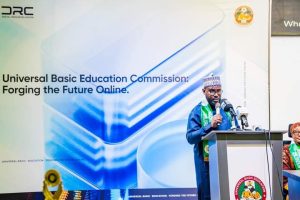
In a momentous display of support for educational and technological advancement, the National Information Technology Development Agency (NITDA) played a pivotal role in the 2024 Head-to-Head Debate Reality House Grand Finale. Hosted by the FCT Universal Basic Education Board (UBEB), the event brought together leading figures in education and technology to discuss and promote the empowerment of Nigeria’s youth.

The highlight of NITDA’s participation came through the insightful address delivered by Mr. Yakubu Musa from the Digital Literacy Department, representing Director General Kashifu Inuwa CCIE. Musa’s speech emphasized the strategic importance of investing in Nigeria’s youth, who he described as the nation’s most valuable asset.

Musa articulated that the future of Nigeria hinges on the effective harnessing of human potential. He advocated for a robust investment in human resources, arguing that such investments are critical to fostering innovation, generating wealth, and driving sustainable growth. According to Musa, nurturing the skills and capabilities of the younger generation is not merely a matter of policy but a fundamental strategy for national development.

He further explained that by prioritizing education and digital literacy, Nigeria could equip its youth with the tools necessary to thrive in an increasingly digital world. This approach, he argued, will contribute significantly to shaping a prosperous future for the country.

The message resonated strongly with attendees, reflecting NITDA’s ongoing commitment to leveraging technology and education as vehicles for national progress. By aligning with initiatives like the Head-to-Head Debate Reality House, NITDA underscores its dedication to fostering a culture of innovation and excellence among Nigeria’s youth.


Stockfish: A Cultural Staple in Nigeria and Its Nordic Origins


Stockfish, a cherished delicacy for the Igbo people of South Eastern Nigeria and their Niger Delta counterparts, holds a significant place in Nigerian cuisine. Its popularity soared following the Nigerian Civil War, when it became a vital source of protein to combat malnutrition-related diseases such as kwashiorkor and beriberi, which plagued the region. This traditional fish, which has been a staple in Nigerian diets for decades, is often thought to be dried using modern ovens. However, the process of making stockfish is deeply rooted in age-old techniques from its Nordic origins, particularly from Sweden and Finland.

The Traditional Drying Process

Stockfish’s journey from the Nordic countries to Nigerian tables is steeped in history. The traditional drying of stockfish, especially in Norway, has been a time-honored practice for centuries. The process involves air-drying fish outdoors, a method that has been used for generations. Historically, the stomachs of sea lions were employed to store and dry the fish, though this practice ceased in the 1800s due to the need to kill the sea lions, which was deemed unsustainable.


The process of drying stockfish in Norway is notable for its simplicity and effectiveness. Fresh fish is hung on wooden racks and left to dry in the open air. This technique relies on the natural cold and dry climate of the Nordic countries to preserve the fish, ensuring that it remains edible for extended periods. The result is a product that retains its flavor and nutritional value, making it ideal for long journeys and storage.

Stockfish’s Introduction to Nigeria

The introduction of stockfish to Nigeria dates back to around 1880. During this period, the practice of importing stockfish became a vital component of Nigerian diets, particularly in the South Eastern regions and the Niger Delta. The protein-rich fish provided a crucial nutritional supplement in the aftermath of the Civil War, helping to address widespread deficiencies and improve the health of many Nigerians.

Today, stockfish continues to be a beloved ingredient in Nigerian cuisine, featured in a variety of traditional dishes. Its journey from the Nordic lands to Nigerian tables highlights a rich history of cultural exchange and adaptation. The enduring popularity of stockfish in Nigeria is a testament to the resilience and resourcefulness of its people, who have embraced this import as a vital part of their culinary heritage.

As we reflect on the journey of stockfish from its origins in the cold climates of Scandinavia to its prominent place in Nigerian kitchens, we celebrate not only a culinary tradition but also a symbol of cultural connection and continuity.

Anthony Emeka Nwosu

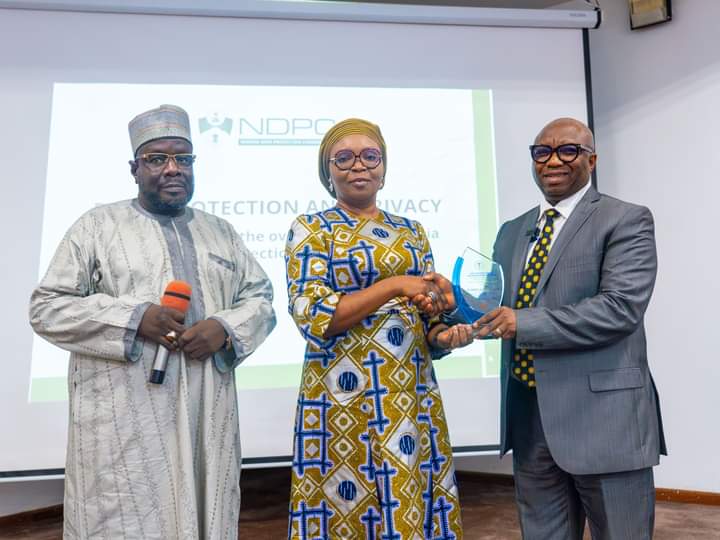
The Nigeria Data Protection Commission (NDPC), in collaboration with the Health Records Officers Registration Board of Nigeria, recently organized a capacity-building workshop for Health Records Officers from various states across the country. The workshop aimed to enhance data protection practices in the health sector.

The event commenced with opening remarks from Dr. Vincent Olatunji, the National Commissioner and CEO of the NDPC. The workshop was formally opened by the Minister of State for Health, Dr. Tunji Alausa, who was represented by Dr. Mrs. Obiajulu Ugbo, Senior Technical Assistant to the Minister of State for Health.

In his address, Dr. Olatunji highlighted the critical importance of data protection within the health sector, emphasizing the sensitive and confidential nature of the data collected and processed. He noted that the workshop is vital as it targets over 40,000 health professionals across Nigeria who handle health records and related matters. Sharing real-life case studies, Dr. Olatunji underscored the potential health risks faced by data subjects in the event of data breaches and stressed the need for robust technical and organizational measures to protect personal data.

Dr. Olatunji also spoke about the National Certification process, urging participants to engage actively in the training and pursue certification to leverage opportunities in the growing data privacy sector.

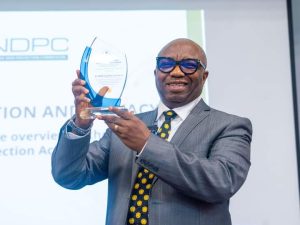
During the workshop, Dr. Vincent Olatunji was honored with an honorary membership award in recognition of his contributions to data protection in the health sector. The event also featured the presence of Alhaji Babagana Mustapha, Registrar of the Health Records Officers Registration Board of Nigeria, and other senior officers from the Board.


ANTHONY EMEKA NWOSU


In a heartfelt letter, Nigerian industrialist Femi Otedola extended his congratulations to Aliko Dangote, Chairman of Dangote Group, for the historic achievement of the first fuel shipment from the Dangote Refinery. Otedola began by expressing his gratitude to President Bola Tinubu for his unwavering support in realizing this monumental accomplishment. He described the day as a victory for every Nigerian who dreams of a brighter future, stating, “Today, we all stand a little taller.”

Reflecting on their shared history, Otedola recounted the ambitious vision that he and Dangote had 25 years ago to revolutionize Nigeria’s energy sector. They had established the Blue Star Consortium to acquire stakes in the Kaduna and Port Harcourt refineries—20% for Otedola and 51% for Dangote. However, their plans were thwarted by what Otedola termed “an utterly obnoxious act” by the government of the day, which canceled their stakes and halted their vision. Despite this setback, Otedola praised Dangote for his tenacity, saying, “You never gave up on the dream we shared. You carried the torch forward, igniting a spark that has today become a roaring flame.”

Otedola emphasized the significance of the first fuel shipment from the Dangote Refinery, describing it as a “miraculous feat.” He contrasted this achievement with the failures of the Kaduna and Port Harcourt refineries, which have remained dormant despite billions of dollars spent on supposed maintenance. Otedola commended Dangote for silencing the skeptics and proving the naysayers wrong, including those who doubted the project’s success and those who actively opposed it.

“You have not just built a refinery; you have liberated us from the chains of economic dependence that have held this nation back for far too long,” Otedola wrote. He lauded Dangote’s determination for ending Nigeria’s reliance on foreign fuel imports, breaking the stranglehold of “local cabals” who profited from keeping the country in a state of economic dependence.

Recalling Dangote’s earlier success in revolutionizing Nigeria’s cement industry, Otedola predicted a similar transformation in the fuel sector. He urged depot owners to dismantle their facilities and sell them as scrap while they still had value, noting that the world has changed and those who fail to adapt will be left behind.

Otedola also reflected on his own experience in the depot business with Zenon Petroleum, which he established to address the inefficiencies of the Nigerian National Petroleum Corporation (NNPC). Zenon quickly became the largest diesel supplier in Nigeria, filling a critical gap in the market. However, Otedola acknowledged that Dangote’s refinery now stands as a symbol of what is possible when one has the courage to dream big and the persistence to make it a reality.

“Aliko, you have my deepest admiration and respect,” Otedola concluded. “Congratulations to you and the entire board, management, and staff of Dangote Refinery on this monumental achievement. This is not just a victory for you but for every Nigerian who dares to dream. May this be just the beginning of even greater things to come.”

With these words, Otedola underscored the importance of Dangote’s accomplishment for the future of Nigeria, reaffirming his support and appreciation for his fellow industrialist’s unwavering commitment to transforming the nation’s economic landscape.