
No fewer than 67 commercial and residential buildings, as well as structures in Alimosho Local Government Area of Lagos State, have been sealed by officials of the Lagos State Physical Planning Permit Authority (LASPPPA) for contravening the State Physical Planning regulations during a recent enforcement exercise carried out by the Authority.

According to the General Manager, LASPPPA, Mr. Kehinde Osinaike, the affected buildings were sealed for offences bordering on non-compliance to building regulations and conversion of residential buildings into commercial use without the necessary authorisation.

He explained that the enforcement was carried out simultaneously in the Authority’s delineated District Areas of Alimosho, Mosan-Okunola and Agbado Oke-Odo in Alimosho Local Government.

Osinaike disclosed that LASPPPA had earlier in September 2021 served contravention notices on the affected structures, adding that the notices were not heeded as required, hence the necessity for the operations.

He said: “125 property owners were served contravention notices, through our District Offices, in September. Out of this number, 40 responded with appropriate approved building permits. However, 67 failed to respond. This was what led to two-day targeted enforcement at the Local Government Areas by our Monitoring and Compliance Unit”.

“The sealed property are mostly residential buildings that were converted into commercial use without recourse to necessary permits and regulations. This is at variance with the Alimosho Model city plan”, the General Manager added.

Osinaike, however, stated that some of the affected structures were partially sealed in order to reduce the effect which a complete closure will have on businesses and the daily activities of the occupants.

While noting that the enforcement would be a continuous exercise in the Local Government Areas and other areas of the State, the General Manager averred that the State Government, through LASPPPA and other sister Agencies, is poised to sanitise the built environment and restore the Lagos Physical Planning Master Plan in line with the mandate of the present administration.

He acknowledged that since the enforcement exercise, owners of the affected structures have been approaching the Agency to address the irregularities and perfect their planning permits.

Speaking in the same vein, the Coordinator, Monitoring and Compliance Unit, LASPPPA, Tpl. Olarinde Iyiola, stated that the two-day enforcement exercise was to ensure that the property owners, who have contravened Physical Planning Laws and Regulations, are made to comply with the Operative Development Plan of the Area.

He said that structures in compliance with planning permit approvals and regulations were spared during the exercise.

LASG

ForAGreaterLagos

The Nigerian Communications Commission (NCC) said it is adjusting regulatory instruments and management tools to ensure regulations are fit for future imperatives of a robust telecoms sector.

The Executive Commissioner, Stakeholder Management (ECSM), NCC, Adeleke Adewolu, stated this when he spoke at a panel session at the 2021 Annual General Conference of the Nigerian Bar Association held in Port Harcourt. The general theme of the Conference is, ‘Taking the Lead’.

Adewolu, who made the declaration in a panel discussion focused on Government Regulation of Innovation and Technology, said, “In specific terms, we are taking action in the following areas: We are adjusting regulatory instruments and management tools to ensure regulations are fit for the future. An example is our ongoing review of the Telephone Subscriber Registration Regulations to strengthen the framework for digital identity; and the review of the Spectrum Trading Guidelines to ensure more efficient use of spectrum.”

Also, the ECSM said NCC is laying institutional foundations to enable co-operation with other regulatory institutions and international organisations such as the International Telecommunications Union (ITU).

The Commission, according to Adewolu, is also developing and adapting governance frameworks to enable the development of agile and future-proof regulation; and equally adapting regulatory enforcement activities to the “new normal”. He said this is to ensure alignment with the rapid technological changes and innovations that are emerging at a high speed and with sophistication.

On censorship, particularly tackling illegal and harmful content on over-the-top (OTT) platforms, Adeleke said NCC had to opt for “a middle ground that promotes safe use of digital service platforms without necessarily stifling the exercise of the citizen’s right to free expression as guaranteed in the Nigerian Constitution.”

He explained that on technology platforms, censorship manifests in three scenarios, namely, restriction of person-to-person communications; restriction of Internet access generally; or restriction of access to specific content, which governments find objectionable.

This, he said, was pursuant to constitutional provisions such as those in Section 39(3) of the Nigerian 1999 Constitution, as amended, which approves “any law that is reasonably justifiable in a democratic society to prevent the disclosure of information received in confidence, maintaining the authority and independence of courts or regulating telephony, wireless broadcasting, television or the exhibition of cinematograph films.”

In particular, Adewolu declared that the third scenario is globally recognised as the ideal situation because one of the core responsibilities of government (as enshrined in Chapter 2 of the Nigerian Constitution) is to safeguard the lives and property of citizens.

Explicating further, Adewolu said that social media platforms allow instant communications without regard for impact or consequences. He insisted that self-regulation is possible, but “as we have experienced over and over again, an ill-considered post on social media can easily incite unrest and crises.”

He bemoaned the fact that leading social media platforms have demonstrated a rather unfortunate reluctance to moderate the use of their platforms for subversion and harm. “So, we cannot trust them to self-regulate,” he emphasised.

According to him, self-regulation has not been very effective, and interestingly, “the largest platforms are global platforms and many of them are protected by their home governments.”

For instance, “Sc.230 of US Communications Act provides immunity to firms like Facebook and Google from responsibility for content disseminated on their media, although they still apply fair usage and community rules which enables them to self-regulate. However, as we saw with the case of the former US President Donald Trump – people are often able to disseminate negative content for a while before they are cut off. Mr Trump had over 87 million followers he engaged directly with,” the ECSM stated.

Another example he cited happened just few days ago when CNN reported that Facebook deliberately failed to curb posts inciting violence in Ethiopia despite the fact that its own staff flagged such posts, and that Ethiopia is listed as a high-priority zone, which has been fighting a civil war for the past one year. As Adewolu recalled, the UN Secretary General recently called for the regulation of social media platforms, and even the CEO of Facebook has made similar calls in the past.

“So, we cannot wholly depend on self-regulation. And whilst we cannot prevent citizens from freely expressing themselves on these platforms, it would be irresponsible for any government to allow unbridled use of these mediated communication to cause chaos and imperil lives and property. Government must act to protect social cohesion and national security,” he counselled.


Cryptocurrencies refuse to play by the rules. People rely on experts for all sorts of advice, but when it comes to cryptocurrencies, they seek advice from peers and the internet. So, what causes this behaviour, and what are the implications? Hint: it’s rooted in behavioural psychology.


Recent studies suggest that crypto-currency investors rely less on expert advice and increasingly follow peer investor communities for guidance.

The daily value of South African crypto trading recently exceeded $141 million for the first time, indicating that many South Africans consider the risks of this complex, unregulated market to be acceptable for the returns which it may deliver.

Digital advocates have hailed cryptocurrencies as the “new gang on the block, who refuse to play along with the traditional rules of engagement”.

For the first time, investors feel “freed” from the constraints of financial regulations and can find their own “facts”.

Given that many people find blockchain technology difficult to understand and struggle to explain the excessive volatility in the crypto markets, it is interesting that they rely mainly on online sources, such as social media and social news aggregation websites, to shape their cryptocurrency investment strategies.

The abundance of information from like-minded investors has heralded an era of information-enabled investors. For the first time, the early adopters of blockchain technology and cryptocurrency understood the underlying opportunities and trends better than their knowledgeable financial advisors.

Its value, in essence, is determined by its unique characteristics and similar opinions.

One of the foundations of behavioural economics is the principle that under conditions of uncertainty, complexity and time pressure, people tend to revert to cognitive shortcuts or mental biases.

This, and the growth in popularity of cryptocurrencies, plus an abundance of available information, is driven by something called the network effect. The network effect implies that the more people who participate, the higher the crypto value becomes.

The second factor that plays a role in shaping the price of cryptocurrency is called social judgement.

Social judgement theory states that you accept or reject a statement on your cognitive map. Having already been primed to the opportunity of cryptocurrency by the network effect, “whales” – early adopters in the crypto world – who have amassed vast crypto investments have the power to artificially create exaggerated price swings or speculative bubbles. ‘Crypto Celebrities’ make a proclamation, and vast numbers of followers follow suit.

This sort of volatility concerns institutional financial minds and scares some investors off but equally attracts large volumes of new trade after some off-the-cuff announcements on social media platforms.​

Fertile soil and the herd that follows it

The market for cryptocurrencies seems to provide fertile soil for investor biases to steer decision-making. An obvious example would be the bandwagon effect whereby investors buy cryptos primarily because others are doing it, regardless of their convictions, which they often override or ignore.

A study by Calderon (2018) confirms that crypto investors display herding behaviour when navigating crypto market ambiguity. Investors tend to hold on to their cryptos, even in highly negative conditions, partly explaining the weak link between information and market outcomes. This is typical herd behaviour.

The downside of herds

The flipside of the potential gains to be made from crypto coins is the tendency for herd behaviour to create opportunities for exploitation.​ South African crypto investors had to stomach two of the largest crypto scams in the world this year. In January, Mirror Trading International disappeared with about 23,000 digital coins, valued at $1.2 billion and in April, Africrypt allegedly absconded with about $4 billion worth of coins.

Although one could argue that the digital revolution has brought a new level of empowerment to consumers, it seems that it has also intensified people’s judgement biases.

There are no real reference points to determine the value of crypto-currencies, and therefore the pricing mechanisms are driven mainly by collective evaluation of the buyers and sellers.

People tend to jump on the bandwagon and mimic the behaviour of others, often on the basis of anecdotal evidence of success stories on social media, without fully appreciating that the human tendency to herd under conditions of optimism or positive news creating market bubbles and crashes.

There is, admittedly, a range of examples in the traditional financial markets where herding behaviour also drives the decisions of many investors. The difference, though, as many South Africans now can attest, is the inherent risks of an unregulated, complex market where “coin-diggers” – those wishing to make a quick buck – can, and do, capitalise on the flaws in human decision-making nature.

Bio of Udette Kirsch


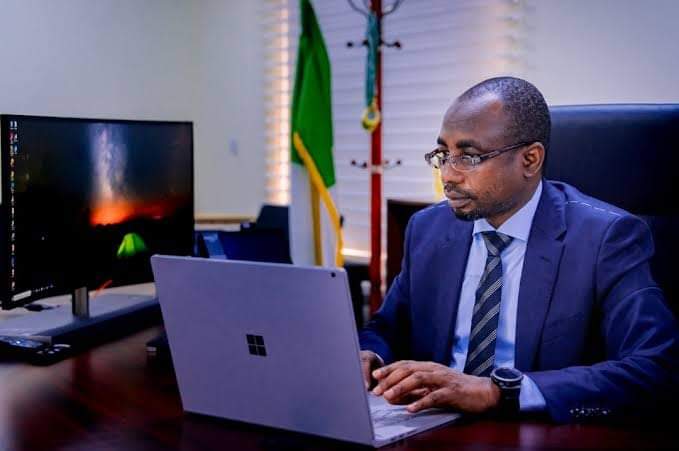
The Director General, National Information Technology Development Agency (NITDA), Mallam Kashifu Inuwa, CCIE has reiterated that protecting personal information of Nigerians online is a top priority of NITDA, as data remains a critical component of Digital Economy.

Inuwa said this while participating at panel discussion during Nigeria Bar Association Annual General Conference held in Port Harcourt, Rivers State.

Represented by Barrister Olufemi Daniel, Inuwa noted that every moment spent on the internet leaves personal data footprints on social media (Facebook, Twitter, Instagram, etc) and search engines (Google, Bing, Yahoo, etc) making the companies get richer through yet free services, but with the personal data of individuals stored online.

He said research has shown that the value of individual personal data on digital platforms is about $12 per person, thus paving way for technology companies to generate revenue.
“Data is the lifeblood of Digital Economy that includes Metadata. The amount of data globally in 2020 was 44 zettabytes which the world is expected to reach 75 billion in Internet-of-Things (IoT) devices by 2025”, he said.

He added that Nigeria Data Protection Regulation (NDPR) was issued in January 2019 pursuant to Section 6 (a, c) of the NITDA Act 2007. The Regulation is the current National law on data protection in Nigeria. It applies to public and private sector processing personal data within and outside Nigeria.

He further stated that, “the Regulation is aimed at protecting the right to privacy, creating the right environment for digital transactions, job creation and improving information management practices in Nigeria”.

The DG further divulged that the recent decision of the Court of Appeal in the case of Incorporated Digital Lawyers vs National Identity Management Commission (NIMC) (CA/IB/291/2020) shows that the judicial system has begun to appreciate the importance of the digital technology in modern life, especially with the the Court ruling that NDPR is the National Law on Data Protection and Extension of Section 37 of the Constitution of the Federal Republic of Nigeria.

Inuwa acknowledged the efforts of legal practitioners and encouraged them to stand at the cusp of history, which in every new historical revolution, a successful lawyer must be ready to learn, unlearn and relearn to remain learned, and the legal professional cannot afford to take a back seat in the digital economy space.


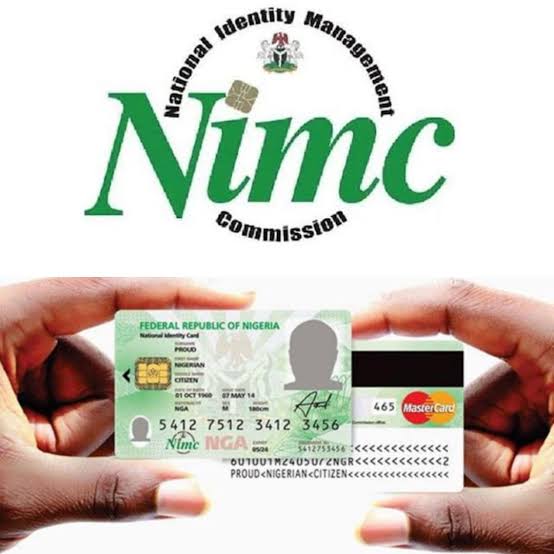
The Honourable Minister of Communications and Digital Economy, Prof. Isa Ali Ibrahim (Pantami) has conveyed the approval of the Federal Government to extend of the deadline for the National Identity Number (NIN)-Subscriber Identity Module (SIM) data verification.  Citizens and legal residents are urged to complete the process before the end of the year 2021.

The decision to extend the deadline was made further to appeals by the Mobile Network Operators and other industry stakeholders, soliciting for a further extension to ensure better compliance with government’s directive and to avoid widening the digital divide. The extension would also provide the enabling environment for the registration of Nigerians in remote areas,  diaspora, schools, hospitals, worship centres, as well as foreigners, diplomatic missions, those in other areas that were hitherto unreachable, and increase enrolments in countries with a significant number of Nigerians.

The review of the progress of the exercise indicated that over 66 million unique National Identity Numbers (NIN) have been issued- an indication of progress achieved in the ongoing NIN-SIM linkage. However, a significant part of the populace is yet to be registered into the National Identity Database (NIDB), which may be due to some challenges which the Federal Government has looked into and has made efforts to alleviate, hence the need to extend the deadline. 

As of October 30, 2021, there were over 9,500 enrolment systems and over 8,000 NIN enrolment centres within and outside the country- this has significantly eased the NIN enrolment process and subsequent linkage of NIN to SIM. The NIN-SIM verification process is supporting the Government’s drive to develop Nigeria’s digital economy, strengthen our ability to protect our cyberspace and support the security agencies.

The administration of His Excellency, President Muhammadu Buhari, GCFR, has graciously approved the extension to accommodate the yearnings of the populace and make it easier for its citizens within and outside the country, and legal residents to obtain the NIN and link it with their SIM. The Federal Government will ensure that all innocent, law abiding citizens and residents will not lose access to the their phone lines as long as they obtain and link their NIN.

Government will also continue to provide an enabling environment for investors in the telecommunications sector,
The unique 66 million NIN enrolments, with an average of 3 to 4 SIMs linked to the NIN, is a testament to the commitment and dedication of the Federal Government, through the Nigerian Communications Commission (NCC) and the National Identity Management Commission (NIMC), to ensure the success of the project. With the creation of additional NIN enrolment centres within and outside the country, and many more coming up, the remaining citizens and legal residents living in the country and the diaspora should be able to obtain their NINs and link them with their SIMs before the end of the year.

Consequently, the Honourable Minister enjoins Nigerians and legal residents to make use of the opportunity of the extension to enrol for their NINs and link with their SIMs. On behalf of the Honourable Minister, the Executive Vice Chairman of NCC, Prof. Umar Garba Danbatta, and the Director-General/CEO of NIMC, Engr. Aliyu Aziz, urge citizens and legal residents to take advantage of the window to complete the process of enrolment and verification before the the end of the year 2021.

Chairman, ReStraL and ex-Executive Chairman of the Federal Inland Revenue Service of Nigeria, Ifueko M Omoigui Okauru will present the Keynote speech at the 2021 Eastern Nigeria Economic Outlook event on 1pm, Friday March 12, 2021.

Ifueko who was the First female Executive Chairman of the National Tax Agency as well as the First female Chairman of the Joint Tax Board of Nigeria, will lead other accomplished professionals that include Chima Ibeneche (Ex-MD, SNEPCO, NLNG & EVP, Bonny Gas Transport Ltd), Ndidi Nwuneli (Co-Founder, Sahel Consulting & Founder, LEAP Africa), Eyo Ekpo (Ex-Commissioner, National Electricity Regulatory Council), Cheta Nwanze (Lead Partner, SBM Intel) while Patrick Okigbo ( Principal Partner at Nextier) will moderate.

The event which is under the auspices of DevEast – a Non-profit Economic advocacy project championing the sustainable development of South Eastern Nigeria – in partnership with South-East & South-South Professionals, #StartupSouth and others, will converge experts across the two regions to explore ways to achieve the economic potential of the zone.

Speaking about the Event, Collins Onuegbu, Founder of DevEast said, “there are 11 states in the South East and South South regions of Nigeria. As an economic unit, this block has a GDP of $111B – creating an Economic Corridor that is one of the biggest in Africa. This corridor also hosts the Oil/Gas industry that has been the mainstay of the Nigerian Economy for the past 50years. A population of about 75million in a small urbanized and connected landmass makes it the 5th Largest populated country in Africa after Nigeria, Ethiopia, Egypt, and DRC.”

This webinar will help us discuss, project the region’s opportunities and attract investors.”

Attending the webinar is free but registration is required via bit.ly/deveast21

About DevEast
DevEast is a non-profit, non-governmental organization championing sustainable economic development of the former Eastern Nigeria region.

Contact: Charleen Chioma
Phone: +234 803 666 2384
Email: deveastng@gmail.com
Facebook/Twitter/Instagram: @DevEastNG
Website: www.deveast.org

The African Business Angel Network (ABAN) and VC4A are pleased to announce the 8th edition of the Africa Early Stage Investor Summit (#AESIS2021) which will take place online and offline from November 3 -5 2021. The annual event ‘for investors, by investors’ this year will shed light on new insights and trends taking over Africa’s startup space, share best practices, open the floor for powerful new deal-flows, celebrate successes and promote a culture of early stage investing on the African continent.

Africa is moving onward and upwards as startups on the continent are breaking records astronomically this year. By mid-July, the ecosystem had already raised as much as it had in the whole of 2019 through $1M+ deals such that even before the big OPay raise of $400M, the total amount raised by startups in Africa so far this year had just surpassed the total amount raised in 2020 overall ($1.6B) reaching a new milestone of $2B in 2021. Early stage investing in Africa is more set than ever to take off in 2021!

Coming up at #AESIS2021

The summit brings together the most notable speakers and guests from leading angel networks, venture capital (VC) funds, impact investors, accelerators, corporate venture divisions, industry associations, and the public sector over the power-packed two-day event withDay 1 focused on angel investors andDay 2 on VCs. Summit delegates will explore developments in Africa’s early stage investment space and will set the agenda for the coming years.

The 2021 Venture Showcase

This year, 16 top companies representing the best investment opportunities on the continent made it into the portfolio of the 2021 VC4A Venture Showcase. The founders will showcase their businesses from theSeed andSeries A tracks on Day 1 and 2 of the summit respectively, with fundraising rounds ranging from $400K to $20M. Following this, interested investors can get their seat at the table through the dedicated #AESIS2021 DealRooms organized in the week after the Summit.

Speakers

Speakers for #AESIS2021 feature industry giants such as Rebecca Enonchong, Eghosa Omoigui, David S Rose, Wale Ayeni, Lauren Cochran, Justin Norman, Zachariah George, Kola Aina, Idris Ayodeji Bello, Hannah Subayi Kamuanga, Yemi Keri, Dina el-Shenoufy and Aly El-Shakany with more still to come.

Alberto Anton of Plug and Play Ventures added in anticipation of the event this year “The summit provides great insights on trends in different industries like fintech, health, and enterprise in Africa, and showcases top investment opportunities”.

You don’t want to miss another great chance to be a part of this story.

Investor Meetups

#AESIS2021 will be complemented by informal invite-only local physical networking meetups organized by the investor community members in 10 cities across the world on the evening of November 3rd. Confirmed cities include Abuja, Accra, Alexandria, Cairo, Cape Town, Dakar, Johannesburg, Lagos Nairobi and Washington DC. Spaces are limited so make sure toregister on time or contact the team (mail: team@africainvestorsummit.com) and become a local host or find out about a local meetupnear you. To be able to register you need to be part of the investor community first:www.AfricaInvestorSummit.com.

Special thanks to our partners
ABAN and VC4A are excited to announce our longstanding partner Naspers who will be hosting the networking lounge at #AESIS2021 this year and with whom we will successfully deliver the Summit to the early-stage investor community once again.

Registrations now live

Register now on www.AfricaInvestorSummit.com and make sure to block your agenda to attend the physical meetup on November 3 and the virtual summit for November 4-5.

Successful registration will give you exclusive access to our community of investors representing over 90% of capital being invested into startups on the African continent. As well as access to highly curated deal flow with the most investible ventures from emerging markers and the ability to relive #AESIS2020 and watch all recordings here.

To ensure the investor community is able to connect and continue important discussions during these times, VC4A and ABAN are offering investors the opportunity to join free of charge. Feel free to invite your networks, but keep in mind the Summit is investor-only. For media requests, and partnership and sponsorship opportunities, please contact the organizers by email: team@AfricaInvestorSummit.com.

Media Contact:

Boye Abiodun-Adepoju

boyewa@vc4a.com

Website: AfricanInvestorSummit.com

About ABAN:

ABAN is the Pan-African network organization for angel investors. Established in 2015 by a group of 6 pioneer angel networks in Africa, ABAN represents an emerging sector playing a vital role in the African early stage ecosystems’ future, providing valuable human and financial capital to African startups through a growing number of Angel investor groups, syndicates and networks across the continent. Visit https://abanangels.org for more information.

About VC4A:

VC4A is an ecosystem builder that leverages its infrastructure, network and expertise for the programs that contribute to Africa’s startup movement. Since 2008, the organization designs, structures and implements successful entrepreneurship programs on the continent. VC4A runs an online platform featuring the world’s largest database of African startups and connecting local entrepreneurs to learning resources, mentors, investors and partner programs. Visit VC4A.com for more information.