The Director General, Bureau of Public Service Reforms (BPSR), Dasuki Ibrahim Arabi has said that Nigeria has shown high level of readiness to achieve digital transformation of the country.

He said with establishment of agencies such as Nigeria Communication Commission (NCC) and National Information Technology Development Agency (NITDA) to concretize the idea, the country is on the right path.

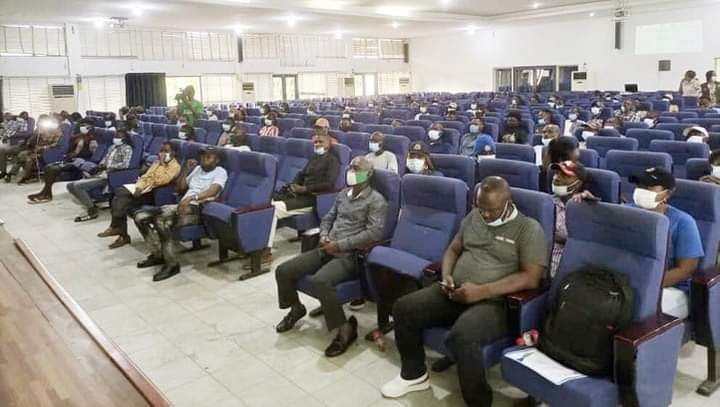
The DG was speaking on Saturday at the 2021 National Summit of Institute of Information Management (IIM) held in Abuja.

Dr Arabi who spoke on the topic: “Promoting the keys to data values through organisational data leadership in the era of digital transformation and economy”, said the discussion is timely and relevant, in view of the importance of the discussions on data and information management on Nigeria’s journey towards attaining digital economy.

He said, “Advanced and evolving technologies such as the Internet of Things (IoT), Big Data, Automation, Self-driving cars and Artificial Intelligence (AI), are projected to affect about 50 per cent of the world economy, and these are some of the outcomes of the application of digital technologies.

Digital transformation should be central and strategic among public sectors across the world, with ever-increasing citizen’s expectation around delivering greater efficiency, offering better services to the public and exploiting a greater range of modern technologies.

The present administration of President Muhammadu Buhari is trying to explore these potentials in all sectors, including in the area of ease of doing business, which made the country moved from the 170th position in 2017, up to 145th in 2018, based on the recent World Bank report.

“In today’s digital economy, organisations have access to more data than ever before. This data creates a foundation of intelligence for important business decisions. To ensure employees have the right data for decision-making, government agencies and private companies must invest in data management solutions that improve visibility, reliability, security, and scalability.

“Now, looking at it from the Nigerian experience, the move to ensure government Ministries, Departments, Agencies and Parastatals have joined other global colleagues, BPSR has been fully instrumental in the entire process.

“Little wonder, the country’s Minister of Communication and Digital Economy, Isah Ali Pantami recently revealed that courtesy of digital transformation, Information Technology projects’ clearance saves Nigeria N22.8b in 4 years,” Dr. Arabi added.
On what BPSR is doing to support the country’s journey to digital transformation, the DG said they have recently unveiled Nigeria National Strategy for Public Service Reform (NSPSR) to that respect.

“Just recently, BPSR unveiled new Nigeria National Strategy for Public Service Reform (NSPSR) to provide a common vision for rebuilding and transforming of the federal public service in the country. The strategy is primarily a coordinating mechanism that will help the ongoing reforms across the public service in government MDAs,” he added.

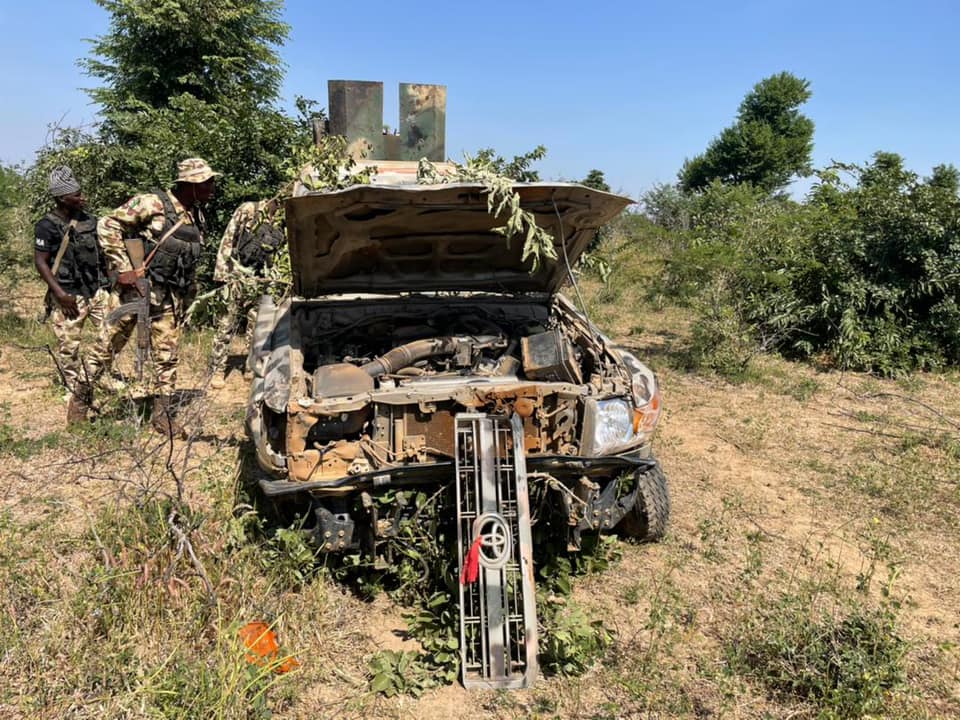
Troops of Joint Task Force, North East(NE) Operation HADIN KAI(OPHK) have neutralized over 50 Islamic State West Africa Province (ISWAP) terrorists and destroyed several of their combat equipment in a fierce counter offensive in Askira Uba Local Government Area of Borno State. In the counter offensive, troops eliminated top commanders of ISWAP as well as foot soldiers. The gallant troops also unleashed massive destruction on the terrorists’ Mine-Resistant Ambush Protected (MRAP) vehicle and several Gun Trucks.

It would be recalled, that 115 Task Force Battalion had an encounter with ISWAP terrorists in Askira Uba on 13 November 2021, during which the troops aggressively defended their location and followed up with a ferocious counter attack. Unfortunately, the Commander 28 Task Force Brigade along side three of his soldiers paid the supreme price, as they reinforced troops to defend the location.

While the battle raged, the gallant troops of 25 Task Force Brigade, supported by Air Component of OPHK engaged the terrorists in a hot pursuit. Troops made contact with the fleeing terrorists at Leho village within Askira Uba LGA and in the encounter that ensued, troops eliminated scores of terrorists and destroyed their combat equipment.

The equipment destroyed by troops include, an MRAP vehicle and 11 Gun Trucks. The troops also recovered large cache of arms and ammunition viz., Five Gun Trucks, two Anti Aircraft Guns, five AK 47 rifles, one HK Machine Gun and one HK Machine Gun links.

Relatedly, troops of 115 Task Force Battalion conducted a dawn exploitation towards Leho village and environs, where they discovered 3 corpses of the fleeing terrorists and also recovered 2,560 rounds of 7.62mm Special and 29 rounds of 7.62mm NATO ammunition abandoned by the terrorists.

In a separate operation, troops have also recovered one AK 47 rifle and uncovered an Improvised Explosive Device (IED) during a patrol in Karawa village and Baga Fish Dam area respectively. The IED has been safely detonated by a team of the Explosive Ordnance Disposal unit.

Meanwhile, the Chief of Army Staff (COAS), Lieutenant General Faruk Yahaya has led a team of top brass of the Nigerian Army to pay a condolence visit to the family of the late Commander 28 Task Force Brigade, Brig Gen Dzarma Zirkusu on Sunday 14 November 2021, where he commiserated with families of the fallen heroes. He has also urged the good people of the NE to continue to support the ongoing counter insurgency operations, while reaffirming troops’ renewed operational readiness to aggressively confront the criminal elements.

Airbus Secure Land Communications will showcase its portfolio of modern hybrid communication and collaboration solutions for smart airports at Dubai Airshow 2021, taking place from the 14th to the 18th of November.

During the exhibition, Airbus will hold at its booth a demo for its Tactilon Agnet solution, a cloud-based collaboration service, to highlight how its features can support smarter teamwork among airport staff and security personnel.

Delivering the best of both Tetra and broadband solutions, the push-to-talk and end-to-end encrypted Tactilon Agnet is packed with state-of-the-art features for better connectivity and higher operational efficiency and safety. Users can securely talk, send multimedia messages and exchange live video with their teams with just a click. Apart from its multimedia-enriched messaging and video transmissions capabilities, it is also equipped with emergency calls and real-time location tracking functionalities to promote better staff coordination and faster response time.

Tactilon Agnet is a modern, easy-to-use, flexible and scalable collaboration solution that is efficient for group communication. By rolling out this solution airports can reduce operating costs, manage flights more effectively and improve security – all of which are vital to running and managing smart airports.

“At airport facilities, efficient supervision of different aspects of the operations is critical to optimizing processes, minimizing aircraft turnaround time and maximizing customer satisfaction. All employees need to ensure that the systems are in place to look after the passengers, airlines, airport security, check-in facilities, baggage handling, passport control, gates, ground handlers, and many more, are working seamlessly. Therefore, Airbus collaboration tools, including our Tactilon Agnet, play a pivotal role in ensuring that all staff can communicate and collaborate without interruption and in a fast and secure manner. This is what we offer to smart airports, which we will highlight at Dubai Airshow” said Selim Bouri, Head of Middle East, Africa and Asia Pacific for Secure Land Communications at Airbus.

Airbus has been providing the UAE’s aviation industry with its mission-critical collaboration and communication technologies for over a decade. Its roster of clients in the country includes Dubai Airports, Abu Dhabi Airports and Sharjah Airports.

In the past few years, one of the challenges the country have had to grapple with is the level of bigotry, which has dominated  our socio-political discourse . Such is the sensitivity of this issue that it has permeated all sectors and affected the perceptions of citizens to decisions and or appointment into offices irrespective of whether such are done with good intentions by the appropriate and or approving authorities.

Today, one of the youngest and scholarly personalities on the federal government of Nigeria, Professor  Isa Pantanmi, the Minister of Communications and Digital Economy is in the eyes of the storm for various reasons.

As a core professional and one of the few square pegs in square holes appointed by the Muhammadu Buhari government, has had to be in controversy, which stems out of his personal beliefs and the coincidental rise of insurgency while trying to ensure the performance of his duty to actualise the policy of National Identity, which has somewhat become an ‘abiku’ child often plaque by convulsion.
Pantanm’s personal religious background and persuasion had collided with the former, which came at a time when Islamic insurgency worsed by Boko Haram, has affected national identity project.

This has unwittingly put Pantanmi in the court of public opinion as he is perceived as a citizen whose previous role in his personal religion couldn’t be separated from his new calling on, which he has earned laurels as a professional.

But by far the most challenging image problem for the 49 years old Cyber security expert in spite of his unquestionable professional and academic credential, is the appointment two months ago as a Professor of Cyber Security by the Federal University of Technology, Owerri (FUTO).

Pantanmi, it will be recalled had a chain of degrees,BSC,MSC,
MBA from Abubakar Tafawa Balewa University(ATBU) and a doctorate in Computer Information Systems from Robert Gordon University,Aberdeen, UK.
Critics have put down the appointment such to the point of doubting the previous academic attainment of the young and performing minister among the pack of 53 colleagues in the Federal Executive Council.

It is on record that the very impactful changes in the nation’s communication sector of which the communications minister is the chief pivot, has apparently prepare it to become another goose that lays the Golden egg for the nation besides the oil sector.

The ASUU panel also explain in detail, how Patanmi applied for a professorial chair in response to the university advertisement and the steps taken by the university to grant his request following its established due process.

Hence,criticism of his new academic position failed to take cognisance of his previous laurels but weigh more on the personal religious pedigree , an issue which has unwittingly weigh the country down.

But then,the adherence to due process by the Governing Board of the FUTO, which advertised for the vacant professorial chairs among which is Cyber Security department to help deepen its research in this field among five others in the sciences is not only commendable but coming at a time the nation is faced with serious security challenges, which deployment of modern technology could only contain.

For appointing Pantanmi, as a Cyber Professor,the university’s branch of the Academic Staff of University,ASUU set up a committee which in it’s report declared the observance of due process by the governing council.

For once,academics should be insulated from undue partisanship more so when FUTO’ s ASUU constituted panel of six professors led by Professor M.S Nwakaudu and came out to adjudge the appointment as having followed due process.

That the eminent academic panel did confirm that the minister indeed applied for and was screened by the Governing Board of FUTO considering his various academic works,publications and contributions to knowledge in the two known institutions..Abubakar Tafawa Balewa University of Technology and Medina University in Saudi Arabia… speaks volume of the academic communities confidence in the system it is part of.

Besides,that it could ask the FUTO’s management to protect its integrity by taking steps to correct some misconceptions against it, is an evidence of a scholarly body ready to defend it’s integrity and that of the institution it represents and by extension the capacity of the appointee to contribute to knowledge of the institution from which the ASUU leadership also drew its strength.

That the ASUU among other measures also recommended a legal action against those who attempted to stain the reputation of the university is a confirmation of its belief and confidence in the sanctity of the institution and the system in operation.

Aside from the governing council,that the ASUU was also able to establish that Pantanmi’s assessment was based on the submission of the details of his publication alongside others and same which was sent to the Dean of School of Information and Communication Technology of the reputable institution which equally assessed the applications on merit, is also an indication that standards of the institution have not been compromised as claimed by critics.

Also that the Dean of SICT assessed the publications and productive works- some of which have even been adopted by the Nigerian Communication system, in it’s various revolutionary programmes as a regulator of the nation’s communication system; and using FUTO’s guidelines for appointment and promotion and establish a prima facie case for Pantanmi’s appointment is an indication of commitment to an established process.

This approach itself by the dean and school is a function of a working academic community and institution which has not been affected by the nation’s deteriorating system.

Perhaps, if Pantanmi have not been a public figure,the furore generated by his professorial appointment would not have arisen.

Yes,as some claim, he might not have spent considerable years in scholarship ladder but then prevailing atmosphere in academics is about impacted knowledge ,contributing to knowledge and sharing for national development.

The fact that since his appointment as a Professor of Cyber Security by the FUTO governing council,he is currently involved in the teaching of CYB 201 via online and also a lead supervisor of one PHD student/staff security department, is a function of desire to contribute to knowledge and inspiring young undergraduates in the contemporary learning environment especially as a serving minister in a crucial and strategic sector of the nation’s economy.

There is a need to divorce our development strides from partisan politics and primordial sentiments especially when we have exposed and energetic public officers in the saddle of leadership in a dynamic world.

We should not forget in a hurry that the duo of former Director General of Nigerian Stock Exchange, Prof Ndi Okereke-Onyiuke and Late Prof Dora Akunyili of the Nigerian Drug Law Enforcement Agency were appointed professors by Nigerian universities.

The appointments of the duo was well received in the corporate, academic world while other stakeholders in the country also did accept the conferments.

By Olukunle Martins

In keeping with its commitment to continuously keep stakeholders in the country’s telecoms sector informed, educated and protected, the Nigerian Communications Commission (NCC) wishes to, once again, notify the public of the existence of another hacking group orchestrating cyberespionage in the African telecoms space.

An Iranian hacking group known as Lyceum (also known as Hexane, Siamesekitten, or Spirlin) has been reported to be targeting telecoms, Internet Service Providers (ISPs) and Ministries of Foreign Affairs (MFA) in Africa with upgraded malware in a recent politically motivated attacks oriented in cyberespionage.

Information about this cyber attack is contained in the latest advisory issued by the Nigerian Computer Emergency Response Team (ngCERT). The ngCERT rated the probability and damage level of the new malware as high.

According to the advisory, the hacking group is known to be focused on infiltrating the networks of telecoms companies and ISPs. Between July and October, 2021, Lyceum was implicated in attacks against ISPs and telecoms organisations in Israel, Morocco, Tunisia, and Saudi Arabia.

The advanced persistent threat (APT) group has been linked to campaigns that hit Middle Eastern oil and gas companies in the past. Now, the group appears to have expanded its focus to the technology sector. In addition, the APT is responsible for a campaign against an unnamed African government’s Ministry of Foreign Affairs.

By the attackers’ mode of operation, Lyceum’s initial onslaught vectors include credential stuffing and brute-force attacks. So, once a victim’s system is compromised, the attackers conduct surveillance on specific targets. In that mode, Lyceum will attempt to deploy two different kinds of malware: Shark and Milan (known together as James).

Both malware are backdoors. Shark, a 32-bit executable written in C# and .NET, generates a configuration file for domain name system (DNS) tunneling or Hypertext Transfer Protocol (HTTP) C2 communications; whereas Milan – a 32-bit Remote Access Trojan (RAT) retrieves data.

Both are able to communicate with the group’s command-and-control (C2) servers. The APT maintains a C2 server network that connects to the group’s backdoors, consisting of over 20 domains, including six that were previously not associated with the threat actors.

According to reports, individual accounts at companies of interest are usually targeted, and then once these accounts are breached, they are used as a springboard to launch spear-phishing attacks against high-profile executives in an organization. The report suggests that not only do these attackers seek out data on subscribers and connected third-party companies, but once compromised, threat actors or their sponsors can also use these industries to surveil individuals of interest.

However, to guard against this kind of threats, the NCC wishes to re-echo ngCERT reports that multiple layers of security in addition to constant network monitoring is required by telecom companies and ISPs alike to stave off potential attacks.

Specifically, telecom consumers and the general public are advised to:

  1. Ensure the consistent use of firewalls (software, hardware and cloud firewalls).
  2. Enable a Web Application Firewall to help detect and prevent attacks coming from web applications by inspecting HTTP traffic.
  3. Install Up-to-date antivirus programmes to help detect and prevent a wide range of malware, trojans, and viruses, which APT hackers will use to exploit your system.
  4. Implement the use of Intrusion Prevention Systems that monitors your network.
  5. Create a secure sandboxing environment that allows you to open and run untrusted programs or codes without risking harm to your operating system.
  6. Ensure the use of virtual private network (VPN) to prevent an easy opportunity for APT hackers to gain initial access to your company’s network.
  7. Enable spam and malware protection for your email applications, and educate your employees on how to identify potentially malicious emails.

For further technical assistance, contact ngCERT on incident@cert.gov.ng.

The NCC, as the operator of the telecom sector’s cyber threat response centre (CSIRT), hereby reiterates its commitment active surveillance and monitoring of cyber activities in the sector and will always keep stakeholders in Nigeria’s telecommunications sector updated on potential threats within the cyber space. This is to ensure that the networks that deliver essential services are safe and that telecom consumers are protected from being victims of cyber attacks.

Signed:
Dr. Ikechukwu Adinde
Director, Public Affairs

November 15, 2021Press Statement

Again, NCC alerts of hacking group targeting Telcos, ISPs

In keeping with its commitment to continuously keep stakeholders in the country’s telecoms sector informed, educated and protected, the Nigerian Communications Commission (NCC) wishes to, once again, notify the public of the existence of another hacking group orchestrating cyberespionage in the African telecoms space.

An Iranian hacking group known as Lyceum (also known as Hexane, Siamesekitten, or Spirlin) has been reported to be targeting telecoms, Internet Service Providers (ISPs) and Ministries of Foreign Affairs (MFA) in Africa with upgraded malware in a recent politically motivated attacks oriented in cyberespionage.

Information about this cyber attack is contained in the latest advisory issued by the Nigerian Computer Emergency Response Team (ngCERT). The ngCERT rated the probability and damage level of the new malware as high.

According to the advisory, the hacking group is known to be focused on infiltrating the networks of telecoms companies and ISPs. Between July and October, 2021, Lyceum was implicated in attacks against ISPs and telecoms organisations in Israel, Morocco, Tunisia, and Saudi Arabia.

The advanced persistent threat (APT) group has been linked to campaigns that hit Middle Eastern oil and gas companies in the past. Now, the group appears to have expanded its focus to the technology sector. In addition, the APT is responsible for a campaign against an unnamed African government’s Ministry of Foreign Affairs.

By the attackers’ mode of operation, Lyceum’s initial onslaught vectors include credential stuffing and brute-force attacks. So, once a victim’s system is compromised, the attackers conduct surveillance on specific targets. In that mode, Lyceum will attempt to deploy two different kinds of malware: Shark and Milan (known together as James).

Both malware are backdoors. Shark, a 32-bit executable written in C# and .NET, generates a configuration file for domain name system (DNS) tunneling or Hypertext Transfer Protocol (HTTP) C2 communications; whereas Milan – a 32-bit Remote Access Trojan (RAT) retrieves data.

Both are able to communicate with the group’s command-and-control (C2) servers. The APT maintains a C2 server network that connects to the group’s backdoors, consisting of over 20 domains, including six that were previously not associated with the threat actors.

According to reports, individual accounts at companies of interest are usually targeted, and then once these accounts are breached, they are used as a springboard to launch spear-phishing attacks against high-profile executives in an organization. The report suggests that not only do these attackers seek out data on subscribers and connected third-party companies, but once compromised, threat actors or their sponsors can also use these industries to surveil individuals of interest.

However, to guard against this kind of threats, the NCC wishes to re-echo ngCERT reports that multiple layers of security in addition to constant network monitoring is required by telecom companies and ISPs alike to stave off potential attacks.

Specifically, telecom consumers and the general public are advised to:

  1. Ensure the consistent use of firewalls (software, hardware and cloud firewalls).
  2. Enable a Web Application Firewall to help detect and prevent attacks coming from web applications by inspecting HTTP traffic.
  3. Install Up-to-date antivirus programmes to help detect and prevent a wide range of malware, trojans, and viruses, which APT hackers will use to exploit your system.
  4. Implement the use of Intrusion Prevention Systems that monitors your network.
  5. Create a secure sandboxing environment that allows you to open and run untrusted programs or codes without risking harm to your operating system.
  6. Ensure the use of virtual private network (VPN) to prevent an easy opportunity for APT hackers to gain initial access to your company’s network.
  7. Enable spam and malware protection for your email applications, and educate your employees on how to identify potentially malicious emails.

For further technical assistance, contact ngCERT on incident@cert.gov.ng.

The NCC, as the operator of the telecom sector’s cyber threat response centre (CSIRT), hereby reiterates its commitment active surveillance and monitoring of cyber activities in the sector and will always keep stakeholders in Nigeria’s telecommunications sector updated on potential threats within the cyber space. This is to ensure that the networks that deliver essential services are safe and that telecom consumers are protected from being victims of cyber attacks.
The Nigerian Communications Commission (NCC) has awarded N20 million grant to four deserving Nigerian tech startups in furtherance of its commitment to encourage development of new indigenous technologies and contents, that are oriented in cutting-edge research to stimulate sustainable economic growth.

The four tech startups are: Clearflow System Hub, Aelaus Engineering Teams/Hyech Electronics Solutions, Kalibotics, and CyberNorth Tech. They emerged winners of Virtual NCC Internet of Things (IoT) Code Camp and Hackathon 2021, and they received N5 million each on their innovative technology solutions aimed at making life better for Nigerians.

While the first two startups, Clearflow System Hub; and Aelaus Engineering Teams/Hyech Electronics Solutions, emerged winners on IoT category on kidnapping and banditry, Kalibotics and CyberNorth Tech, emerged winners on assistive robotics for effective e-waste management solutions.

The grant was for the novel digital solutions of four startups, aimed at finding innovative digital solutions in addressing the challenges of insecurity and to stem the growth in national e-waste rates, while advancing the frontier of Internet of Things (IoT) in Nigeria.

Speaking at the prize-giving ceremony held at the Commission’s headquarters, in Abuja recently, Director, New Media and Information Security, NCC, Dr. Haru Al-Hassan, who delivered a speech at the event, on behalf of the Executive Vice Chairman of NCC, Prof. Umar Danbatta, said the Commission, as a frontline driver of innovation in Information and Communications Technology (ICT) industry, organized the second edition of the NCC Hackathon with a view to drive the creation of problem-solving tech innovations.

Danbatta said that the initiative was in line with the objectives of the Nigerian Economic Sustainability Plan (NESP) 2020, NCC’s Strategic Vision Plan (SVP) 2021-2025, Executive Order 5 of 2017, and Section 1 (f) of the Nigerian Communications Act (NCA), 2003 which focuses on promotion of Nigerian content in contracts, science, engineering and technology.

The EVC added that the occasion also symbolises the NCC’s commitment to deliver objectives of pillars 4, 7 and 8 of the National Digital Economy Policy and Strategy (NDEPS) 2020-2030, and the aspirations of the Commission’s SVP 2021-2025 in promoting innovative services and maintaining effective partnership and collaborations with relevant stakeholders.

Earlier, the Executive Commissioner, Technical Services, Ubale Maska, who was represented by Head, Research and Development, Kelechi Nwankwo, noted that the event demonstrated the critical role that the telecommunications sector plays in addressing Nigeria’s social and environmental problems with innovative solutions. He reiterated the Commission’s commitment towards continuously supporting innovations for nation building.

Underscoring the determination of the Commission towards harnessing the potentials of Nigerian youth in addressing emerging challenges through ICT, Maska said the event boldly demonstrates Commission’s resolve to champion the efforts of government to leverage telecommunications-based solutions to address societal issues that need urgent attention.

Representatives of agencies in the security governance sector, telecommunications operators, National Financial Intelligence Unit (NFIU) and Ministries, Departments and Agencies (MDAs) that attended the event lauded the NCC for the meaningful initiative.

The existence of shared vision, partnership and collaboration amongst the Ministry of Communications and Digital Economy, its parastatals and the sector’s stakeholders have been identified as one of the reasons for the unprecedented 17.09 percent contribution of the digital economy sector to the Gross Domestic product of the second quarter of 2021.

The Director General, National Information technology Development Agency, Mallam Kashifu Inuwa, CCIE disclosed this in a paper titled “The Nigerian Digital Architecture: The Journey So Far.” The paper was presented at the World Fintech Festival, 2021. An event jointly hosted by Nigeria and Singapore.

Inuwa who was represented at the event by the Agency’s Director of e-Government Development and Regulations, Dr Vincent Olatunji, stated that the way forward for Nigeria in attaining vintage position in the global digital economy remains in the country’s resolve to public private partnership initiatives, funding, human capital, advocacy and continuity.

He said, “The digital economy, from Nigeria’s perspectives revolves around the utilization of digital transformation, knowledge and technology to deliver goods and services, economy that drives on the Fourth Industrial Revolution, (4IR), convergence of all sets of digital innovation that drives social economic development and economic output created from digital technologies and innovations.”

According to the DG, the redesignation of the Federal Ministry to Ministry of Communications and Digital Economy and the launch of the National Digital Economy Policy and Strategy, (NDEPS) were responsible for the paradigm shift in Nigeria’s digital economy adding that NDEPS was developed to reposition the Nigerian Economy in order to take advantage of the many opportunities that digital technologies provide.

He said that the eight pillars of NDEPS align well with the Economic Recovery and Growth Plan of the Federal Government and address the three key focus areas of Mr. President, namely economic development, anti-corruption and security noting that the various policies and strategies put in place by the ministry and being executed by its parastatals laid the foundation for the success recorded so far.

While listing Nigeria’s achievements through the Strategic Roadmap and Action Plan, he said the Nigeria Data Protection Regulation initiative has impacted the Ease of Doing Business, cross border data flow, creation of over 3000 jobs, international recognition, creation of a new sector worth N5.2 billion and protection of Nigerian against digital colonialism.

On IT project clearance, he said the initiative has saved the country over N30 billion and reduction in IT project failure in the country while under the Digital Literacy and Skill programme, over 20,000 Nigerians have been trained and 250,000 enrolled in both NITDA Academy and Digital Nigeria dot gov dot ng platform.

He concluded that “digital economy continues to play an important role in our developmental agenda as we move into the age of artificial intelligence.”

Governor Obiano rewards Mrs Eunice Ngozi Onuegbusi, from Ukwulu (Amagu village) Ward 1, polling unit 04 (Dunukofia LG) with a sum of 1,000,000 million naira.

In a viral video, Madam Eunice was seen rejecting a whooping 5,000 naira from APC agents in her polling unit inorder for her to vote against her conscience on Saturday, November 6, 2021.

In governor Obiano’s remark: “Madam Eunice knew that though money could buy her temporary relief, but Anambra would be a better place if she voted according to her conscience. It belongs to our loyal party men and women who resisted temptations of financial inducement from rival parties to fight under the banner of APGA because they knew that victory for APGA is victory for the ordinary citizens of our dear state. And finally, it belongs to Ndi Anambra at home and in the Diaspora who stood behind APGA, not because we have met all the expectations of our people but because even in the foundation my Team and I have laid so far, they see enough sunlight to believe that Anambra State is like the sun which is bound to rise, against all odds. And that is why we won this election.”…

~~~Izuchukwu Adichie

In recognition of the relevance and activities of the informal e-waste operators in the State, a comprehensive training programme was organised by the National Environmental Standards and Regulations Enforcement Agency (NESREA), in collaboration with Lagos State Environmental Protection Agency (LASEPA), Lagos Waste Management Authority (LAWMA) and E-Waste Producer Responsibility of Nigeria (EPRON), to expose the collectors to basic operating procedures as well as laudable approaches to mitigate environmental health risks associated with improper handling and management of e-waste.

Declaring open the training programme, which took place at the Digital Bridge Institute, Oshodi, the Director-General of NESREA, Prof. Aliyu Jauro, stated that the training was designed to highlight the opportunities and challenges inherent in circularity of the sector as well as zero-tolerance for non-compliance to established protocol by the operators.

Prof. Jauro, represented by Mrs. Miranda Amachree, explained that the programme was organised for E-waste Collectors in Lagos with a focus on Circular Economic Approaches for the Electronic Sectors in Nigeria and was funded by the Global Environment Facility (GEF), adding that the training has four components, namely: Implementation of the extended producers’ responsibility and legislation in the e-waste sector; Establishment of 30 collection centres to collect 300 tons of e-waste through formalised collection channels; Development of a cost-effective recycling system for various e-waste categories to develop regional and global knowledge exchange on a circular economy model for e-waste and the Establishment of an e-waste compensation programme.

The training exercise, according to him, would expose the informal e-waste handlers to basic information guiding their operations, such as Proper handling of Waste Electrical/Electronic Equipment (WEEE), Safe handling of WEEE, Proper usage of Personal Protective Equipment (PPE), statutory duties of collectors as well as the creation of the Standard Operating Procedure (SOP).

Mr. Olugbenga Aleriwon-Daniel of GEF called for collective action that would positively impact and protect generations yet unborn, expressing optimism that the training would positively rub on the participants and enhance a clear understanding of proper management of e-waste, enlighten participants on best practices in handling WEEE and create a better understanding of the roles of informal collectors in achieving circularity in e-waste sector in the country.

In her goodwill remarks, General Manager of LASEPA, Dr. Dolapo Fasawe, who was represented by the Director of E-Waste Management, Mrs. Adedayo Adebayo noted that the training could not have come at a better time, particularly at this crucial period when world leaders are presently gathered in Glasgow (COP 26) to proffer solutions to climate change, through the collective implementation of eco-friendly policies that would reduce the negative impact on the environment.

“Circular economy reduces pressure on the environment, improves the security of the supply of raw material, increases competitiveness, innovation, economic growth and job creation. To drastically reduce the dangers imposed on the society by disposed and dismantled electronics, we must continuously engage our people through education, advocacy, sensitisation and call for attitudinal change against all forms of pollution”, Fasawe averred.

To ensure effective delivery of the message, the facilitators, Mrs. Halima Kolo Mohammed (GEF Project Manager); Mr. Ayinla Sulyiman (LASEPA); Mrs. Esther Oluwapojuwo (LASEPA), Mrs. Chika Anidiobi (LASEPA), Mr. Ibrahim Musa (NESREA) and Engr. Kamoru Yusuf (LAWMA), took turns engaging the participants in interactive sessions in Yoruba, Hausa and Igbo languages for proper understanding of the working protocol guiding recycling operations in the country.

The high point of the event was the presentation of Personal Protective Equipment (PPE) to participants for safeguarding against danger and hazardous materials in the course of their duties.

LASG

ForAGreaterLagos

CAPTIONS:

PIX 1: Mrs. Adedayo Adebayo, representative of the GM, LASEPA, Dr. Dolapo Fasawe.

PIX 2: E-waste Collectors in Personal Protective Equipments

PIX 3: A cross-section of the e-waste collector

Ndi Anambra, ekenm unu.

Umu nnem, the outcome of this gubernatorial election presents hope and a new beginning for our dear state. For the second time in the last four years, Ndi Anambra boldly chose to stand on the side of positive history. People who thought that 21/21 was a fluke have seen history repeat itself in a most memorable way. 19/21 is a massive repeat of history. The difference is just two! And so, against intimidating odds, we stood tall and reclaimed the dignity of our people. Ndi Anambra, we proved to be true sons and daughters of our fathers and mothers and lived out the full meaning of our motto: Light of the Nation!

Fellow citizens, this sweet victory belongs to you. It belongs to that courageous woman in Ebenebe who turned down the N5000 bribe for her vote because she knew that though money could buy her temporary relief, but Anambra would be a better place if she voted according to her conscience. It belongs to our loyal party men and women who resisted temptations of financial inducement from rival parties to fight under the banner of APGA because they knew that victory for APGA is victory for the ordinary citizens of our dear state. And finally, it belongs to Ndi Anambra at home and in the Diaspora who stood behind APGA, not because we have met all the expectations of our people but because even in the foundation my Team and I have laid so far, they see enough sunlight to believe that Anambra State is like the sun which is bound to rise, against all odds. And that is why we won this election.

Ndi Anambra, in pursuit of excellence, we placed merit above narrow interests. We choose a candidate whose pedigree announces itself. Prof Chukwuma Soludo has a name to protect. I have no doubt that he will not let you down. However, on a personal level, Ndi Anambra, you have made me proud. You have shown the world that when a determined people come together as one in pursuit of what is right and just, they bend the arc of justice in their favour.

I must quickly warn, however, that the victory we celebrate today is not a winner-takes-it-all! The motto of our great party is onye aghana nwanne ya (be your brother and sister’s keeper). So, our arms are wide open to our brothers and sisters who fought this battle on other platforms to join APGA. As for those who allowed themselves to be lured away from our great party, our arms are wide open to you too. Please come home! The wound of political battles may be costly but it heals fast. We must not allow a brief struggle for power put a permanent division between families and friends. We must come together to build a prosperous homeland for ourselves and our children.

Ndi Anambra, this is a day of celebration; not for long speeches. The most important speech has been made by the people at the polls. So, I must end this address, but not without thanking the President of the Federal Republic of Nigeria, Muhammadu Buhari for allowing the will of the people to prevail in this election. Indeed, I am happy to recognize and appreciate the massive efforts of the National Chairman of our party, Ozonkpu Victor Oye, the former National Chairman and distinguished Senator of the Federal Republic, Chief Sir Victor Umeh, the Director General of APGA Campaign Committee, Prof Solo Chukwulobelu and of course, the Governor-elect of Anambra State, Prof Chukwuma Soludo. I also thank the leaders of the church and the traditional institution, leaders of the various market associations, farmers’ cooperatives, the town unions and our brothers and sisters in the Diaspora for playing active roles in this election. Without a doubt, you have demonstrated to the world that though we may fight with each other, the bond of brotherhood that holds us together is stronger than our disagreements!

My gratitude also goes to the Nigerian Police, the Army, the Navy and all the security agencies for providing a watertight security to ensure a peaceful election. I thank my beloved wife, Ebelechukwu for standing by me all through the campaign period and mobilizing umunwanyi Anambra to come out and perform their civic duty on November 6 and 9. Darling, oga adili gi mma!

In conclusion, Ndi Anambra, thank you so much for voting Prof Chukwuma Soludo. It is the best parting gift you will ever give to me!

God bless Anambra State
God bless Nigeria

Willie Obiano
Governor