The Lagos State Government has commenced the celebration of Year 2021 Restorative Justice Week, which holds on the third week of November every year.

A statement released on Tuesday by the Lagos State Restorative Justice Steering Committee on behalf of the Attorney-General and Commissioner for Justice, Mr. Moyosore Onigbanjo, SAN, said Restorative Justice is a method used for dealing with a crime that puts the needs of victims first while the offender takes responsibility for their actions.

According to Onigbanjo, the celebration of Restorative Justice Week, which is to amplify a practice that focuses on addressing conflict through participation and reconciliation, has the theme: “Protect and Empower the Person Harmed”.

His words: “The Week was set aside to create awareness about the role and importance of Restorative Justice as it relates to the promulgation of the ethos of justice based on putting victims first as well as giving them a voice. This year’s event is focused on Restorative Justice for victims, the benefits it can create for society as well as addressing injustices and harm in a humane way”.

Speaking further, he said the theme of this year’s programme is also apt given the impact of the COVID-19 pandemic on victims of crimes and the justice system as he reeled out the activities earmarked for the Week to include; sensitisation programmes, community outreach and a webinar for stakeholders scheduled for Tuesday, 30th November, 2021.

“The State is also set to launch the Restorative Justice Centre, which will serve as the coordinating hub for RJ referrals”, he said.

The Commissioner averred that deploying Restorative Justice as a tool for decongesting correctional facilities across the State will promote peaceful communities, transform the criminal justice system, heal wounds of crime and reintegrate offenders.

The Attorney-General noted that the Restorative Just Week is observed by diverse groups involved in RJ such as Non-Governmental Organisations (NGOs), Government Departments, Academia and other stakeholders in the justice system.

Pointing out that the Lagos State Restorative Justice Steering Committee was established by the State Criminal Justice Reform Committee to create awareness and develop policies as well as an operational framework for implementing Restorative Justice, Onigbanjo said that members of the Committee include representatives from the Ministry of Justice; Judiciary, Correctional Service, Police, Prison Fellowship Nigeria, Multi-door Court House, Citizens Mediation Centre (CMC) as well as the academia.

LASG

ForAGreaterLagos

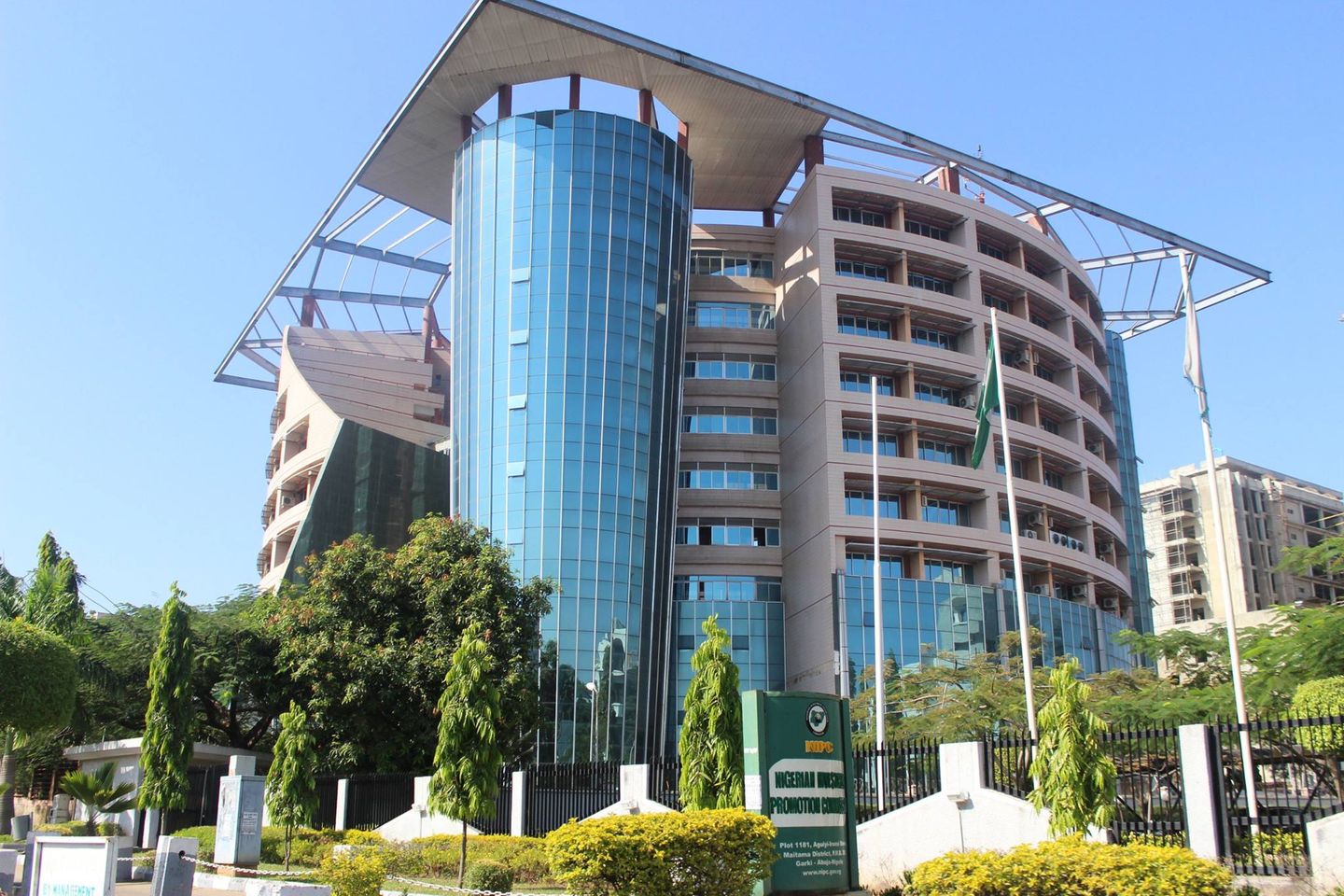
The Nigerian Communications Commission invites the Public to note that the submission of responses in respect of the 3.5 Gigahertz Spectrum Band auction was scheduled to close on Wednesday, 24th November 2021.

However, due to the challenges posed to air travels as witnessed recently and considering that it may have some impact on intending bidders regarding the submission of their bids, the Commission hereby extends the deadline for submission of bids and Initial Bid Deposits (IBDs) to 5.00 pm on Monday, 29th November, 2021.

All other events as scheduled in the Information Memorandum remain unchanged.

The trove of garlands for the Nigerian Communications Commission (NCC) for its role in enhancing digital transformation in Nigeria, has swelled with new awards conferred from an array of stakeholders.

It is two decades since the NCC midwifed the birth of Global System of Mobile Communications (GSM), to herald a new era of public communication in Nigeria.

The new awards were conferred on the Commission and its Management at different fora organised to commemorate 20 years of revolutionary digital communication in Nigeria.

Besides the serial honour attending the celebrations of two decades of the GSM revolution, the Commission also won awards at annual events organised by strategic stakeholders, including, the Nigerian telecom sector’s equivalent of Oscars, the Nigeria Tech Innovations & Telecoms Awards (NTITA), 2021.

At NTITA, NCC received the ‘Outstanding Telecom Regulator of the Year’ award, while its CEO, Prof. Umar Danbatta, the Executive Vice Chairman, was honoured with the ‘Telecoms Industry Leader’ award. The event took place in Lagos, on 19th November 2021.

A week earlier, at another event organised by the Association of Licensed Telecoms Operators of Nigeria (ALTON) and the Association of Telecommunications Companies of Nigeria (ATCON), in collaboration with Digivation Network, the Commission had received,  ‘The Premier African Regulator’ award. The EVC was also honoured with the ‘Regulatory Excellence Award’, while the Executive Commissioner Stakeholder Management, Barrister Adeleke Adewolu, received ‘The Outstanding Digital Impact Personality’ award. The event, tagged 20 Years of Digital Revolution Powered by GSM, took place at the Nigerian Air Force Conference Centre, Abuja, on 11th November 2021.

The same day, at yet another event organised by E-Business Life Magazine at the Oriental Hotel, Lagos to mark the 20 years of the birth of GSM, the NCC also received, ‘Technology Transformer Award’.

Additionally, just over the weekend, the NCC also received the ‘Regulator of the Year’ award at the New Telegraph Awards 2021, organised at the Federal Palace Hotel, Lagos, on Friday, November 19, 2021.

Meanwhile, at the event organised at NAF Conference Centre in Abuja, a panel representing shades of stakeholders in the telecom and ICT sector, took a retrospective reflection at the last 20 years of telecom liberalisation under NCC’s supervision. The panelists agreed that there have been irreversible, exponential transformation of the sector with visible impact on all other sectors of the Nigerian economy.

The panelists reminisced on developments in the sector in an inquisitorial manner, asking the audience to measure the dynamism in the telecom sector in terms of digital sophistication and  digital literacy in comparison to what it was two decades ago.

The speakers, one ofter another, examined in objective contexts, how telecoms service availability, affordability and accessibility have benefited persons of all social strata, especially the disadvantaged segment of the society. The panel also took a stock of the general impact of the digital culture from a historical perspective in order to properly capture the milestones.

As Nigeria prepares for the launch of the Fifth Generation (5G) networks, the panelists agreed that there will be more benefits to harvest from the emerging technologies. Thus, they urged all stakeholders to heighten education of citizens and especially telecom consumers, in order to halt the misinformation about 5G.

The discussants also expressed confidence in the ability of the Federal Ministry of Communications and Digital Economy and the NCC to rally stakeholders to deepen engagement at all levels and sectors to focus on the implementation of policies to ensure attainment of the set targets.

Meanwhile, the Director Public Affairs at the Commission, Dr. Ikechukwu Adinde, commended stakeholders, who gathered at various events where the Commission and its leaders were honoured, for their dedicated solidarity. He also thanked the various stakeholders who recognised the Commission with landmark awards, for the impeccable honours. Adinde stated that such number of awards to NCC in a fortnight testified to the strong collaboration between the Commission and the stakeholders and their conviction that NCC is fulfilling its mandate.

Adinde particularly told the audience at the E-Business Life forum that the recognitions coming to NCC will further encourage the Commission’s management led by Prof. Umar Danbatta and his dynamic team to do more to expand the frontiers of opportunities of digital economy to enable citizens and other investors to enhance their contributions to Nigeria’s growth and development.

As the three-day 2021 Board and Management Retreat (BMR) organised by the Nigerian Communications Commission (NCC) comes to a close, the Executive Vice Chairman and Chief Executive Officer of the Commission, Prof. Umar Garba Danbatta, has re-emphasised the confidence of Management in the continuous support of its Board of Commissioners towards actualising the set targets and goals for advancing the growth of the telecoms industry.

On the heels of Danbatta’s declaration came a pledge by Chairman, NCC Board of Commissioners, Prof. Adeolu Akanade, ‘to go to the drawing table’ in ensuring the Commission is well positioned to deliver on its mandates. The Chairman promised that the Board will work on issues that will help strengthen the regulator to deliver more effectively on its mandates.

Speaking at the wrap-up ceremony of the Retreat, which started on Thursday, November 11, 2021, at the Transcorp Hilton Hotel, Abuja and ended on Saturday, November 13, 2021.

Danbatta expressed confidence in the leadership of the Board of the Commission, noting that the support of the Board has been invaluable in the accomplishments of the Commission.

According to Danbatta, “I must commend the Board of Commissioners under the chairmanship of Prof. Adeolu Akande for their support. From the first day of assuming office as NCC Chairman, Prof. Akande has demonstrated his commitment to work with the management towards ensuring that NCC delivers its functions more efficiently and effectively.”

Danbatta stated that, as an effective, efficient and independent regulatory agency of the Federal Government, the NCC has been consistent in living up to stakeholder expectations and this is proven by the contribution of the telecom sector to the national economy.

“Without the staunch support of the Board for the Management’s vision and mission, it would have been difficult for us to achieve our goals. Therefore, I commend the Board for providing the necessary policy directions required to drive management’s daily activities,” Danbatta said.

Danbatta also appreciated the effective coordination of the 2021 BMR by the retreat consultants led by Prof. Pat Utomi, in ensuring effective facilitation of proceedings, deliberations and brainstorming sessions at the Retreat.

With the theme: ‘Expect More, Deliver Result’, this year’s strategic annual retreat of the Commission’s Board and Management, was attended in-person and virtually by Board members and Senior Management Staff of the Commission.

The retreat follows the unveiling of two key documents – the Strategic Management Plan (SMP), 2020-2024, and the Strategic Vision Plan (SVP), 2021-2025. The SVP is a streamlined version of the SMP, and the SMP took life out of the National Digital Economy Policy and Strategy (2020-2030), the National Broadband Plan (2020-2025) and the Federation Government’s Economic Recovery and Growth Plan.

The SVP, which has five central vision, also has three supporting documents, namely: implementation strategies and timelines; monitoring and evaluation framework; and implementation responsibility matrix. The objective of the SVP is to enhance regulatory focus and efficiency in the delivery of NCC’s mandate.

Within this context, the Commission has focused this year’s retreat on taking account of remarkable successes recorded in the last one year and how the Commission hopes to innovate its way toward addressing industry challenges militating the consolidation of the growth of telecommunications sector.

At the end of the three-day Retreat, an eight-point communique was read out as a synthesis of all the deliberations for submission to NCC Board and Management to guide the regulatory activities of the Commission over the next one year. Implementation of the communique is expected to birth a new lease of expectations and dedication towards making 2022 a more rewarding year innovation and growth for the telecom industry.

Over the years the NCC, as a world-class regulatory agency, has held annual Board and Management retreats, affording it the opportunity to rejig its culture, processes and strategic objectives for enhanced operational efficiency and regulatory excellence.

In keeping with its commitment to continuously keep stakeholders in the country’s telecoms sector informed, educated and protected, the Nigerian Communications Commission (NCC) wishes to, once again, notify the public of the existence of another hacking group orchestrating cyberespionage in the African telecoms space.

An Iranian hacking group known as Lyceum (also known as Hexane, Siamesekitten, or Spirlin) has been reported to be targeting telecoms, Internet Service Providers (ISPs) and Ministries of Foreign Affairs (MFA) in Africa with upgraded malware in a recent politically motivated attacks oriented in cyberespionage.

Information about this cyber attack is contained in the latest advisory issued by the Nigerian Computer Emergency Response Team (ngCERT). The ngCERT rated the probability and damage level of the new malware as high.

According to the advisory, the hacking group is known to be focused on infiltrating the networks of telecoms companies and ISPs. Between July and October, 2021, Lyceum was implicated in attacks against ISPs and telecoms organisations in Israel, Morocco, Tunisia, and Saudi Arabia.

The advanced persistent threat (APT) group has been linked to campaigns that hit Middle Eastern oil and gas companies in the past. Now, the group appears to have expanded its focus to the technology sector. In addition, the APT is responsible for a campaign against an unnamed African government’s Ministry of Foreign Affairs.

By the attackers’ mode of operation, Lyceum’s initial onslaught vectors include credential stuffing and brute-force attacks. So, once a victim’s system is compromised, the attackers conduct surveillance on specific targets. In that mode, Lyceum will attempt to deploy two different kinds of malware: Shark and Milan (known together as James).

Both malware are backdoors. Shark, a 32-bit executable written in C# and .NET, generates a configuration file for domain name system (DNS) tunneling or Hypertext Transfer Protocol (HTTP) C2 communications; whereas Milan – a 32-bit Remote Access Trojan (RAT) retrieves data.

Both are able to communicate with the group’s command-and-control (C2) servers. The APT maintains a C2 server network that connects to the group’s backdoors, consisting of over 20 domains, including six that were previously not associated with the threat actors.

According to reports, individual accounts at companies of interest are usually targeted, and then once these accounts are breached, they are used as a springboard to launch spear-phishing attacks against high-profile executives in an organization. The report suggests that not only do these attackers seek out data on subscribers and connected third-party companies, but once compromised, threat actors or their sponsors can also use these industries to surveil individuals of interest.

However, to guard against this kind of threats, the NCC wishes to re-echo ngCERT reports that multiple layers of security in addition to constant network monitoring is required by telecom companies and ISPs alike to stave off potential attacks.

Specifically, telecom consumers and the general public are advised to:

  1. Ensure the consistent use of firewalls (software, hardware and cloud firewalls).
  2. Enable a Web Application Firewall to help detect and prevent attacks coming from web applications by inspecting HTTP traffic.
  3. Install Up-to-date antivirus programmes to help detect and prevent a wide range of malware, trojans, and viruses, which APT hackers will use to exploit your system.
  4. Implement the use of Intrusion Prevention Systems that monitors your network.
  5. Create a secure sandboxing environment that allows you to open and run untrusted programs or codes without risking harm to your operating system.
  6. Ensure the use of virtual private network (VPN) to prevent an easy opportunity for APT hackers to gain initial access to your company’s network.
  7. Enable spam and malware protection for your email applications, and educate your employees on how to identify potentially malicious emails.

For further technical assistance, contact ngCERT on incident@cert.gov.ng.

The NCC, as the operator of the telecom sector’s cyber threat response centre (CSIRT), hereby reiterates its commitment active surveillance and monitoring of cyber activities in the sector and will always keep stakeholders in Nigeria’s telecommunications sector updated on potential threats within the cyber space. This is to ensure that the networks that deliver essential services are safe and that telecom consumers are protected from being victims of cyber attacks.

In 2020/2021, the United States remains the top destination for international students, welcoming over 914,000 international students from over 200 places of origin according to the 2021 Open Doors Report on International Educational Exchange.  International students build life-long connections with Americans, their peers, host families, professors and communities.  These relationships help grow America’s international partnerships, forging ties that help the world collectively global challenges.

The United States remained open and welcoming to international students, even throughout the pandemic. The U.S. Government and the U.S system of higher education have been flexible to safely welcome international students, providing opportunities and resources to students during a global crisis. These efforts exemplify our shared commitment to international student mobility and global higher education.

The new report indicates there was a slight drop in the number of students from Nigeria currentlystudying in the United States, less than half the worldwide average decline. The current figure of 12,860 Nigerian students represents 33% of African students in the United States, making Nigeria both the leading source of students from the continent and 10th largest place of origin country worldwide.

Nigerians are enrolled in more than 1,000 institutions in the United States, while students using EducationUSA Nigeria services recorded $28 million in scholarships and financial aid awarded to those admitted for the 2021 academic year.

Open Doors 2021, released today by the Institute of International Education (IIE) and the U.S. Department of State’s Bureau of Educational and Cultural Affairs, highlights the U.S. higher education sector as a destination of choice for international students and the growing interest in international educational exchange among U.S. students. The release of the new Open Doors data marks the celebration of International Education Week, a joint initiative of the U.S. Department of State and the U.S. Department of Education to prepare Americans for a global environment and attract future leaders from other countries to study, learn, and exchange experiences in the United States. The Open Doors® report is published annually by the Institute of International Education in partnership with the U.S. Department of State’s Bureau of Educational and Cultural Affairs.

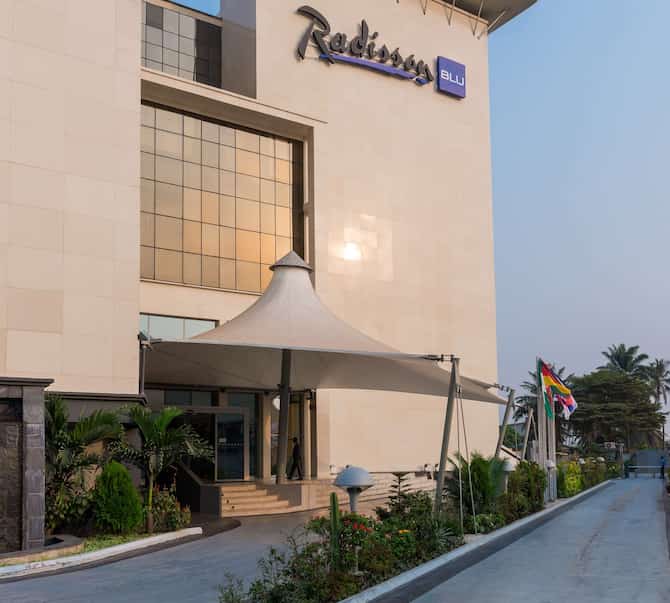
Radisson Hotel Group (RadissonHotels.com), one of the world’s leading hotel companies, has identified West & Central Africa as key markets in its African development strategy, growing its portfolio from one hotel in 2008 to the current portfolio of 25 hotels in operation and under development. With its robust expansion strategy, the Group is on track to cement its leadership and double its portfolio to 50 hotels by 2025.

Despite the pandemic, West & Central Africa remains a strategic territory for Radisson Hotel Group’s expansion. In 2020, the Group was able to increase its West & Central African portfolio with three new hotel signings, adding over 625 rooms, further reinforcing its presence in key markets such as Nigeria and Mali while entering a new West African market, Ghana. With conversions at the forefront of the growth strategy for the Group, Radisson Hotel Group was able to open within the same year, further demonstrating the strength and ability of the company to accelerate rebranding and repositioning of existing hotels.. Another milestone, was the debut of Radisson Collection brand in Africa, with the opening of Radisson Collection Hotel, Bamako in December.

In April this year, the Group launched its first Radisson Individuals property in Africa, with the signing of Earl Heights Suites Hotel, a member of Radisson Individuals, in Accra, Ghana, due to open during the first quarter of 2022. Radisson Individuals is a conversion brand that offers independent hotels and local, regional chains the opportunity to be part of the global Radisson Hotel Group platform, benefit from the Group’s international awareness and experience, with the freedom to maintain their own uniqueness and identity. The pandemic has set a trend of consolidation in the lodging industry, giving individual hotels the opportunity to rebrand their properties, allowing the Group to expand even faster. 

Erwan Garnier, Senior Director, Development, Africa at Radisson Hotel Group said, “We have identified six countries for growth in West & Central Africa, with a clear strategy to have city scaled growth in the key African capital cities, financial hubs and resort destinations. We have also identified eight pro-active cities in West & Central Africa in which we are focusing our efforts for scaled expansion. The focus destinations are Abuja, Lagos, Accra, Abidjan, Dakar, Yaoundé, Douala, and Kinshasa. Our development strategy for West and Central Africa, focuses on business hotels, resorts, serviced apartments and mixed-use developments. What sets us apart is our owner-centric approach with dedicated teams and relevant brands with the lowest development cost and access to development solutions, plus our adaptive solutions to meet local needs from compact offering, midscale to luxury, serviced apartments, lean operational model and clustering efficiencies.

Nigeria

As the largest economy of the African continent, Nigeria remains a key market for Radisson Hotel Group as it expands its reach across West Africa. The Group currently has nine properties open and under development in Nigeria, five which are operating in Lagos and Abeokuta and spread across our award-winning upper upscale brand, Radisson Blu, the upscale Radisson brand and the upper midscale brand, Park Inn by Radisson.

Four properties are currently under development in Abuja and Lagos: Radisson Collection Hotel Ikoyi Lagos, Radisson Collection Hotel Emerald Grand Hotel & Spa, Radisson Blu Hotel Abuja City Centre and Radisson Hotel Abuja Gudu.

Our objective in Nigeria is to increase our portfolio by 50%, by 2025. The prime focus of expansion is  the capital city of Abuja, followed by Lagos and Port Harcourt. We foresee developing each of our six brands in Nigeria which includes our newest Radisson Individuals brand to support potential conversions,” said Garnier.

Ghana

Claiming the title as the fastest economy in West Africa, Ghana has been identified as a focus market for the Group. Following the announcement of Earl Heights Suites Hotel, a member of Radisson Individuals, in Accra, Ghana earlier this year, the Group aims to enter the international luxury market with Radisson Collection, develop thier flagship Radisson Blu portfolio, the upscale segment with their Radisson brand, the upscale lifestyle segment with Radisson RED and the midscale segment with Park Inn by Radisson.

We have identified six countries for growth in West & Central Africa, with a clear strategy to have city scaled growth in the key African capital cities

The focus of expansion is the capital city, Accra, the Gulf of Guinea as well as Kumasi, one of the largest cities of the country.

Ivory Coast

Ivory Coast is one of the fastest economies in French Speaking Africa and is a key market for Radisson Hotel Group.

Garnier said, “Abidjan is our focus city and we aim to further expand and meet the needs of the market by having each of our six brands present by the end of 2025. Currently in operation is the Radisson Blu Hotel, Abidjan Airport (https://bit.ly/3B28TPb) and one hotel under development, the Radisson Hotel & Apartments, Abidjan Plateau, which will offer the largest conference center in the city center, stylish accommodation and the city’s first roof top bar and restaurant.”

We’ve identified the market requirement for international luxury in Abidjan and plan to meet this with our entry luxury brand, Radisson Collection. We also aim to expand our growing Radisson Blu portfolio and the upscale segment and upscale lifestyle segments with Radisson and Radisson RED in Plateau and Cocody. In terms of the international midscale segment, we aim to develop in Plateau, Cocody, Marcory and Treichville with our popular Park Inn by Radisson brand. Other cities we’re aiming to establish a presence in are San Pedro and the capital city of Yamoussoukro with our international upscale and midscale hotels. In the leisure market of Grand Bassam and Assinie, the ideal debut would be with Radisson Blu and Radisson brands.”

Senegal

Known as an example of political and economic stability in French speaking Africa, Senegal remains as a steadfast priority country of expansion for the Group. Dakar, a key focus city for Radisson Hotel Group, indicates strong potential in various market segments. The Group currently operates two hotels, Radisson Blu Hotel, Dakar Sea Plaza (https://bit.ly/3aVCGyk) and Radisson Hotel Dakar Diamniadio (https://bit.ly/3vzdjMd) and aims to establish a presence for each of their six brands by 2025.

Garnier added, “We plan to enter the international luxury market with Radisson Collection, expand upon our flagship Radisson Blu portfolio, and establish a presence in the upscale segment and upscale lifestyle segment with Radisson and Radisson RED as well as the midscale segment with Park Inn by Radisson. We are focusing our expansion in the center of Dakar with Plateau, Corniche, Ngor and Point E as well as Diamniadio and Saly. Other cities we’ve identified for expansion are Touba and Saint Louis with our Radisson and Park Inn by Radisson brands. In Cap Skirring, we aim to introduce our upscale and upper upscale brands to this leisure market alongside the Atlantic Ocean Coast.

Cameroon

Radisson Hotel Group plans to further expand its portfolio of brands across the country with a focus in Douala and Yaoundé. In Douala, the economic hub in Central Africa, the Radisson Blu Hotel & Apartments Douala is currently under-development with the opening scheduled for Q1 2023. The property will lead the five star segment in the city with 180 rooms and apartments, a range of food and beverage facilities, including a skybar with a view of the entire city, as well a cutting edge wellness spa and gym.

In the capital city of Yaounde and the financial hub of Douala, our ambition is to establish a presence for each of our six brands. Our priority now is to enter Yaoundé in order to have presence in both key cities of the country. We are also aiming to expand our resort offering in Kribi with our Radisson and Park Inn by Radisson brands.”

Democratic Republic of the Congo (DRC)

Radisson Hotel Group has identified the Democratic Republic of the Congothe second largest country of the continent by area, as a focus of expansion, placing a priority to enter this strategic market in 2022, focusing on Kinshasa city followed by Kolwezi and Lubumbashi. Kinshasa has the potential to house each of the six Radisson Hotel Group brands especially Radisson Collection, Radisson Blu and Radisson.


Millions of sports fans in Nigeria will step into a new world of sports entertainment with the launch of Afrosport TV (afrosport.tv) on the Free TV DTT network.

Afrosport will be sub-Sahara Africa’s first 24-hour free continent-wide sports channel in Nigeria, delivering a quality and depth of service that is usually found only on Pay TV channels, such as Supersport or StartTimes. Rolling out in Nigeria, with the intention of developing a presence across Africa and the diaspora, Afrosport is driven to change the narrative around Free-To-Air (FTA) sports provision on the continent, by delivering bespoke content to an underserved and passionate fan base.

Afrosport will seek to focus on the 90% of fans who are not able to subscribe to Pay TV and allow them to participate in the enjoyment of the best of sport

Speaking at the launch of the channel, Co-founder and Director, Andy Howes stated, “Africa has some of the best Pay TV sports delivery in the World, that is vital to rightsholders and fans alike. Afrosport will seek to focus on the 90% of fans who are not able to subscribe to Pay TV and allow them to participate in the enjoyment of the best of sport.”

“There is both a compelling commercial and moral reason for Afrosport to exist. Commercially, with a potential audience in Nigeria of more than 150 million people, Afrosport provides a method of communication that is essential for brands to market their products and will be an essential component for rightsholders – both global and local – to establish a strong following for their products.

“Morally, when you consider the powerful role that sports has played in societies, it is only right that a continent that has given so much enjoyment to the world of sports through its sons and daughters over the past 100 years and still continues to do so currently should not face exclusion for a majority of its population when it comes to viewing and enjoying sport.

Business Director Adeola Ogundele added, “Many will never get the chance to attend a World Cup, go to the Olympics, or attend a match at Wembley or watch a NBA game at the Staples Centre, and the TV is the closest that they will get to enjoying collectively what is experienced in arenas around the world. Afrosport’s aim is to inspire a billion dreams”.

Free TV is the public private partnership, backed by Nigerian broadcast regulator/government and INVIEW, and will be the default FTA platform as the long-awaited Digital Switch Over (DSO) moves into gear with the roll out across the country, including Lagos, Kano, Jos, Kaduna, Enugu, Oshogbo, and Abuja. Currently in over 1,000,000 TV homes with a target of over 25 million in the next 12 to 18 months.

The international medical humanitarian organization Doctors Without Borders/Médecins Sans Frontières (MSF) has launched a new program to treat malnourished children in the state of Katsina, in the northwest of Nigeria, as conflict and insecurity surge in the region and access to health care remains limited. Malnutrition is endemic in northern Nigeria with cases usually declining by October, though this year MSF teams are continuing to see alarmingly high levels.

MSF is working in collaboration with the Nigerian Ministry of Health to run a 62-bed inpatient therapeutic treatment center (ITFC) in Katsina City, as well as five ambulatory therapeutic treatment centers (ATFCs): one in Katsina City and the other four in Jibia Local Government Area, close to the border with Niger where many parents from Nigeria are seeking care for their malnourished children.

Since activities launched in Jibia in August, MSF has admitted 4,513 malnourished children, 78 percent of whom were suffering from severe acute malnutrition. Given that these centers were only open two days a week due to security concerns, these numbers are strikingly high.

In the city of Katsina, from the beginning of activities on September 20 through the last week of October, MSF staff admitted 1,784 severely malnourished children to the ATFC and 324 to the ITFC. MSF is still admitting patients into its ITFC in Katsina City, showing that there are still malnourished children needing treatment in a region with very limited care options.

The conflict is both contributing to the high levels of malnutrition and making responding to them more difficult

“During the summer, MSF carried out a nutritional survey in Katsina that revealed alarmingly high levels of malnutrition,” said Dr. Guyguy Manangama, MSF’s deputy emergency cell manager. According to this survey, the prevalence of global acute malnutrition was 26.1 percent, and severe acute malnutrition was 7.4 percent.

“The fact that we are not yet seeing the number of admissions drop in our centers leads us both to worry about how severe the situation is now and how it will develop if the response is not stepped up,” Manangama said.

People in the northwest of the country, including Katsina, are also currently experiencing a wave of violence, with kidnappings for ransom common and frequent confrontations between various armed groups and Nigerian forces. Conflict has also impacted agricultural activities because people are afraid to work in the fields, travel is more difficult, and the cost of food has increased. People are also facing an economic crisis driven by several factors including the consequences of the COVID-19 pandemic.

“The conflict is both contributing to the high levels of malnutrition and making responding to them more difficult,” Dr. Manangama said. “The provision of health care is increasingly complicated; medical staff can be targets for kidnapping, and they fear attacks on medical centers. The insecurity also means that we cannot travel to all the areas where we would like to offer care. Insecurity is a real issue in the area, but more must be done by international organizations to help the Nigerian authorities deal with this very worrying malnutrition situation.”

MSF teams in Nigeria are also running nutritional activities in Zamfara State, with three ITFCs in Anka, Shinkafi, and Zurmi Local Government Areas, as well as 12 ATFCs spread throughout the state.


Planning on a shopping spree this Black Friday or Cyber Monday? Ask yourself these questions before clicking ahead and becoming a scam statistic.


By: Carey van Vlaanderen, Chief Executive Officer at ESET Southern Africa


“Gucci bags 80% off!” screams the email that lands in your inbox on Black Friday. It seems like an impossibly large discount, but you open the email anyway – just to check if it seems legitimate. And it does – it’s professionally compiled, there are no spelling errors, and the logos and merchandise all look like the real deal. So, you click on the link provided. And you shop. Only to see a string of fraudulent charges on your next bank statement.

Black Friday is a lucrative day not only for retailers, but also for cyber criminals. In 2019, the use of retail phishing URLs jumped by 275% the week before Black Friday.

Before going on an online spending spree, ask yourself these questions to stay ahead of scammers:

Is my security up to date? Though many people secure their computers, they often leave their most connected device, their phone, vulnerable. Cybersecurity solutions like antivirus, firewalls and internet protection must be installed on any connected device. Before Black Friday starts, check if these solutions are up to date and apply any necessary patches.


Is it too good to be true? Cyber criminals are taking advantage of cash strapped consumers’ increased desire to save money, partly due the economic crisis caused by the COVID-19 pandemic. Any deal that seems too good to be true should not be trusted offhand. Verify them by typing in the retailer’s website address in a browser window and searching for the deal there.


Apart from jaw-dropping discounts, coupons are also a popular way to reel customers in. According to ESET telemetry, of all the Black Friday-related emails you will get in one day an average of 12% will be spam emails. Again, do not click on any links. Be sure to shop on the real website and apply coupons there by manually typing out the code.

Is the website (or app) real? Scammers are better than ever at creating legitimate-looking fake websites and apps to steal your personal details. The website address might even be very similar, with only one extra character. Always type out the correct website address in your browser rather than clicking on a link, and make sure to download apps from the Google Play Store or Apple App Store itself – not from a link. Once on a website, look for a padlock and, on a desktop device, the https:// at the beginning of the website address.​ These indicate that communication between you and the site is encrypted and any data you send can’t be seen by anyone intercepting the traffic.


Is it an ad? Attractive fake adverts with great deals abound on Black Friday and, other than websites, you can’t tell them apart from the real ads until it’s too late. Avoid clicking on any ads, whether on search results or on social media. Again, rather type out the retailer’s address in your browser.


Am I on public wi-fi? Criminals often intercept public wi-fi by creating a fake hotspot in the same area as a real hotspot. Log onto the fake one, and they can easily steal your details. Rather use your carrier’s service.


How should I pay? Secure payment services like Apple Pay, Android Pay or PayPal are your best bet. Credit cards are also a good means of payment when shopping online, because banks keep a close eye out for fraudulent activity. If you are unfortunate enough to have been scammed, you can alert the card issuer to dispute the charge and get it reversed quickly. Be sure to set you card limit low to minimise any damage.


Am I logged in? Never over-share personal data by creating an account with a retailer and letting them store your personal or payment details. Reducing the number of people storing your data will help reduce your risk of being affected by a breach. If you do create an account, choose a strong password that can’t easily be guessed. Between May and August 2021, ESET detected 55 billion new password guessing attacks (up 104% compared to T1 2021).


Deal or no deal? Stay safe on Black Friday


Planning on a shopping spree this Black Friday or Cyber Monday? Ask yourself these questions before clicking ahead and becoming a scam statistic.


By: Carey van Vlaanderen, Chief Executive Officer at ESET Southern Africa


“Gucci bags 80% off!” screams the email that lands in your inbox on Black Friday. It seems like an impossibly large discount, but you open the email anyway – just to check if it seems legitimate. And it does – it’s professionally compiled, there are no spelling errors, and the logos and merchandise all look like the real deal. So, you click on the link provided. And you shop. Only to see a string of fraudulent charges on your next bank statement.

Black Friday is a lucrative day not only for retailers, but also for cyber criminals. In 2019, the use of retail phishing URLs jumped by 275% the week before Black Friday.

Before going on an online spending spree, ask yourself these questions to stay ahead of scammers:

Is my security up to date? Though many people secure their computers, they often leave their most connected device, their phone, vulnerable. Cybersecurity solutions like antivirus, firewalls and internet protection must be installed on any connected device. Before Black Friday starts, check if these solutions are up to date and apply any necessary patches.


Is it too good to be true? Cyber criminals are taking advantage of cash strapped consumers’ increased desire to save money, partly due the economic crisis caused by the COVID-19 pandemic. Any deal that seems too good to be true should not be trusted offhand. Verify them by typing in the retailer’s website address in a browser window and searching for the deal there.


Apart from jaw-dropping discounts, coupons are also a popular way to reel customers in. According to ESET telemetry, of all the Black Friday-related emails you will get in one day an average of 12% will be spam emails. Again, do not click on any links. Be sure to shop on the real website and apply coupons there by manually typing out the code.

Is the website (or app) real? Scammers are better than ever at creating legitimate-looking fake websites and apps to steal your personal details. The website address might even be very similar, with only one extra character. Always type out the correct website address in your browser rather than clicking on a link, and make sure to download apps from the Google Play Store or Apple App Store itself – not from a link. Once on a website, look for a padlock and, on a desktop device, the https:// at the beginning of the website address.​ These indicate that communication between you and the site is encrypted and any data you send can’t be seen by anyone intercepting the traffic.


Is it an ad? Attractive fake adverts with great deals abound on Black Friday and, other than websites, you can’t tell them apart from the real ads until it’s too late. Avoid clicking on any ads, whether on search results or on social media. Again, rather type out the retailer’s address in your browser.


Am I on public wi-fi? Criminals often intercept public wi-fi by creating a fake hotspot in the same area as a real hotspot. Log onto the fake one, and they can easily steal your details. Rather use your carrier’s service.


How should I pay? Secure payment services like Apple Pay, Android Pay or PayPal are your best bet. Credit cards are also a good means of payment when shopping online, because banks keep a close eye out for fraudulent activity. If you are unfortunate enough to have been scammed, you can alert the card issuer to dispute the charge and get it reversed quickly. Be sure to set you card limit low to minimise any damage.


Am I logged in? Never over-share personal data by creating an account with a retailer and letting them store your personal or payment details. Reducing the number of people storing your data will help reduce your risk of being affected by a breach. If you do create an account, choose a strong password that can’t easily be guessed. Between May and August 2021, ESET detected 55 billion new password guessing attacks (up 104% compared to T1 2021).