


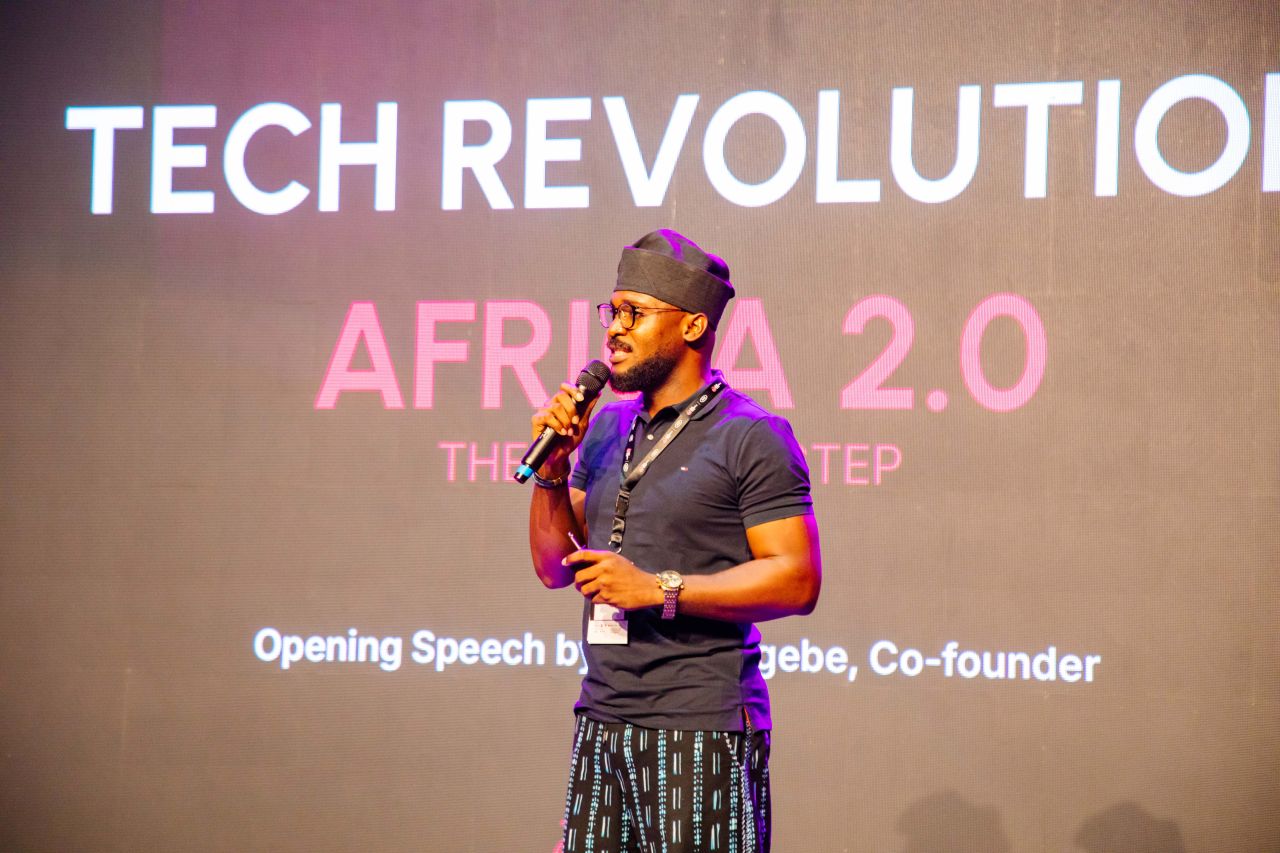






David Ogebe, an entrepreneur and ecosystem builder focused on Africa’s digital transformation, has raised concerns over Nigeria’s ability to meet its projected $18 billion digital economy target by 2026, warning that systemic execution failures and infrastructure challenges are slowing progress.
Speaking on the current state of the country’s tech ecosystem, Ogebe noted that despite Nigeria entering the second quarter of the year, the nation remains significantly behind its ambitious projection. He attributed this gap not to a lack of ideas or activity, but to an inability to execute initiatives at scale.
According to Ogebe, Nigeria’s digital landscape is characterized by high levels of engagement, with startups pitching to investors, young professionals acquiring digital skills, policymakers unveiling new initiatives, and industry events taking place regularly. However, he stressed that these activities are not translating into measurable outcomes such as revenue growth, job creation, or sustainable business systems.
He argued that the ecosystem currently incentivizes the wrong priorities, placing more value on discussions than execution, access to networks over ownership of solutions, and visible activity over tangible results. While acknowledging the vibrancy of Nigeria’s tech scene, Ogebe emphasized that energy alone does not equate to economic value at scale.
“The real issue is not a lack of innovation,” he suggested, “but a disconnect between ideas and their ability to generate real economic impact.” He pointed out that many startups focus on attracting investment rather than building products that customers are willing to pay for. Similarly, he observed that talent development programs often produce individuals who are certified but not adequately prepared for real-world execution.
Ogebe also highlighted a culture of networking that prioritizes visibility over structured outcomes, further contributing to the slow pace of meaningful progress within the ecosystem.
Describing the situation as a “hard truth,” he warned that without a shift in mindset and approach, Nigeria risks missing out on the full potential of its digital economy—not due to lack of effort, but due to insufficient focus on building scalable, sustainable solutions.
To address these challenges, Ogebe called for a fundamental shift in priorities: from learning to building, from talking to executing, and from generating ideas to creating scalable businesses that deliver measurable impact. He stressed the importance of moving beyond participation metrics, such as event attendance, toward outcomes that reflect real economic growth.
Through his work with Tech Revolution Africa, Ogebe said efforts are underway to bridge this execution gap. The initiative focuses on connecting digital talent to real opportunities, fostering partnerships that yield concrete results, and creating platforms where ideas can be tested, developed, and scaled effectively.
He concluded that the future of Africa’s technology ecosystem will ultimately depend not on the number of participants or conversations, but on the ability to build solutions that endure and create lasting value. While the $18 billion opportunity remains within reach, Ogebe cautioned that achieving it will require a deliberate and sustained focus on execution.