


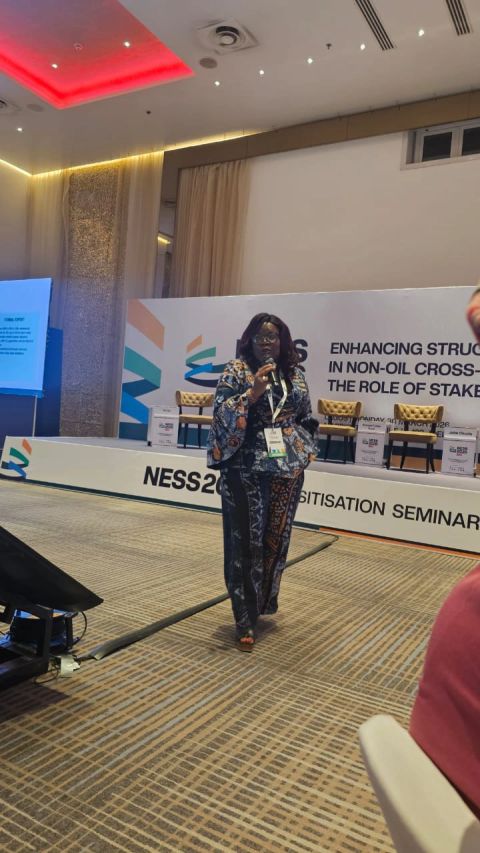






Trade and export development expert Titi Ojo has highlighted growing efforts to improve Nigeria’s non-oil export sector following a series of sensitization seminars held across major commercial cities in the country.
The most recent session took place on March 30, 2026, at the Marriott Hotel in Ikeja, Lagos, under the Nigerian Export Promotion Council (NEPC)-linked export sensitization framework. The event focused on strengthening exporters’ understanding of procedures, compliance requirements, and available incentives designed to support international trade.
Closing knowledge gaps in export processes
Ojo, who delivered the first paper titled “Export Procedures, Compliance & Incentives,” described the seminar as a practical engagement aimed at addressing real-world challenges faced by both emerging and experienced exporters.
Discussions at the event covered key areas including documentation requirements, regulatory compliance, access to export incentives, and institutional support mechanisms. Participants included active exporters, small and medium-scale enterprise operators, and stakeholders within Nigeria’s trade ecosystem.
According to Ojo, the sessions were designed not only to educate exporters but also to provide feedback to export-support institutions on bottlenecks affecting trade performance.
Nationwide engagement across commercial hubs
The sensitization programme was also extended beyond Lagos, with parallel sessions held in Kano and Port Harcourt. These cities were selected as strategic commercial hubs representing Nigeria’s diverse export landscape, including agriculture, manufacturing, and energy-linked value chains.
Organizers noted that the multi-city approach was intended to ensure broader reach and inclusivity, particularly for exporters operating outside major financial centers.
Focus on branding and global competitiveness
A key highlight of the Lagos session was a fireside conversation with export and branding specialist Rukayat Yusuf, which centered on improving product positioning for international markets. The discussion emphasized branding strategies, storytelling, and quality alignment as critical tools for competing globally.
Participants were encouraged to move beyond production capacity and focus on building export-ready brands that meet international standards and consumer expectations.
Strengthening Nigeria’s export ecosystem
Ojo also noted the launch and distribution of her publication, “From Nigeria to the World – A Beginner’s Guide to Exporting,” which she described as part of ongoing efforts to provide structured knowledge resources for exporters.
She emphasized that the future of Nigeria’s non-oil export sector depends on sustained collaboration between exporters, regulatory agencies, and trade facilitators. According to her, aligning both demand and supply sides of the export ecosystem is essential for improving efficiency and global competitiveness.
Outlook for non-oil exports
Stakeholders at the seminar expressed optimism about the growth of Nigeria’s export capacity, particularly in agriculture and value-added products. However, they stressed that continued investment in training, compliance education, and institutional support will be critical to translating potential into measurable export growth.
The sensitization initiative is part of broader national efforts to diversify Nigeria’s economy away from oil dependence and strengthen its participation in global trade markets.