


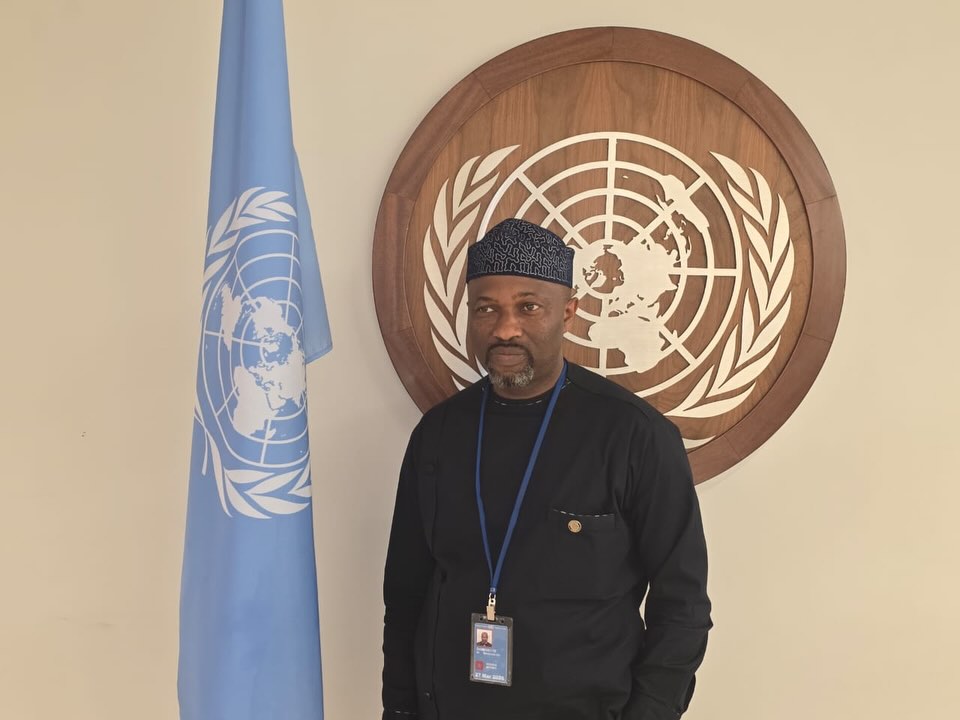






Nigeria has recorded a significant milestone on the global stage as Babatunde Bamigboye, Head of Legal, Enforcement and Regulations at the Nigeria Data Protection Commission, was elected Rapporteur at the 70th Session of the United Nations Commission on International Trade Law Working Group on Electronic Commerce.
The high-profile session, held at the United Nations Headquarters, brought together leading legal minds, policymakers, and international delegates to deliberate on emerging frameworks shaping the future of global digital trade and data governance.
A Strategic Global Recognition
Bamigboye’s election followed a nomination by the United States delegation and was seconded by Singapore, underscoring the growing confidence in Nigeria’s expertise and leadership in data protection and digital regulation.
His new role as Rapporteur places him at the center of documenting and shaping critical discussions that influence international legal standards, particularly in the fast-evolving space of electronic commerce and data transactions.
Shaping the Future of Data Governance
At the heart of the session were extensive deliberations on the Draft Model Legislative Provisions (DMLP) on Contracts for the Provision of Data, a framework designed to bring clarity, stability, and trust to global data exchange systems.
The UNCITRAL initiative aims to strengthen data value chains worldwide, ensuring that both data providers and recipients operate within secure, transparent, and legally protected environments.
A key highlight of the proposed provisions is their respect for national laws, particularly those governing trade and the protection of individuals, a balance that experts say is crucial in today’s interconnected digital economy.
Nigeria’s Growing Voice in Global Digital Policy
Bamigboye’s emergence in this role signals Nigeria’s rising influence in international conversations around data protection, privacy rights, and digital economy governance.
With delegates from countries such as Australia, Brazil, China, France, Germany, Ghana, Italy, Spain, Tanzania, and Zimbabwe in attendance, alongside observers from major institutions including the African Union and the European Union, the session reflected a broad global consensus on the importance of cohesive data regulation.
Reinforcing NDPC’s Global Relevance
For the Nigeria Data Protection Commission, the development is seen as a validation of its ongoing efforts to position Nigeria as a key player in data protection and privacy advocacy.
As digital transactions continue to define global commerce, Nigeria’s active participation in shaping international legal frameworks not only boosts its credibility but also ensures that the interests of emerging economies are well represented.
With this achievement, Nigeria is not just participating in global digital conversations, it is helping to lead them.