


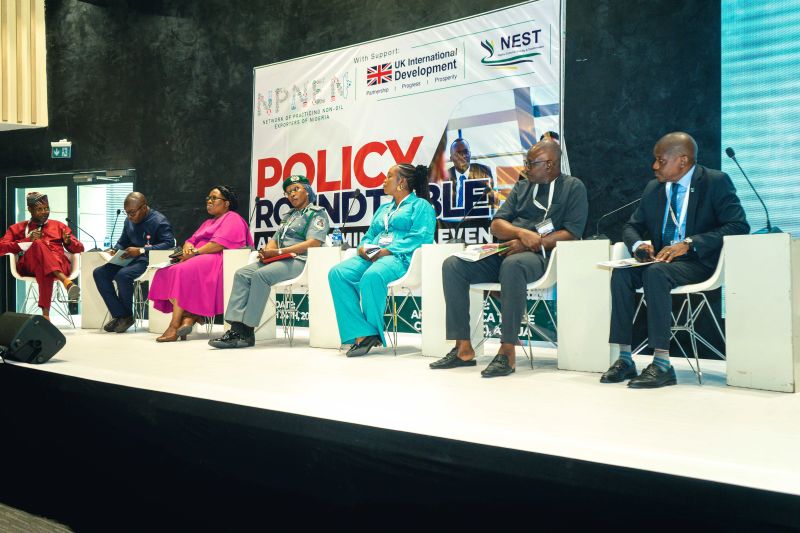
Nigeria has long recognised that its future economic growth cannot rely on oil alone. Over the past few years, non-oil exports have become a central part of the country’s strategy for diversification, resilience, and inclusive development. While the nation has made strides in reaching new markets and increasing export volumes, a closer look reveals a critical gap: most non-oil exports are still concentrated in low-value commodities, with little industrial processing or integration into higher-value global supply chains. This limits the benefits of international trade and the wider economic impact of export growth.
The introduction of the United Kingdom Developing Countries Trading Scheme (UK DCTS) and the African Continental Free Trade Area (AfCFTA) has created unprecedented opportunities for Nigerian exporters. The UK DCTS provides preferential access to over 3,000 product lines in one of the world’s wealthiest markets, while AfCFTA opens the door to a continental market of more than 1.3 billion people. Together, they offer a real chance for Nigeria to grow exports, diversify products, and become more deeply connected in global and regional value chains.
Yet, as a recent study by the Network of Practicing Non-Oil Exporters of Nigeria (NPNEN) shows, access alone is not enough. Many Nigerian exporters especially small and medium enterprises struggle to turn opportunities into consistent, profitable exports. “The central challenge is not access it is conversion,” the study notes.
The research, which combined surveys, interviews, and workshops across multiple cities, paints a detailed picture of the sector. Nigerian exporters have widened their reach, but their engagement is often shallow and irregular. Many rely on personal networks, trade fairs, or intermediaries to reach buyers, rather than structured market strategies. This makes them vulnerable to unreliable buyers, missed payments, and inconsistent demand, limiting their ability to grow.
Small and medium enterprises dominate the sector, yet they often face low production volumes, weak compliance systems, and limited value addition. The study highlights a “missing middle”: firms tend to operate at either very small scales or very large industrial levels, with little opportunity to scale in between. Barriers such as high logistics costs, poor infrastructure, fragmented regulations, and limited access to finance make this gap even harder to bridge.
Case studies underscore the problem. FVS Herbal & Agro Products, despite meeting international standards and exporting to the UK, struggles to maintain reliable buyers. Eterval Food Limited, a women-led SME, can produce large quantities of processed goods but is held back by payment risks and limited working capital. In both cases, capacity exists, but structural and financial hurdles prevent consistent export performance.
External challenges add to the strain. High shipping costs, complex certification requirements, and difficulties in navigating rules of origin mean that even when opportunities exist, firms struggle to take full advantage of trade preferences. Many SMEs find the compliance costs financially burdensome, limiting their competitiveness despite meeting quality standards.
The study’s key takeaway is that Nigeria’s non-oil export sector is full of promise but the system is holding it back. Bridging the gap between market access and actual export performance requires more than policy; it requires practical solutions: better infrastructure, more efficient logistics, access to finance, streamlined regulations, structured B2B networks, and targeted support for women and youth-led exporters.
By addressing these challenges, Nigeria can convert its trade potential into sustainable growth, creating jobs, boosting incomes, and making non-oil exports a real engine of economic transformation. The country has the markets and the talent it now needs the systems to turn opportunity into lasting success.