


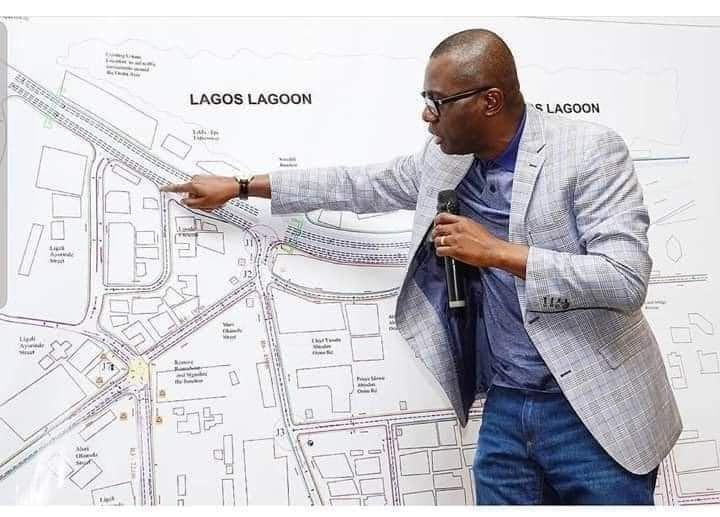





Elliot E. Odia has highlighted the potential long-term implications of the proposed Fourth Mainland Bridge on Lagos’ real estate landscape, describing the project as a transformative infrastructure development that could reshape investment patterns across the city.
The Fourth Mainland Bridge, a major transport project expected to span approximately 38 kilometers with multiple lanes and integrated BRT corridors, has been at the center of ongoing discussions around urban mobility, economic redistribution, and infrastructure-led growth. Recent updates indicate renewed momentum, with emphasis on a phased delivery approach and evolving financing structures involving African-led participation.
According to Odia, the bridge represents more than a transportation upgrade, suggesting that its broader economic impact could influence how real estate assets are valued across Lagos. He noted that improved connectivity between key mainland corridors, the Lekki axis, and other emerging zones may reduce pressure on traditionally congested areas while creating new clusters of commercial and residential activity.
Analysts and industry observers have also begun to link the bridge, alongside the Lagos–Calabar Coastal Highway project, to anticipated changes in coastal property valuations and logistics efficiency. Improved infrastructure is expected to enhance accessibility, reduce travel time, and potentially unlock new investment corridors that have previously been underdeveloped due to mobility constraints.
Odia emphasized that infrastructure projects of this scale often have ripple effects beyond transportation, influencing capital allocation decisions within the real estate sector. He described the development as a shift from viewing prime locations solely based on historical prestige to evaluating assets based on future connectivity, accessibility, and resilience.
He further noted that investors and professionals in the real estate space are increasingly considering how emerging infrastructure will influence movement patterns, business districts, and demand distribution. Areas such as Eko Atlantic, Ikoyi, and Victoria Island are already experiencing evolving investment perspectives as stakeholders assess how future traffic flows and economic activity may reshape their relative positioning within the city.
The broader implication, according to market observers, is that infrastructure-led development could redefine Lagos’ real estate hierarchy over time, creating new growth corridors while redistributing demand across the metropolitan area. This dynamic is prompting investors to increasingly align their strategies with long-term infrastructure plans rather than relying solely on existing urban congestion patterns.
As the Fourth Mainland Bridge project progresses, stakeholders continue to watch closely, with expectations that its completion could significantly influence mobility, commerce, and property value trends across Lagos in the coming years.

Elliot E. Odia • Founder & Group CEO, Wisecom Realty | Non-Executive Director, Veluxe Capital