


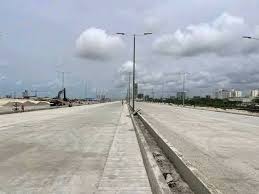
Lagos–Calabar Coastal Highway Project Expected to Transform Travel Time and Boost Regional Economy
The proposed is being projected to significantly reshape transportation and economic activity across Nigeria’s southern corridor, with expectations of major reductions in travel time between key cities and states.
According to projections around the project, travel time between and could drop from the current estimated 12–14 hours to about 6–7 hours under safe driving conditions once the highway is fully completed and operational.
The corridor is also expected to dramatically improve regional connectivity. Estimated travel times along connected routes suggest journeys to could take around 50 minutes, while access to may reduce to roughly 2 hours. Travel to could take about 3 hours, around 4 hours, approximately 5 hours, and about 6 hours, depending on traffic and road conditions.
Economic analysts suggest that improved connectivity of this scale could open up new trade routes, strengthen tourism, and reduce logistics costs for businesses operating across the coastal belt. By easing movement of goods and people, the highway is expected to integrate markets more closely and improve access to ports, industrial hubs, and agricultural zones.
Some long-term projections estimate that enhanced infrastructure efficiency of this nature could contribute to an overall GDP uplift in the range of 8–15% over the next 10 to 15 years, largely driven by increased productivity, reduced transportation costs, and expanded regional commerce.
While the project remains dependent on full completion and sustained maintenance, it is already being described as one of the most ambitious infrastructure developments aimed at reshaping economic activity along Nigeria’s coastal corridor.