






)
ABUJA, Nigeria — The Federal Government has officially signaled the start of a new economic era with the commencement of the Renewed Hope National Development Plan (2026–2030).
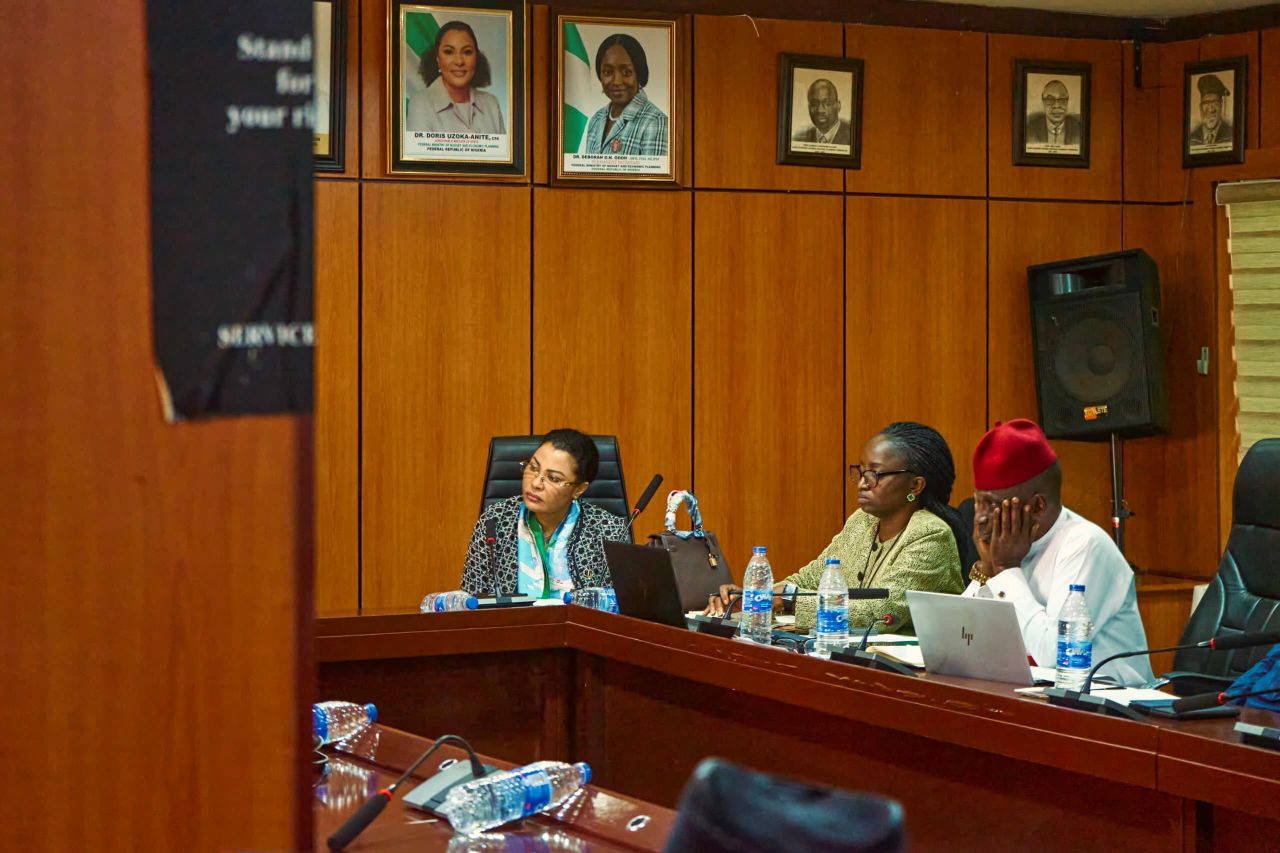
In a high-level strategic engagement, the Honourable Minister of State for Budget and Economic Planning, Dr. Doris Uzoka-Anite, met with the Ministry’s Directors to lay the groundwork for a framework designed to catapult Nigeria toward a one-trillion-dollar economy.
A Multidimensional Framework for Growth
The 2026–2030 plan is being designed as a “forward-looking” roadmap that moves away from siloed planning. Instead, it seeks to integrate Nigeria’s most critical economic engines into a single, cohesive trajectory. Key focus areas include:
- AgricTech & Infrastructure: Modernizing the backbone of the Nigerian economy.
- Technological Advancement: Ensuring the digital economy remains a primary driver of GDP.
- Climate Resilience & Social Welfare: Balancing aggressive industrial growth with environmental sustainability and poverty alleviation.
The “Blended Finance” Strategy
A standout feature of the Minister’s briefing was the emphasis on a blended financing model. Recognizing that government budgets alone cannot bridge the nation’s infrastructure and development gaps, the 2026–2030 plan aims to aggressively harmonize public and private sector resources.
“A critical priority is establishing a credible baseline, leveraging robust sectoral analysis,” Minister Uzoka-Anite noted. This data-driven approach is intended to provide investors—both domestic and international—with the confidence needed to commit capital to long-term national projects.
Continuity and Strategic Evolution
Rather than discarding previous efforts, the Renewed Hope Plan is positioned as an evolution of existing frameworks. The Ministry is introducing “strategic improvements” to ensure that development isn’t just fast, but inclusive and continuous.
By focusing on effective implementation and deliberate collaboration, the Ministry aims to ensure that the vision of a trillion-dollar economy becomes a measurable reality for the average Nigerian by the end of the decade.
The Industry Perspective
As the government prepares this roadmap, the role of indigenous tech leaders—such as Cardforté in the identity space and Menxtt Tech NG in IT infrastructure—becomes even more pivotal. These firms represent the “private sector resources” and “technological integration” that the Minister identified as essential to the plan’s success.