


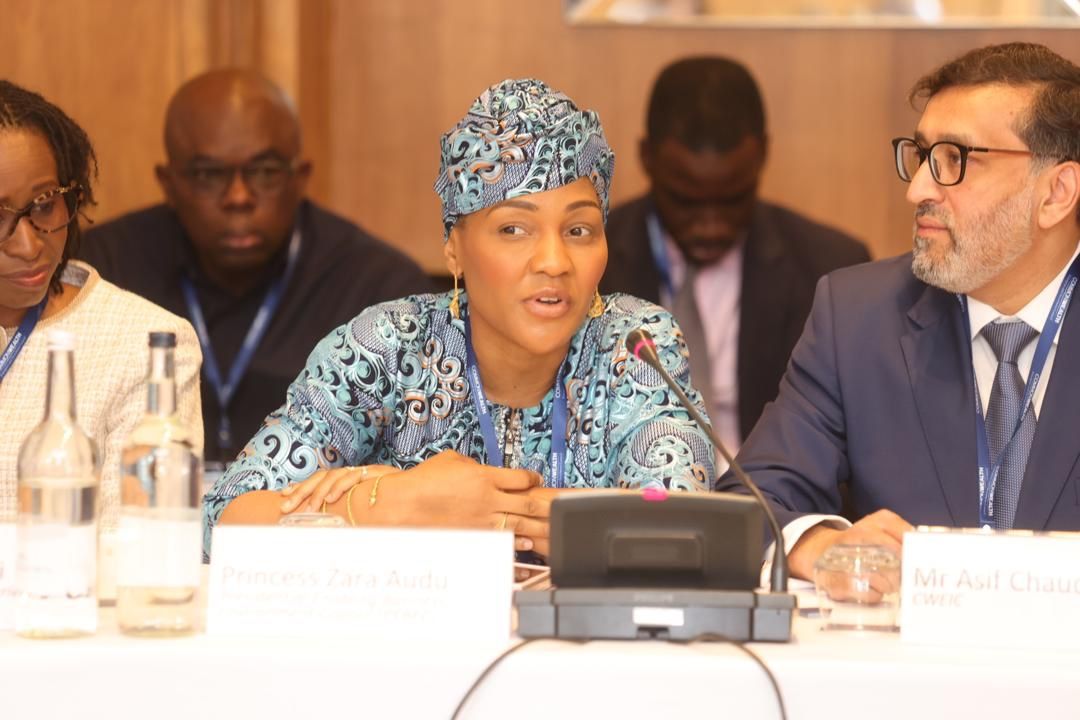






Princess Zahrah Mustapha Audu, Director General of the Presidential Enabling Business Environment Council (PEBEC), has participated in the Nigeria–United Kingdom Investment Roundtable held in London, where government officials and private-sector leaders explored opportunities to strengthen economic cooperation between both countries. 🇳🇬🇬🇧
The strategic engagement, hosted by the Nigerian Investment Promotion Commission (NIPC) in collaboration with the Commonwealth Enterprise and Investment Council, provided a platform for dialogue on enhancing trade relations, attracting foreign investment, and supporting sustainable economic growth. The roundtable convened policymakers, investors, and business stakeholders committed to building stronger bilateral partnerships and unlocking new areas of commercial collaboration.
During her presentation, Princess Audu outlined key reforms being implemented by PEBEC to improve Nigeria’s business environment. She highlighted ongoing initiatives aimed at strengthening regulatory transparency, reducing bureaucratic constraints, and improving service delivery across government agencies. According to her, these reforms are designed to foster a more predictable and competitive investment climate that can support long-term economic development.
She further emphasized the importance of institutional efficiency and investor-friendly policies in positioning Nigeria as a preferred destination for global capital. Participants at the forum also discussed innovative financing models, sector-specific investment opportunities, and mechanisms to facilitate smoother cross-border business operations.
Beyond economic gains, the reforms and partnerships discussed at the roundtable are expected to generate meaningful social benefits for Nigerians. Improved ease of doing business can stimulate job creation, support entrepreneurship, and encourage the growth of small and medium-scale enterprises. This, in turn, has the potential to reduce poverty levels, expand access to livelihoods, and enhance overall living standards.
Increased investment in key sectors such as infrastructure, technology, and manufacturing could also contribute to improved public services and community development. By promoting transparency and efficiency in governance processes, the reforms aim to build public trust and create a more inclusive environment where businesses and citizens alike can thrive.
The roundtable concluded with renewed commitments from stakeholders to deepen collaboration, strengthen investment partnerships, and drive policies that promote sustainable growth and shared prosperity between Nigeria and the United Kingdom.