



ANTHONY EMEKA NWOSU
The increasing exposure of Nigerian students to the digital world and the crucial responsibility of teachers to guide them safely within it took centre stage at a Stakeholders’ Dialogue on Teachers’ Role in Safeguarding Students’ Digital Exposure held at Novare Central Mall.
Delivering the keynote address titled “Nigeria’s Current Digital Landscape: Our Reality and Its Practical Connection to Education,” the Director General of National Information Technology Development Agency (NITDA), Kashifu Inuwa Abdullahi, represented by Dr. Aristotle Onumo, Director of Stakeholders Management and Partnerships, highlighted how the rapid expansion of Nigeria’s digital economy is reshaping the country’s education system and redefining the responsibilities of educators.
According to him, digital technologies have opened unprecedented opportunities for students by providing greater access to knowledge, information, and global learning resources. However, he noted that these opportunities also come with new challenges that require careful guidance and supervision.
Dr. Onumo explained that teachers now play a critical role in helping students navigate the complex digital environment responsibly. He emphasised that educators must guide students in identifying credible information, avoiding harmful or misleading online content, and developing responsible digital habits.
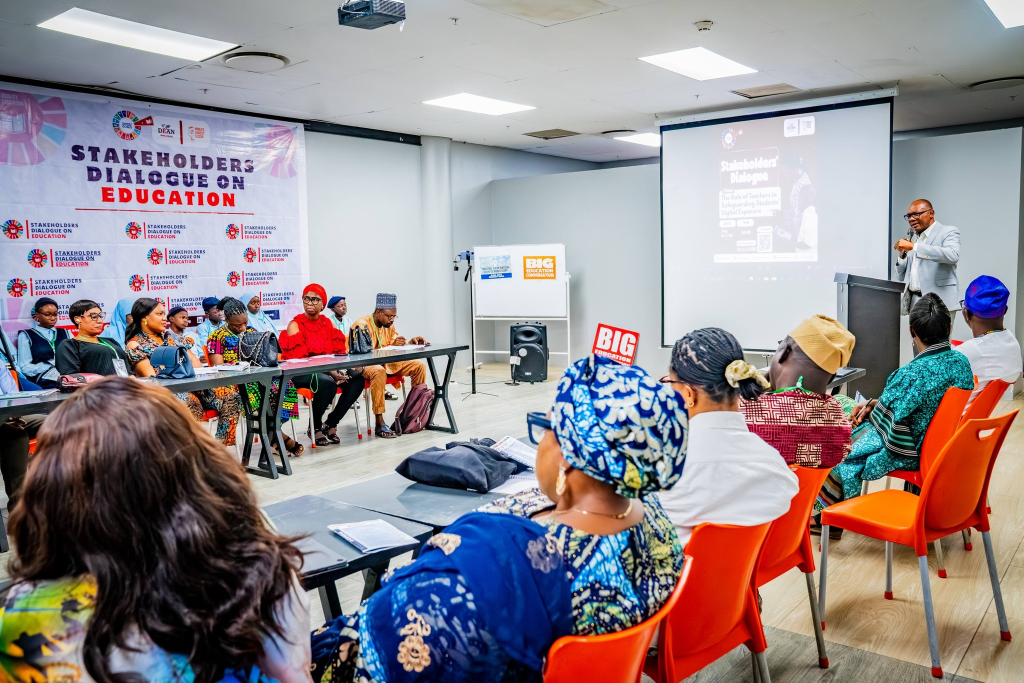
“The responsibilities of educators have evolved beyond simply transmitting knowledge,” he noted. “Teachers are now expected to act as navigators of information, mentors who cultivate critical thinking, and guardians of digital responsibility in an increasingly technology-driven learning environment.”
He further stressed that equipping teachers with the necessary digital skills is essential for preparing students to thrive in Nigeria’s rapidly evolving technology ecosystem.
Reaffirming the agency’s commitment to strengthening digital capacity nationwide, NITDA continues to implement several initiatives aimed at expanding digital literacy across the country. These include the Digital Literacy for All Programme, strategic collaborations with educational institutions, and capacity-building programmes designed to empower teachers with the tools and knowledge required to support students in a digital-first world.
The dialogue brought together educators, technology stakeholders, and policymakers to examine practical strategies for protecting students while maximising the educational benefits of digital technologies. Participants agreed that building a digitally responsible generation requires a collaborative approach involving teachers, parents, institutions, and government agencies working together to create a safer and more productive online learning environment.
The event underscored the growing importance of digital responsibility in Nigeria’s education system as the country continues to position itself as a key player in Africa’s rapidly expanding digital economy.