


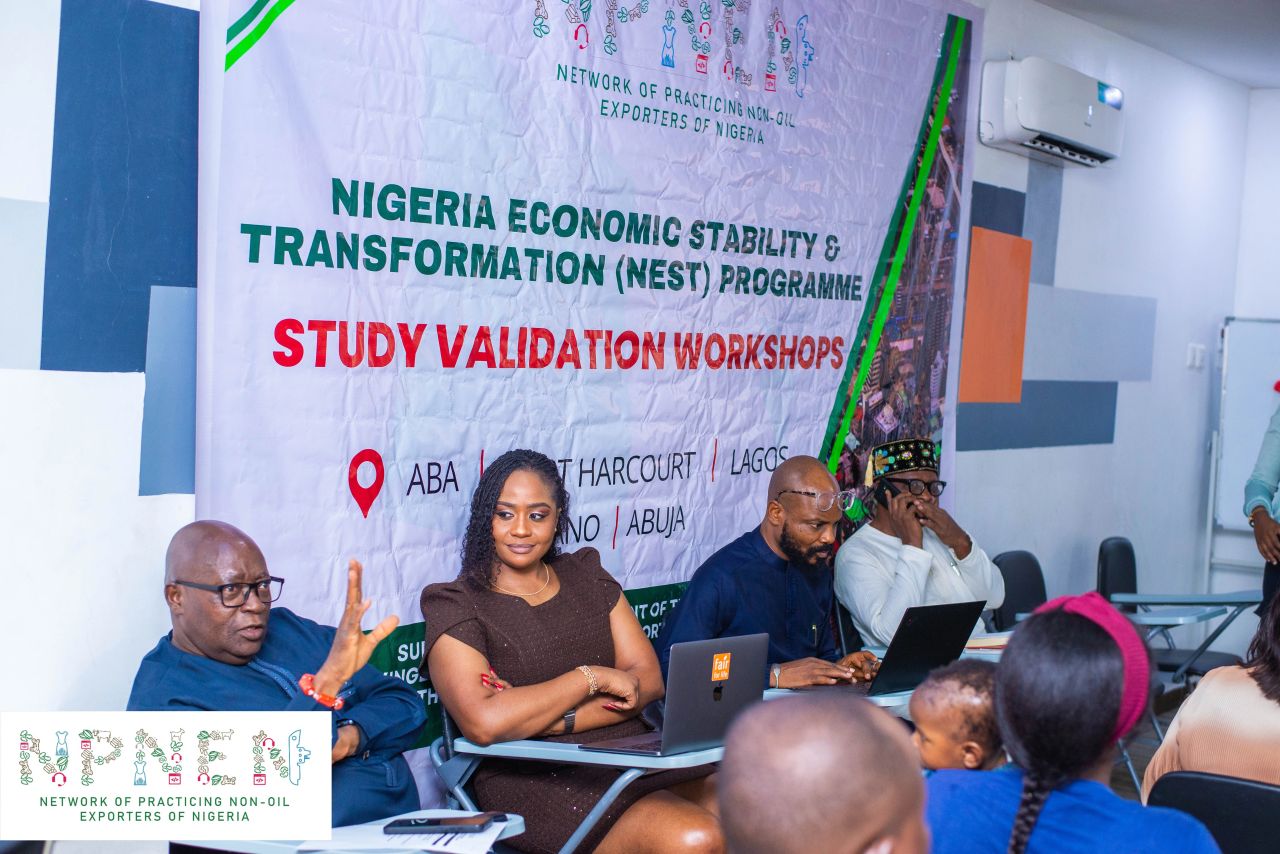






Aba & Port Harcourt, March 4–5, 2026 – In a significant step toward boosting Nigeria’s non-oil export sector, Network of Practicing Non-Oil Exporters of Nigeria (NPNEN), in collaboration with the Nigeria Economic Stability and Transformation (NEST) Programme funded by the UK Foreign, Commonwealth & Development Office (FCDO), convened exporters in Aba and Port Harcourt for the first in a series of stakeholder validation workshops.
The workshops aim to validate the findings of a Market Access Study for Nigeria’s Non-Oil Export Sector, ensuring that policy recommendations are grounded in the realities faced by exporters on the ground. Participants, drawn from small and medium enterprises (SMEs) operating across diverse sectors, had the opportunity to interrogate findings, challenge assumptions, and provide insights that would shape actionable policy interventions.
Titi Ojo, Trade and Export Development Expert and lead facilitator, emphasized the importance of involving exporters directly in policy design:
“Validation is where rigor meets reality. For Nigeria’s non-oil export sector to grow sustainably, policy must be shaped by those who trade across borders daily. The depth of insight and candor we received from participants in Aba and Port Harcourt is very encouraging.”
The workshops also focused on enhancing SME competitiveness within the frameworks of the Domestic Content, Trade and Standards (DCTS) initiative and the African Continental Free Trade Area (AfCFTA), positioning Nigerian businesses to expand regionally and globally.
Following the sessions in Aba and Port Harcourt, the validation exercise will move to Lagos on Thursday, and then to Kano and Abuja next week, ensuring broad geographic representation of exporters and stakeholders.
Analysts note that this participatory approach could significantly improve the effectiveness of trade policies, making them responsive to real-world challenges, enhancing SME competitiveness, and driving sustainable growth in Nigeria’s non-oil export sector.
By bridging the gap between research and policy implementation, initiatives like this not only strengthen evidence-based advocacy but also contribute to job creation, economic diversification, and Nigeria’s integration into regional and global markets.