









The rapid growth of artificial intelligence adoption across Nigeria’s technology ecosystem is reshaping how founders and businesses approach productivity, innovation, and profitability, according to recent reflections from ecosystem observers. In a recent commentary on the state of AI adoption, impact investing and partnerships professional Amanda Etuk highlighted the accelerating pace at which AI tools are being integrated into daily business operations across the country.
Etuk shared insights following attendance at two AI-focused industry events, noting that AI is no longer viewed as a future technology but as a present-day business tool. She observed that in one of the event sessions, nearly all participants had already used an AI-powered tool on the same day, signaling a major shift in perception across the Nigerian startup community. The conversation among founders, she explained, has moved beyond debating whether artificial intelligence will replace jobs to focusing on how businesses can leverage AI to increase productivity and profitability.
According to Etuk, the central question now facing Nigerian entrepreneurs is not about AI’s arrival, but about practical implementation and monetization. She explained that while enthusiasm for AI continues to grow across startup networks, the real challenge lies in identifying business models where AI transitions from being a convenience tool to becoming a critical operational necessity for companies operating in Nigeria’s unique market environment.
She emphasized that many current AI applications remain focused on automation for efficiency or adaptation of global AI models to local markets. However, she argued that the real opportunities lie in building deeply contextual solutions designed specifically for local economic challenges. These include solving problems related to distribution inefficiencies, fragmented and informal data systems, limited access to credit, complex supply chain networks, and gaps in public service delivery systems.
Economic observers and technology investors agree that the long-term winners in Nigeria’s AI space will be determined not only by technological innovation but also by business viability. Factors such as sustainable monetization strategies, market defensibility, and scalability across Nigeria’s diverse economic landscape are expected to play a decisive role in determining which companies succeed.
Etuk also praised early pioneers building AI solutions tailored to African markets, noting that ecosystem education is essential for sustainable growth. She described responsible AI adoption as a process that requires patience, collaboration, and long-term ecosystem leadership rather than rapid, short-term market capture.
“Market creation requires patience and leadership,” she said. “The real breakthrough will come from founders who focus on solving real, everyday problems for Nigerian businesses and consumers rather than simply adopting global solutions without adaptation.”
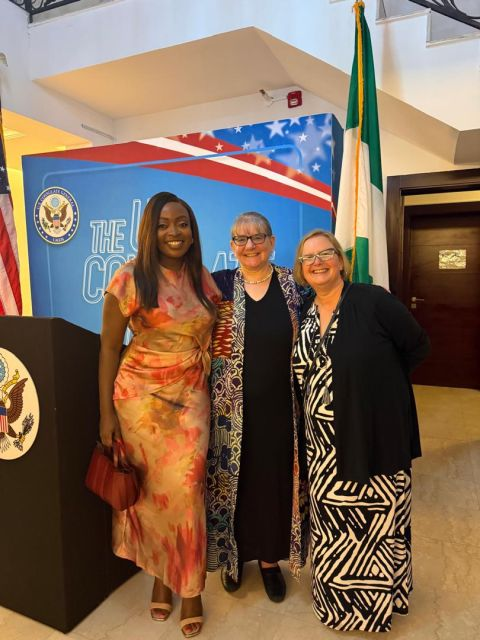
The discussion of AI adoption also reflects broader international partnerships supporting technology development in Nigeria. Engagements with international institutions such as the United States Department of State have helped foster dialogue around innovation, digital transformation, and responsible technology deployment across African markets.
Looking forward, industry experts predict that Nigeria’s AI ecosystem will continue to expand rapidly, particularly in sectors where technology can address structural inefficiencies. As digital transformation accelerates across African economies, investors are increasingly watching for startups that can demonstrate clear revenue potential alongside technological innovation.
Etuk concluded that Nigeria’s AI future will depend on founders who focus on building solutions that are both technologically advanced and commercially sustainable.
“If you are building practical, revenue-generating AI solutions for local problems, that is where the real long-term opportunity lies,” she stated, inviting collaboration from other founders and innovators across the ecosystem.