


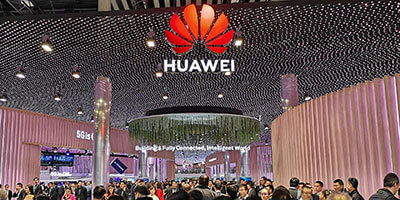






Global technology giant Huawei has introduced a new generation of high-performance computing systems designed to power the rapidly expanding artificial intelligence ecosystem, unveiling its latest SuperPoD portfolio during the Mobile World Congress 2026 in Barcelona.
The announcement was made by Seaway Zhang, President of Huawei’s Computing Product Line, who revealed two flagship solutions—the Atlas 950 SuperPoD and the TaiShan 950 SuperPoD—alongside a range of new computing technologies that made their global debut at the event.
The new portfolio forms part of Huawei’s broader strategy to build what the company describes as a “resilient computing foundation” capable of supporting the growing demand for large-scale AI processing across industries.
Advancing Global AI Infrastructure
Speaking during the unveiling, Zhang emphasized that the rapid evolution of artificial intelligence is driving the need for more powerful and scalable computing platforms capable of handling massive datasets and complex training models.
According to Huawei, the Atlas 950 SuperPoD is built to support advanced AI workloads by leveraging the company’s UnifiedBus interconnect architecture, a high-speed communication system that allows thousands of computing nodes to operate together as a single powerful machine.
This architecture enables organizations to perform large-scale AI training and inference operations more efficiently, significantly reducing the time required to process complex machine learning models.
Industry analysts say such infrastructure is becoming increasingly critical as enterprises, governments, and research institutions invest heavily in artificial intelligence applications ranging from scientific research and healthcare analytics to financial services and autonomous technologies.
Supporting Open Innovation
Huawei also used the platform to reaffirm its commitment to open-source development and open computing ecosystems, a strategy the company says is essential for accelerating global innovation.
The technology firm noted that its new computing solutions are designed to integrate with leading open-source communities and development frameworks, allowing developers worldwide to build, scale, and deploy AI applications more easily.
By supporting open systems, Huawei aims to expand global developer participation, unlock new computing capabilities, and speed up the deployment of next-generation AI solutions.
Growing Demand for AI Supercomputing
The launch of the SuperPoD portfolio reflects a broader industry trend toward massive AI computing clusters capable of training large language models and other advanced AI systems.
As artificial intelligence continues to transform sectors such as telecommunications, manufacturing, finance, and digital services, companies are increasingly investing in high-performance computing infrastructure to maintain competitiveness.
With the unveiling at Mobile World Congress, Huawei positioned its latest technologies as a new option for global AI infrastructure, reinforcing its ambition to remain a key player in the rapidly evolving global computing landscape.
The announcements also highlighted how technology companies are racing to develop next-generation computing platforms capable of supporting the exponential growth of AI innovation worldwide.