


A series of high-level reflections and public commentaries from leaders across finance, technology, infrastructure, governance, and entrepreneurship have converged on a common theme: institutions must evolve with intention, accountability, and courage to address structural challenges in Nigeria and across Africa.
From gender equity and digital infrastructure to startup execution and oil sovereignty, the conversations reflect a broader debate about how leadership, policy alignment, and institutional design shape long-term outcomes.
Gender Equity and the Architecture of Trust
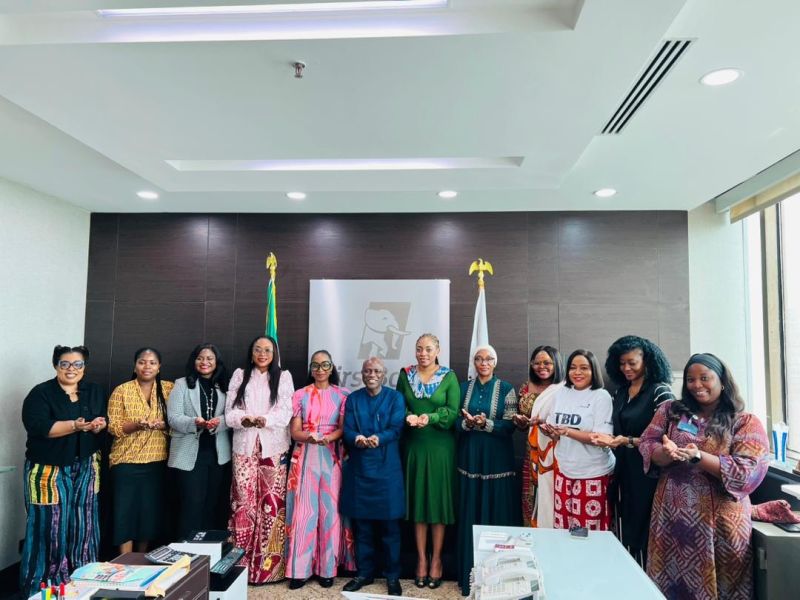
In her reflections on International Women’s Day 2026, Ngover Ihyembe-Nwankwo, an executive in financial services and digital infrastructure, framed gender equity not as symbolic inclusion but as a strategic investment in courage and institutional trust. Referencing the IWD 2026 theme “Give to Gain,” she argued that trust within complex systems — particularly Nigeria’s digital economy — must be deliberately designed rather than demanded.
Her remarks were delivered during events marking IWD hosted by First Bank of Nigeria Ltd. and its women’s network chaired by Olaitan Martins. Ihyembe-Nwankwo emphasized that while women are often conditioned to prioritize precision and conformity, innovation ecosystems require room for bold experimentation. According to her, granting women access to capital, leadership trust, and institutional backing is not an act of charity but a multiplier strategy that expands markets, strengthens resilience, and redefines prosperity.
Her position reflects a growing recognition within Nigeria’s fintech and financial services sectors that inclusive leadership and diverse decision-making are integral to sustainable digital growth.
Economic Reform and Diaspora Investment Strategy
Meanwhile, Ayodele Akinwunmi, Chief Economist at United Capital Plc, announced a briefing targeted at Nigerians in the diaspora, particularly in North America, focused on structural reforms underway in the Nigerian economy.
Akinwunmi highlighted significant shifts reshaping key sectors and unlocking new value pools. His engagement with diaspora investors underscores a broader strategy to position external capital and expertise as catalysts for domestic transformation. As Nigeria undergoes fiscal and structural recalibration, policymakers and market leaders are increasingly courting diaspora participation as both a confidence signal and a funding source.
Workplace Safety and Corporate Accountability Concerns
In contrast to policy-focused discussions, a separate conversation on workplace health and safety gained momentum following concerns raised about reported health complications among workers at an Indian-operated company in Nigeria identified as ARAP.
Finance and administrative professional Adesuwa Aghedo amplified calls for transparency and investigation, urging authorities to prioritize worker welfare and ensure accountability. Public reactions to the post highlighted broader anxieties about corporate governance standards, environmental compliance, and regulatory enforcement.
While formal investigations or official confirmations were not detailed in the discussion, the issue reflects persistent public scrutiny around occupational safety standards and the responsibility of both companies and regulators to safeguard employees.
Startup Lessons: Stage-Fit Over Pedigree
In the entrepreneurial ecosystem, Adewale Yusuf shared a cautionary account from his early fundraising experience. After raising a pre-seed round exceeding $300,000, his team hired an experienced operator from a well-capitalized firm, only to discover a misalignment between enterprise-grade structure and the ambiguity of a pre–product-market-fit startup.
Yusuf’s reflection centered on the concept of “stage-fit” — arguing that early-stage ventures benefit more from adaptable generalists than from specialists optimized for scale and structure. His remarks resonated widely within Nigeria’s growing startup community, where access to capital is expanding but execution discipline remains a differentiator.
The broader takeaway reinforces a common theme across sectors: institutional maturity must match operational needs, and timing is often as critical as talent.
Africa’s Data Center Gap and Digital Sovereignty Debate
Debate intensified within Africa’s digital infrastructure space following commentary by Jaye Connolly, who described the continent’s limited data center capacity as an emerging AI crisis. Connolly noted that despite representing nearly 20 percent of the global population, Africa controls less than 1 percent of global data center capacity.
He cited key operators such as Teraco and Africa Data Centres as leading contributors to continental capacity growth. However, his assertions drew public rebuttal from Ayotunde Coker, CEO of Open Access Data Centres, who questioned the credibility of certain figures presented.
The exchange reflects ongoing debates about data sovereignty, cloud dependency, AI infrastructure readiness, and the energy constraints associated with hyperscale computing. With Africa’s data center market reportedly expanding at double-digit growth rates, the policy implications span technology strategy, energy reform, and economic sovereignty.
Oil Sovereignty and Control of Strategic Assets
Legal and governance expert Olisa Agbakoba raised fundamental questions about Nigeria’s oil governance structure during a media interview with Africa Independent Television. He questioned why control over Nigeria’s oil sector appears concentrated between NNPC Limited and international oil companies, framing the issue as one of sovereignty and strategic autonomy.
His remarks feed into a long-running national conversation about resource control, regulatory reform, and the balance between foreign investment and domestic economic empowerment.
A Converging Narrative
Across these diverse conversations, a shared narrative emerges. Whether discussing gender equity in fintech, diaspora investment strategy, startup hiring discipline, digital infrastructure sovereignty, workplace safety, or oil governance, leaders are grappling with the same structural questions: Who controls value creation? How are institutions designed? And how can accountability and innovation coexist?
As Nigeria and the broader African continent navigate economic reform, digital transformation, and industrial evolution, the recurring themes of trust, coordination, sovereignty, and stage-appropriate leadership appear to define the next chapter of institutional development.
The discourse suggests that sustainable progress will depend less on isolated initiatives and more on systemic coherence — where governance, capital, talent, and infrastructure align to produce durable and inclusive growth.