


ANTHONY EMEKA NWOSU
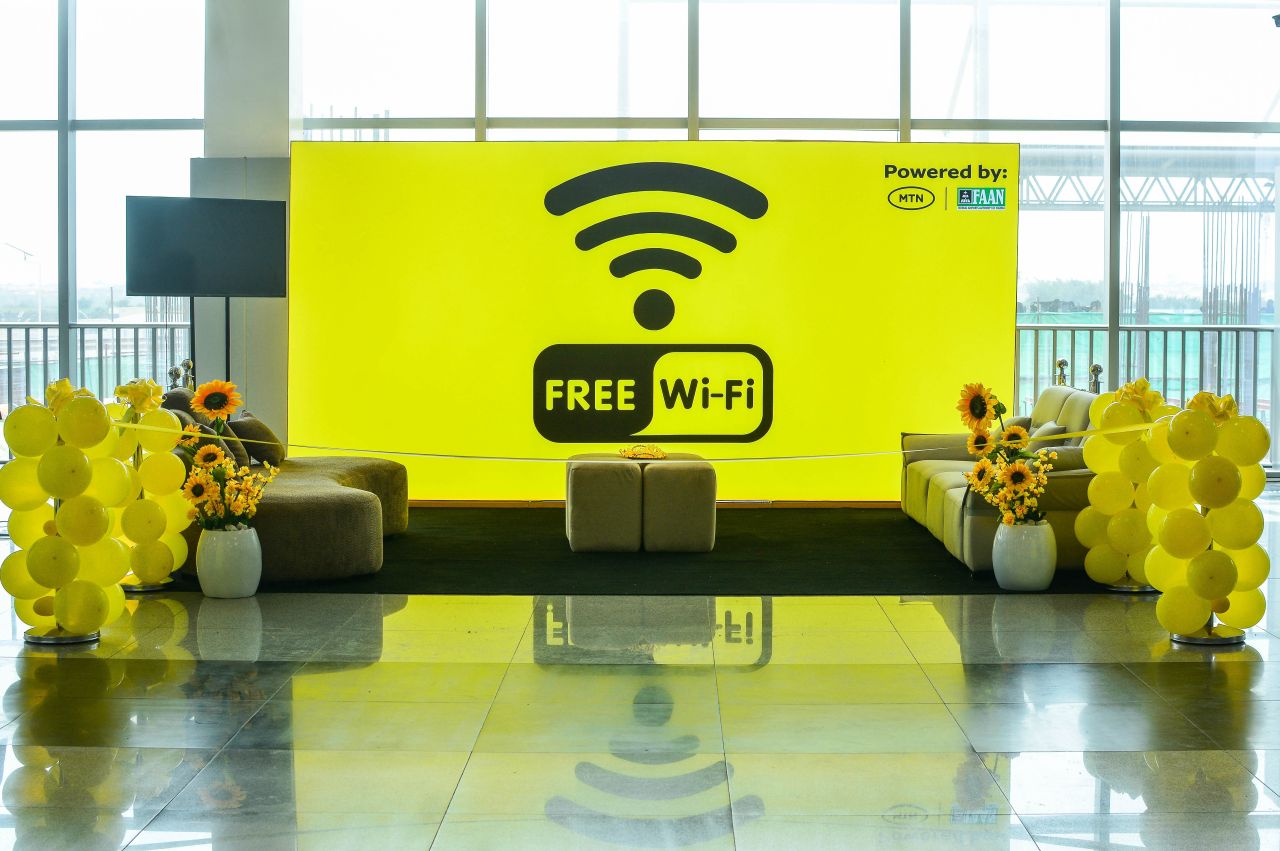
In a move poised to expand digital access at some of the country’s busiest public spaces, MTN Nigeria has partnered with the Federal Airports Authority of Nigeria (FAAN) to deploy free, high-capacity Wi-Fi services across Nigeria’s major international airport terminals.
The rollout covers key hubs including Murtala Muhammed International Airport in Lagos, Nnamdi Azikiwe International Airport, Port Harcourt International Airport, Akanu Ibiam International Airport, and Mallam Aminu Kano International Airport. The initiative was formally unveiled at a joint press conference and activated at the Arrival Concourse of Terminal 2 at Lagos’ international gateway, marking the beginning of a nationwide implementation.
While airport Wi-Fi is often seen as a convenience feature, stakeholders say this partnership represents something broader: an effort to reduce digital exclusion in high-traffic public infrastructure and improve access to information for millions of travelers each year.
Connectivity as a Public Utility
Airports are more than transit points; they are economic arteries connecting Nigeria to the world. For students traveling abroad, entrepreneurs meeting investors, diaspora Nigerians returning home, and small business owners transporting goods, reliable internet access can be critical. Free connectivity enables passengers to access travel documents, coordinate logistics, communicate with family, conduct business transactions, and stay informed in real time.
In a country where data costs can be prohibitive for some travelers and roaming charges remain expensive, providing free high-capacity Wi-Fi within airport terminals removes an immediate financial barrier to digital access.
Industry observers note that improving digital infrastructure at airports also strengthens Nigeria’s global competitiveness. Seamless connectivity aligns with international passenger expectations and enhances the perception of Nigerian airports as modern, efficient gateways.

Strengthening Critical Infrastructure
Beyond passenger convenience, the partnership underscores the growing recognition that digital connectivity is now part of essential infrastructure. High-capacity Wi-Fi networks within airports can support operational efficiency, improve communication channels, and potentially enable future smart-airport solutions, including digital wayfinding, real-time service updates, and data-driven passenger management systems.
For MTN Nigeria, the initiative aligns with its broader digital inclusion strategy aimed at expanding access to reliable connectivity across urban and underserved communities. By embedding free internet access within national transit hubs, the company is extending its inclusion agenda into spaces that connect local communities to global networks.
A Step Toward Broader Digital Inclusion
Nigeria’s digital economy continues to expand, but disparities in access remain. Public-private collaborations such as this highlight the role of corporate partnerships in complementing government efforts to close infrastructure gaps. By integrating connectivity into airports — symbolic entry and exit points of the nation — the initiative reinforces the idea that access to information should not be a luxury, but a baseline expectation.
As the service rolls out across Lagos, Abuja, Port Harcourt, Enugu, and Kano, the impact may be measured not only in megabytes consumed, but in opportunities enabled — from smoother travel experiences to real-time business decisions and stronger connections between Nigerians at home and abroad.
In positioning connectivity as both a service and a social good, MTN Nigeria and FAAN are signaling that the future of national infrastructure must be digital, inclusive, and accessible to all.