

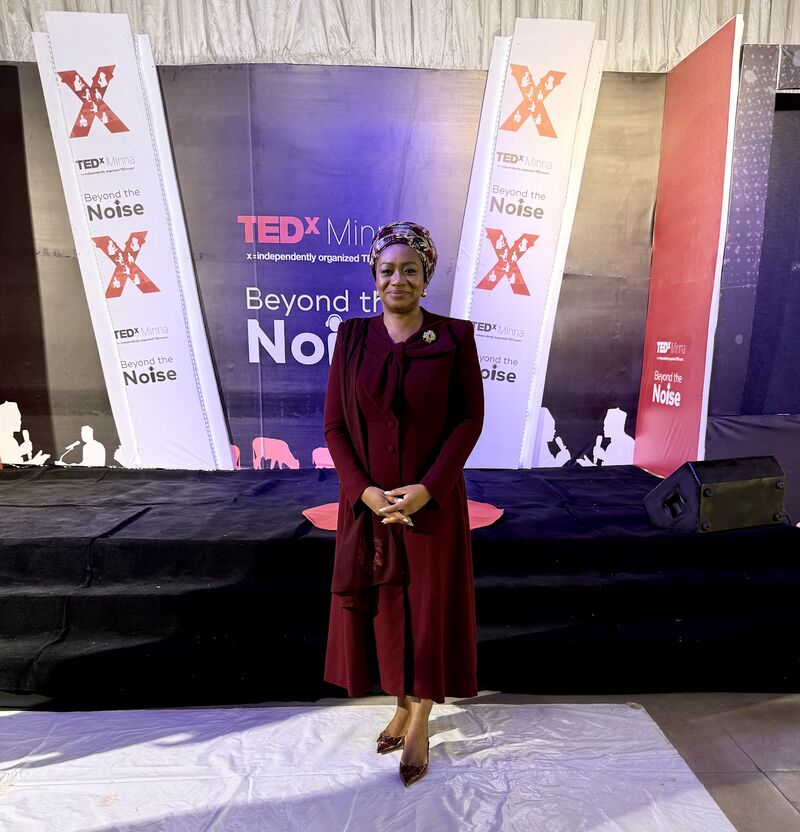
When Aishah N. Ahmad stepped onto the TEDxMinna stage, she did not offer a slogan. She offered a diagnosis.
“The North is not poor. The North is disconnected.”
It was a statement shaped not by abstraction, but by proximity. Speaking in Minna—in her home state of Niger State—Ahmad addressed an audience intimately familiar with the lived realities behind development statistics. The moment carried a different weight: not an external assessment of the region, but an internal reckoning with what has consistently blocked its potential.
Her central argument challenged one of Nigeria’s most persistent narratives. Poverty, she suggested, is too often treated as the root problem. In reality, the deeper issue is broken connectivity—between people and markets, talent and opportunity, ideas and institutions, policy and execution.
Across much of Northern Nigeria, value exists in abundance: human capital, land, culture, enterprise, and ambition. What is missing are the systems that allow value to move. Roads that do not connect producers to buyers. Financial systems that exclude rather than enable. Digital infrastructure that stops short of communities that could use it to leapfrog constraints. Governance structures that fail to translate policy into lived outcomes.
“When systems don’t connect,” Ahmad noted, “they don’t just slow progress—they quietly drain value.”
Her talk examined how institutional failure compounds itself. When young people cannot access capital, skills networks, or platforms, their potential remains localised and fragile. When regions remain disconnected from national and global value chains, productivity stalls—not because of incapacity, but because of isolation.
Yet the most compelling evidence for her argument was not theoretical. It was visible in the room.
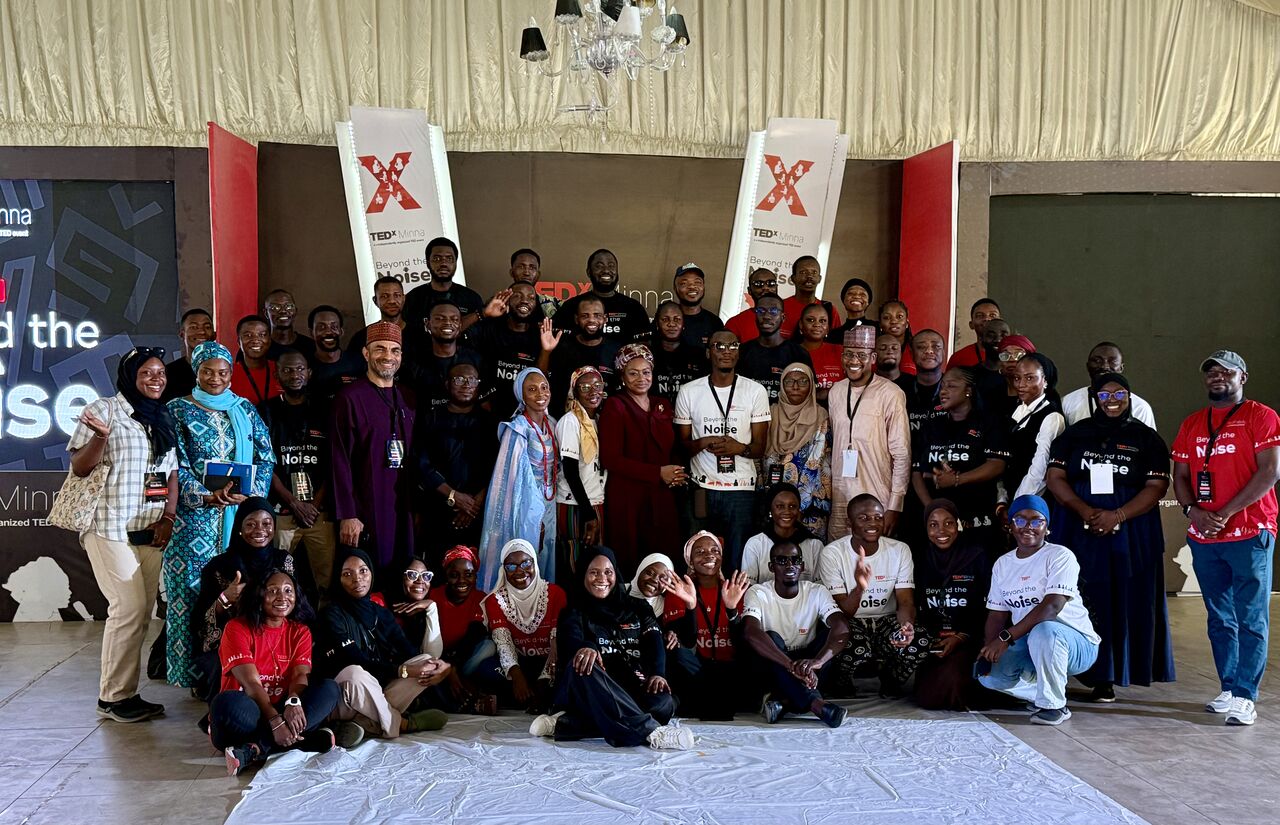
Ahmad pointed to the TEDxMinna team itself: young curators, organisers, and volunteers—building a global-standard platform from scratch, with limited resources but abundant drive. They were not anomalies. They were representatives of a wider, under-leveraged asset base spread across the North.
Talent, she made clear, is not the constraint. Systems are.
The critical question, therefore, is not whether the region has what it takes—but whether Nigeria is willing to build the connective infrastructure that allows such talent to scale. Infrastructure not just in the physical sense, but institutional: access to finance, digital platforms, mentorship networks, policy continuity, and market linkages that extend beyond geography.
Ahmad’s framing shifts the development conversation away from deficit thinking and toward design thinking. It calls for intentional system-building, where regions are not treated as recipients of aid, but as contributors to national and global value creation—if properly connected.
Her message also carried an implicit warning. Disconnection is not neutral. Left unresolved, it deepens inequality, fuels migration pressures, and wastes demographic potential at a time when Nigeria can least afford it.
As Nigeria debates growth, inclusion, and national cohesion, Ahmad’s intervention at TEDxMinna stands out for its clarity and restraint. It does not deny hardship. It refuses to define a region by it.
Instead, it poses a harder challenge:
Will we continue to describe poverty—or will we finally engineer connection?
As she noted in closing, the real work begins not on stages, but in the systems built afterward. When the TEDxMinna video is released, it will add visual record to a message already resonating quietly: the future of the North is not waiting to be invented. It is waiting to be connected—to Nigeria, and to the world.
I