

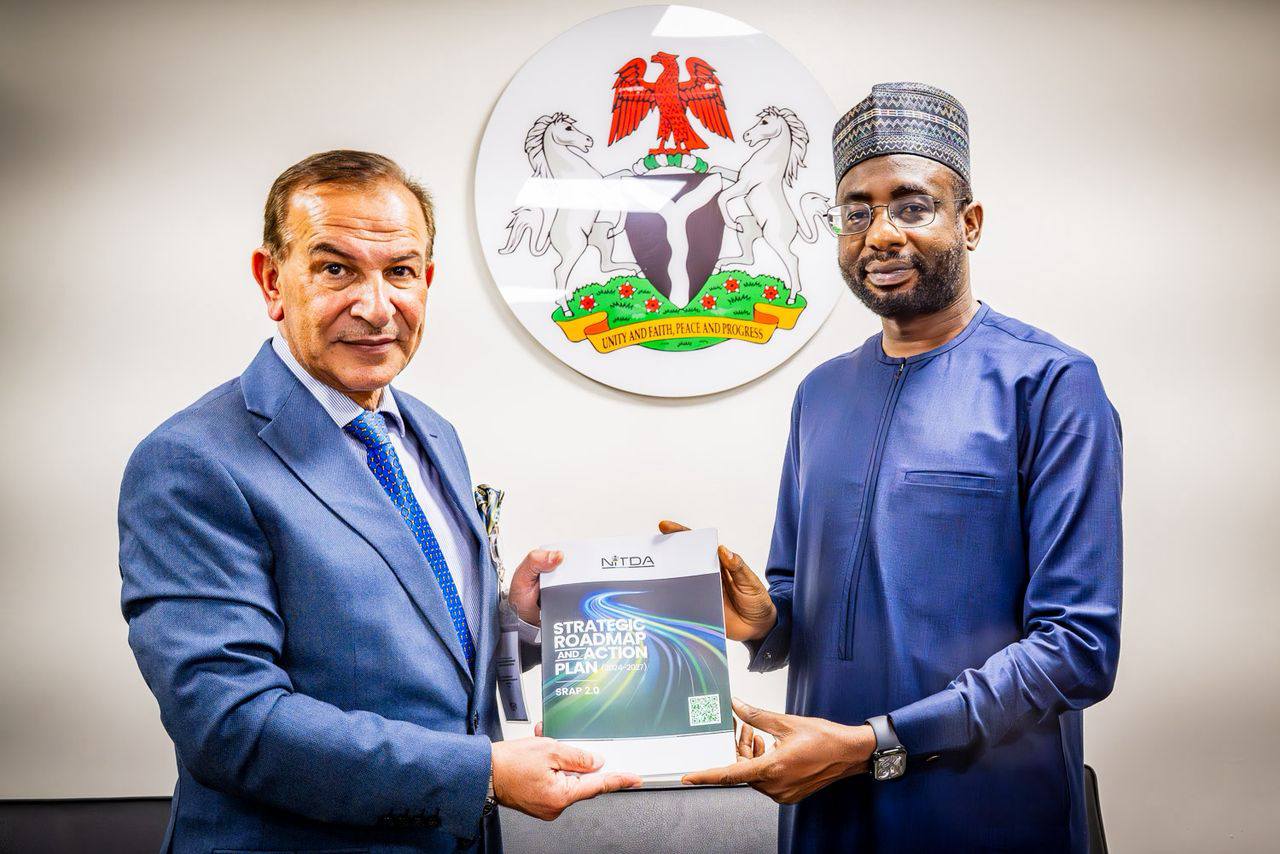
Efforts to close Nigeria’s technology skills gap and accelerate innovation received a boost as the National Information Technology Development Agency (NITDA) and Wigwe University explored a strategic partnership aimed at translating policy, research, and academic excellence into measurable national impact.
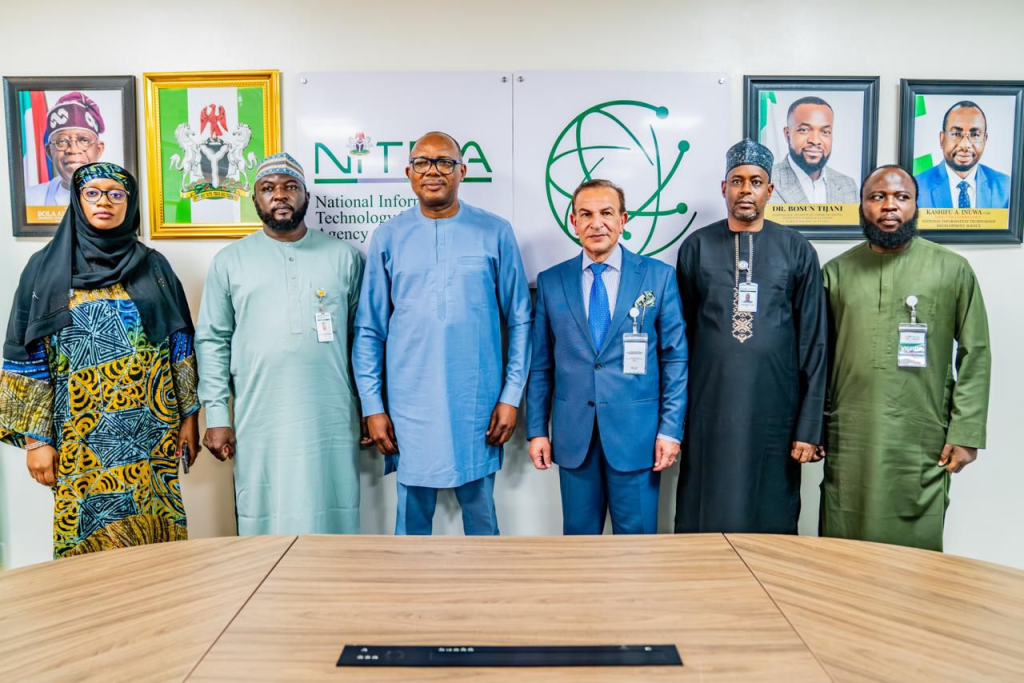
The engagement, hosted by the Director General of NITDA, Kashifu Inuwa Abdullahi, brought together government and academia around a shared challenge: how to build a future-ready workforce capable of driving Nigeria’s digital economy. Professor Marwan Al-Ateidi, Vice-Chancellor of Wigwe University, led the university’s delegation in discussions focused on talent development, applied research, and technology-driven solutions for national growth.
Representing the Director General, Dr Aristotle Onumo, Director of Stakeholders Management and Partnerships, described NITDA as Nigeria’s technology engine, responsible for translating IT policies into practical outcomes through regulation, innovation support, research, and digital inclusion. He noted that the proposed collaboration aligns closely with NITDA’s mandate to ensure that technological advancement delivers real benefits to citizens, industries, and the economy.
The discussions identified high-impact areas where joint action could yield tangible results, including artificial intelligence, robotics, smart agriculture, and virtualised education. Dr Onumo highlighted NITDA’s ongoing initiatives such as the National Centre for Artificial Intelligence and Robotics, the National Adopted Village for Smart Agriculture (NAVSA), the National AI Strategy, and efforts to strengthen Nigeria’s standing in global technology research and innovation rankings.
From the university’s perspective, Professor Al-Ateidi emphasised that Wigwe University was founded with a clear mission to redefine higher education in Africa. Established in honour of the late Herbert Wigwe, founder of Access Bank, the institution aims to become a continental hub for innovation, leadership, and technology-driven problem solving.
Both organisations agreed that the true measure of success would be impact rather than intent. They expressed commitment to moving beyond dialogue to implement joint programmes that accelerate innovation, equip young Nigerians with in-demand digital skills, and translate research into solutions for agriculture, education, and emerging industries.
The anticipated collaboration reflects a growing recognition that meaningful national development will depend on stronger links between policy institutions and universities. If executed effectively, the NITDA–Wigwe University partnership is expected to play a role in shaping Nigeria’s next generation of technology talent while advancing the country’s broader digital transformation agenda.