


As Nigeria’s telecommunications sector enters a new phase defined by rising data consumption, enterprise digitisation, and heightened customer expectations, Airtel Nigeria has identified quality of service (QoS) as the critical issue that will shape sustainable industry growth.
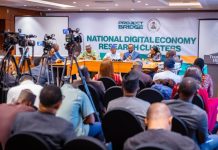
This position was outlined at Airtel Nigeria’s first media roundtable of 2026, where the company presented an extensive update on network, infrastructure, and technology investments made over the past 12 to 24 months. The session brought together senior ICT, business, and technology editors to interrogate how these investments are translating into measurable improvements for retail users, enterprise customers, and the broader digital economy.
Leading the engagement, Chief Executive Officer Dinesh Balsingh addressed longstanding industry challenges such as network congestion, service inconsistency, and resilience gaps. He noted that as data demand accelerates across sectors, telecom operators must move beyond expansion for scale and focus instead on building intelligent, high-capacity networks that can deliver reliability under pressure.

According to Airtel, its strategy has been deliberately structured around future readiness, with investments spanning mobile and fibre infrastructure, deeper spectrum holdings, cloud and IT backbone upgrades, expanded retail reach, and the integration of emerging technologies. These elements, the company said, are designed to support how Nigerians increasingly live, work, transact, and connect in a digital-first economy.
Balsingh emphasised that quality of service is no longer defined by coverage alone, but by resilience, redundancy, and network intelligence. He explained that Airtel’s infrastructure roadmap now incorporates fibre, cloud, and satellite-enabled connectivity to ensure businesses can scale with confidence, regardless of geography or operating environment.
A recurring issue discussed during the roundtable was the widening gap between data usage growth and network capacity across the industry. Airtel stated that its recent upgrades were implemented ahead of demand curves, allowing the network to absorb increased traffic while improving consistency, reducing congestion, and strengthening overall resilience.
The company also linked quality of service directly to national economic outcomes, noting that reliable connectivity underpins productivity across sectors such as finance, trade, education, healthcare, and the creative economy. As Nigeria’s digital economy expands, Airtel positioned itself as a critical enabler, focused on ensuring that growth in usage is matched by dependable daily access for millions of users.
The media engagement reflects a broader shift within the telecoms industry, where quality of service is emerging as the defining metric of competitiveness. For Airtel Nigeria, the company insists that sustained investment in infrastructure and technology remains central to meeting this challenge and supporting Nigeria’s evolving digital ambitions.