

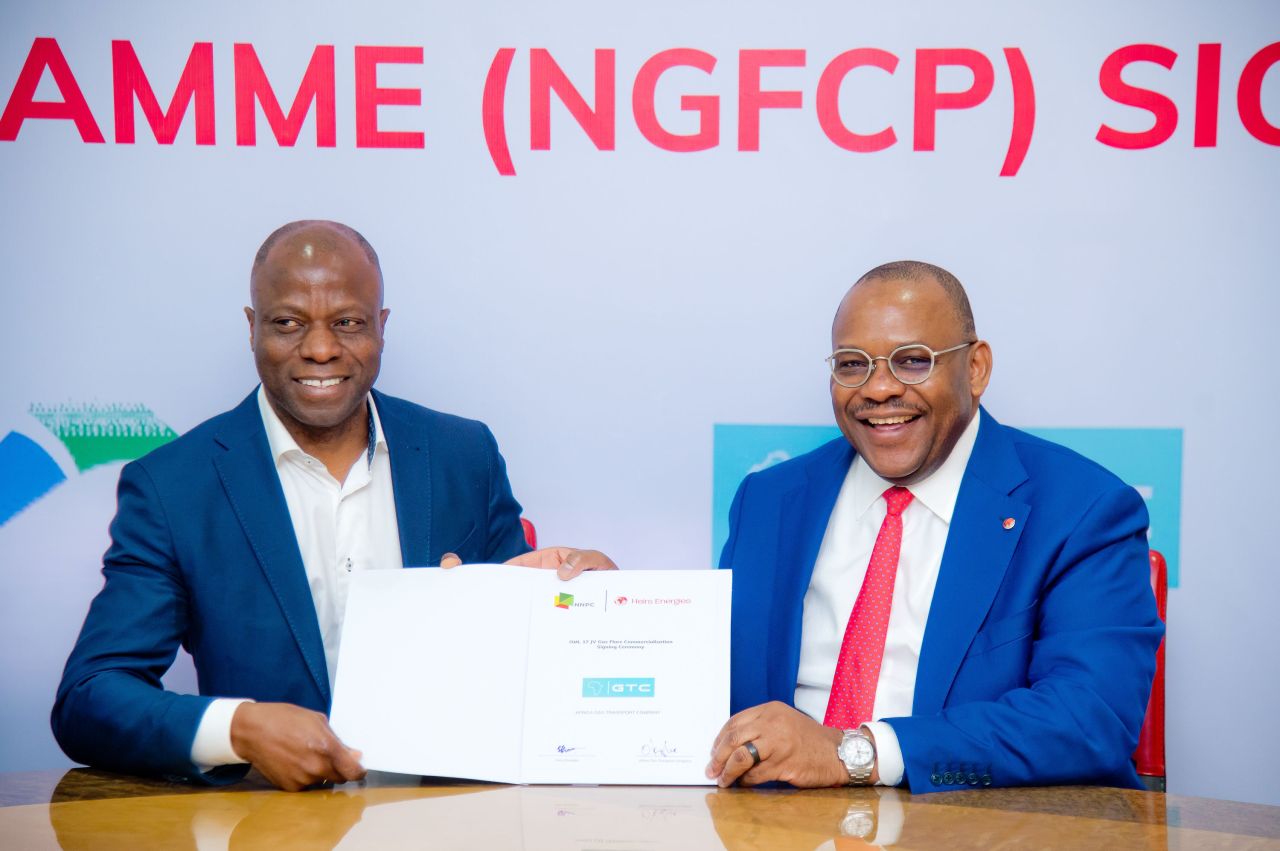
Heirs Energies has taken a further step in advancing Nigeria’s gas commercialisation agenda and environmental stewardship by signing Gas Flare Commercialisation Agreements under the Nigerian Gas Flare Commercialisation Programme (NGFCP) and approving additional non-NGFCP frameworks across OML 17.
The agreements, concluded in 2025, are designed to enable the capture and productive use of previously flared gas, supporting Nigeria’s broader gas development priorities and energy-transition objectives. Under the arrangements, flare gas will be deployed for power generation, industrial use, liquefied petroleum gas (LPG) and compressed natural gas (CNG), helping to reduce waste while expanding domestic energy supply.
Heirs Energies, operator of the OML 17 Joint Venture, partnered with a group of approved flare gas offtakers—AUT Gas, Twems Energies, Gas & Power Infrastructure Development Limited (GPID), PCCD, and Africa Gas & Transport Company Limited (AGTC). The frameworks are structured to eliminate routine flaring and convert gas that would otherwise be wasted into economic and social value.
Supporting Nigeria’s Gas-Led Energy Transition
Nigeria holds one of the largest proven gas reserves in Africa, and the federal government has positioned natural gas as a transition fuel to support economic growth, energy access and emissions reduction. The NGFCP was established to attract private-sector investment into flare gas utilisation, reduce greenhouse gas emissions and improve environmental outcomes in oil-producing communities.
By participating in both NGFCP and non-NGFCP frameworks, Heirs Energies is aligning operational activity with national policy objectives while enabling third-party investors to develop gas infrastructure around existing oil operations.
Environmental and Economic Impact
Routine gas flaring has long been a challenge in Nigeria’s upstream oil sector, contributing to emissions, environmental degradation and lost economic opportunity. The new agreements are expected to reduce flaring volumes across OML 17 while supporting job creation, industrial activity and energy availability.
The captured gas will be channelled into downstream applications that address key domestic needs, including electricity generation, cleaner cooking fuel through LPG, and transportation fuel via CNG, particularly relevant as Nigeria expands alternatives to liquid fuels.
Commitment to Responsible Operations
Heirs Energies said the agreements reflect its continued commitment to responsible resource development, environmental stewardship and value creation. The company has positioned gas commercialisation as a core element of its operating strategy, alongside investments in production optimisation and infrastructure development.
The latest agreements build on earlier initiatives by the company to reduce emissions intensity, support host communities and contribute to Nigeria’s long-term energy security.
Looking Ahead
As implementation progresses, the flare gas commercialisation projects are expected to play a role in advancing Nigeria’s flare-elimination targets while demonstrating how partnerships between operators and specialist gas developers can unlock value from existing assets.
The agreements mark another milestone in Heirs Energies’ efforts to integrate environmental responsibility with commercial performance, reinforcing the role of natural gas in Nigeria’s transition toward a more sustainable and inclusive energy future.