


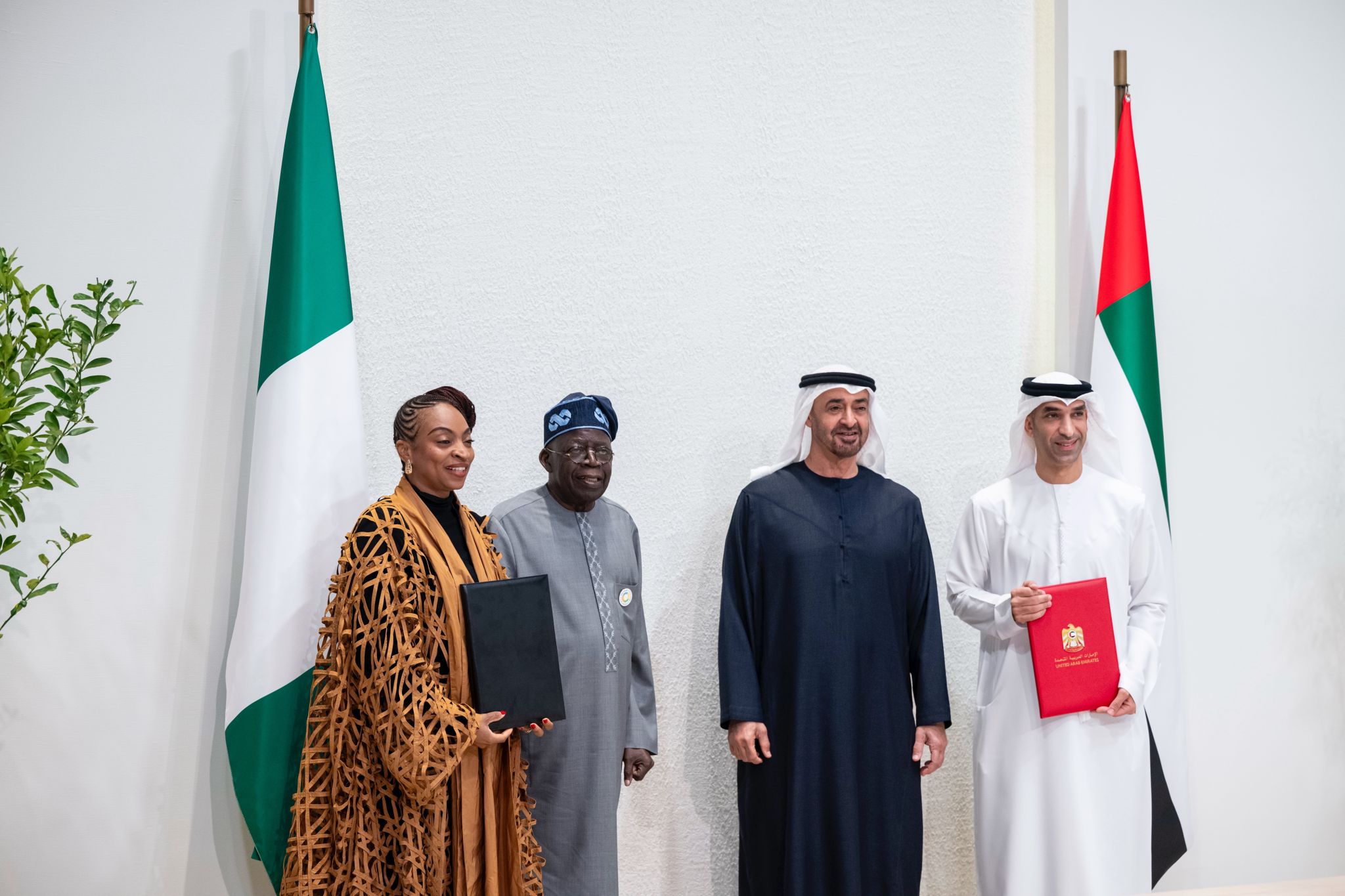
Nigeria has taken a significant step toward restructuring its global trade positioning with the signing of a Comprehensive Economic Partnership Agreement (CEPA) with the United Arab Emirates, a move expected to expand market access for Nigerian goods, services, and talent while strengthening the country’s appeal to international investors.
The agreement was signed on January 13, 2026, by the Honourable Minister of Industry, Trade and Investment, Dr. Jumoke Oduwole, and the UAE Minister of Foreign Trade, Thani bin Ahmed Al Zeyoudi, in the presence of the Presidents of both countries. Analysts describe the deal as one of Nigeria’s most far-reaching bilateral trade agreements in recent years.
Under the CEPA framework, tariffs will be eliminated on more than 7,000 products, while Nigerian service providers gain access to 108 service sectors within the UAE market. The agreement is designed to support Nigeria’s economic diversification agenda by reducing dependence on oil exports and opening new pathways for non-oil goods, professional services, and creative and technical talent.
Trade experts note that access to the UAE—one of the world’s most connected trade and logistics hubs—offers Nigerian businesses a strategic entry point into the wider Middle East, Asia, and global markets. The agreement positions Nigeria as a preferred gateway for international investors seeking access to Africa’s largest economy.
Speaking on the significance of the agreement, Dr. Oduwole emphasised that the deal was negotiated with strict adherence to Nigeria’s existing international trade obligations, including those under the World Trade Organization (WTO), the African Continental Free Trade Area (AfCFTA), and ECOWAS. This, she said, ensures policy coherence while strengthening Nigeria’s competitiveness.
Industry stakeholders argue that beyond tariff reductions, the real impact of the agreement will depend on how effectively Nigerian businesses are supported to take advantage of the new opportunities. In response, the Federal Ministry of Industry, Trade and Investment has committed to equipping local enterprises with the necessary information, facilitation tools, and institutional support required to compete successfully in the UAE market.
Dr. Oduwole acknowledged the role of the Nigerian negotiation team, including the Federal Ministry of Industry, Trade and Investment, the Nigerian Office for Trade Negotiation, the Nigeria Customs Service, the Federal Ministry of Justice, and other Ministries, Departments, and Agencies, describing the agreement as a product of coordinated national effort.

The agreement has been widely welcomed by the private sector, particularly exporters, service providers, and small and medium-sized enterprises seeking new growth markets. Observers say the deal sends a strong signal that Nigeria is repositioning itself as an open, rules-based, and globally integrated economy.
Addressing Nigerian businesses directly, the Minister urged the private sector to proactively identify opportunities created by the agreement and enter the UAE market with confidence, noting that protections and market access provisions were specifically negotiated to support Nigerian enterprises.
With the CEPA now in place, analysts believe Nigeria’s challenge will be to convert policy momentum into measurable trade flows, job creation, and investment inflows—outcomes that could redefine the country’s role in global commerce.