

In a bold initiative aimed at tackling Nigeria’s persistent challenges of food insecurity, rural underdevelopment, and housing deficits, the Niger State Government has pledged 100,000 hectares of land to the Federal Government for a pioneering Mass Housing and Agricultural Settlement Project.
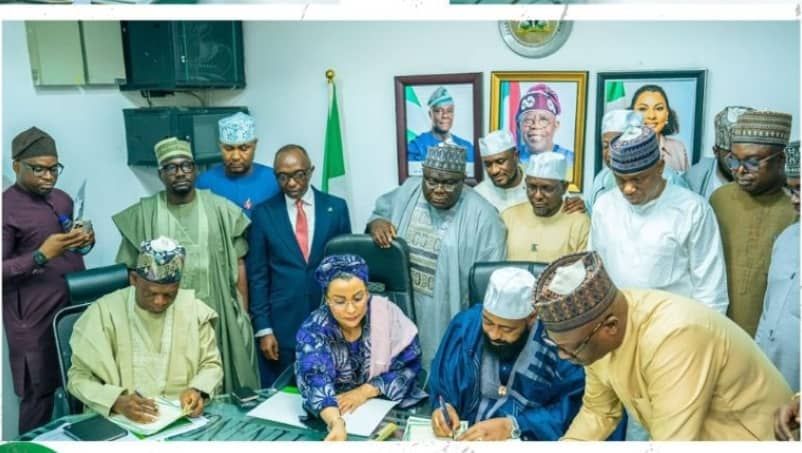
The agreement was formalized on January 9, 2026, in Abuja through a Memorandum of Understanding (MoU), bringing together the Niger State Government, the Federal Ministry of Finance, and the Ministry of Finance Incorporated (MOFI). Governor Mohammed Umaru Bago described the project as a major step toward realizing President Bola Ahmed Tinubu’s Renewed Hope Agenda, and assured that the state would deliver the Certificate of Occupancy (C-of-O) for the land promptly—by the following Monday—to demonstrate its full commitment.
Integrating Housing and Agriculture
The innovative project combines purpose-built housing with large-scale farming settlements, allowing farmers to live close to their farmlands. The integrated model aims to:
- Boost agricultural productivity
- Reduce post-harvest losses
- Minimize rural-urban migration
- Enhance security in rural communities
Settlements will feature comprehensive infrastructure, including access roads, potable water systems, renewable energy solutions, schools, healthcare facilities, agro-processing centers, and organized grazing reserves to support both crop and livestock farming.
A Holistic Approach to Rural Development
Minister of State for Finance, Dr. Doris Uzoka-Anite, emphasized that the project goes beyond conventional housing.
“This is deliberately designed not just as a housing intervention but as a settlement framework for farmers aimed at strengthening agricultural value chains and improving livelihoods,” she said. She noted that Niger State was chosen as the pilot due to its vast agricultural potential, abundant land and water resources, and the pressing need to address insecure settlements and inadequate infrastructure.
Economic and Investment Opportunities
The initiative is expected to create thousands of jobs for engineers, builders, artisans, and service providers, while stimulating demand across sectors such as cement, steel, logistics, and agro-processing. It also offers significant opportunities for private developers, pension funds, and agribusiness investors, positioning Niger State as a scalable model for similar projects nationwide.
Governor Bago described the collaboration as a model of cooperative federalism, stressing that the project could remove up to 80% of the constraints limiting agricultural output in the state. By clustering farmers into planned, secure communities with mechanized farming support, irrigation, improved seedlings, and guaranteed market access, the project is set to transform rural livelihoods, improve food security, and drive inclusive economic growth.