






It was meant to be a night of celebration—but it also became a moment of reflection.
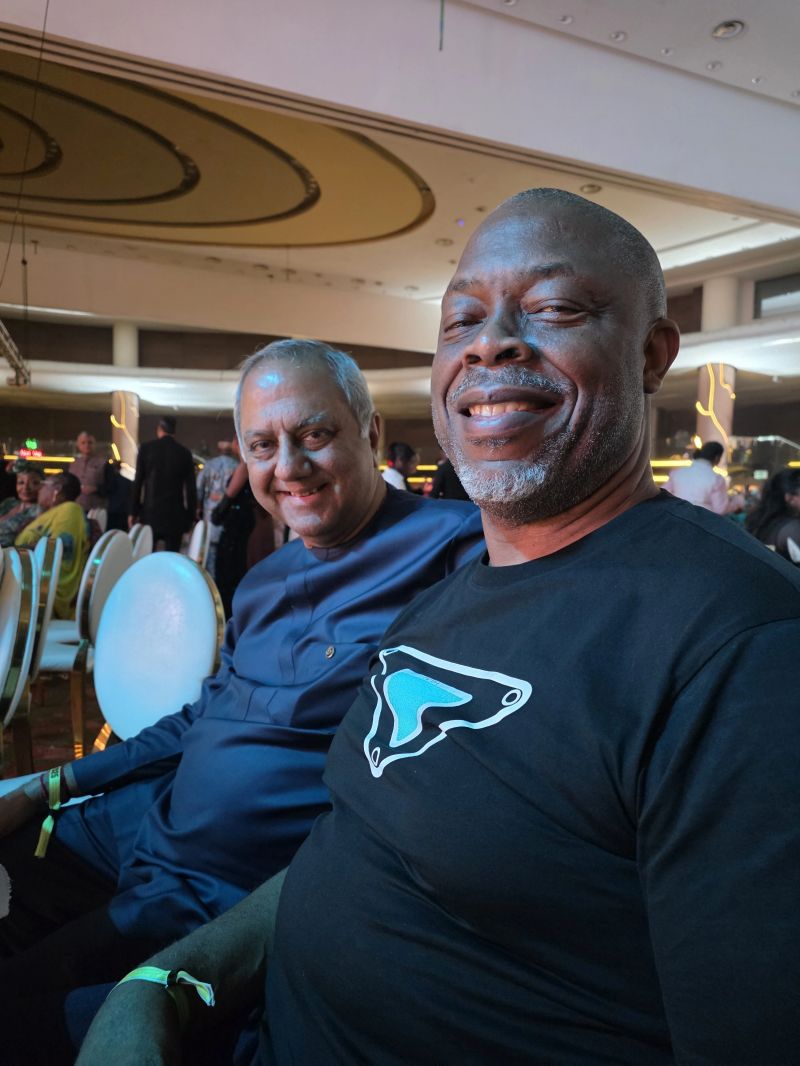
At the Tolaram Group’s end-of-year conclave and party, business leaders stepped away from boardrooms and balance sheets to celebrate the work behind the numbers. For Mike Ogbalu III, FCIB—Chief Executive Officer of the Pan-African Payment and Settlement System (PAPSS) at Afreximbank—the evening was a reminder that Africa’s economic progress is built as much on people and partnerships as it is on policy and infrastructure.
“After a year of intense work, it was good to see the human side of a group that consistently delivers,” Ogbalu noted, describing the event as a moment where hard work met well-earned celebration.
A Friendship, and a Leadership Story
Central to the evening was Haresh Aswani, a long-time friend of Ogbalu and a key leader within Tolaram Group. Ogbalu spoke warmly about Aswani’s journey and impact—one that many Nigerians experience daily, often without thinking about it.
Under Aswani’s leadership, Indomie Instant Noodles grew from a simple product into a household name and a billion-dollar business in Nigeria. Beyond consumer goods, Aswani also played a leading role in delivering the $1.2 billion Lekki Deep-Sea Port, Nigeria’s first privately developed deep-sea port.
“These are not small achievements,” Ogbalu reflected. “They are the kind of projects that quietly reshape economies and open doors for others.”
Why Infrastructure Matters to Payments
For Ogbalu, whose work focuses on building Africa’s cross-border payment backbone, projects like the Lekki Port are deeply personal—not abstract.
Ports, factories, and supply chains are where payments begin. Every container unloaded, every supplier paid, every product moved across borders creates demand for faster, cheaper, and more reliable payment systems.
“When trade flows better, payments have to keep up,” he explained. “Infrastructure like this creates real economic activity—and that activity needs modern payment rails.”
The Fintech Connection
Ogbalu noted that large pan-African businesses such as Tolaram are quietly shaping the fintech ecosystem by their sheer scale and operational needs. Operating across multiple countries means managing currencies, settlements, and treasury flows that traditional systems struggle to handle efficiently.
This is where fintech innovation and platforms like PAPSS come in—reducing currency friction, enabling instant settlement, and allowing African businesses to trade with one another without routing payments outside the continent.
“Fintech doesn’t grow in isolation,” Ogbalu said. “It grows because real businesses need better ways to move money.”
People Behind the Progress
Beyond the economics, the evening was also about people—about leaders who invest patiently, teams who execute consistently, and relationships that last beyond transactions.
Ogbalu emphasized that Africa’s payment revolution will not be driven by technology alone, but by trust, collaboration, and long-term thinking.
As the music played and the year drew to a close, the message was clear: Africa’s future—whether in infrastructure, trade, or fintech—is being built by people who work hard, think long term, and still remember to celebrate together.
Sometimes, progress looks like policy and platforms.
Sometimes, it looks like a room full of people pausing to acknowledge how far they’ve come—and how much further they can go.