


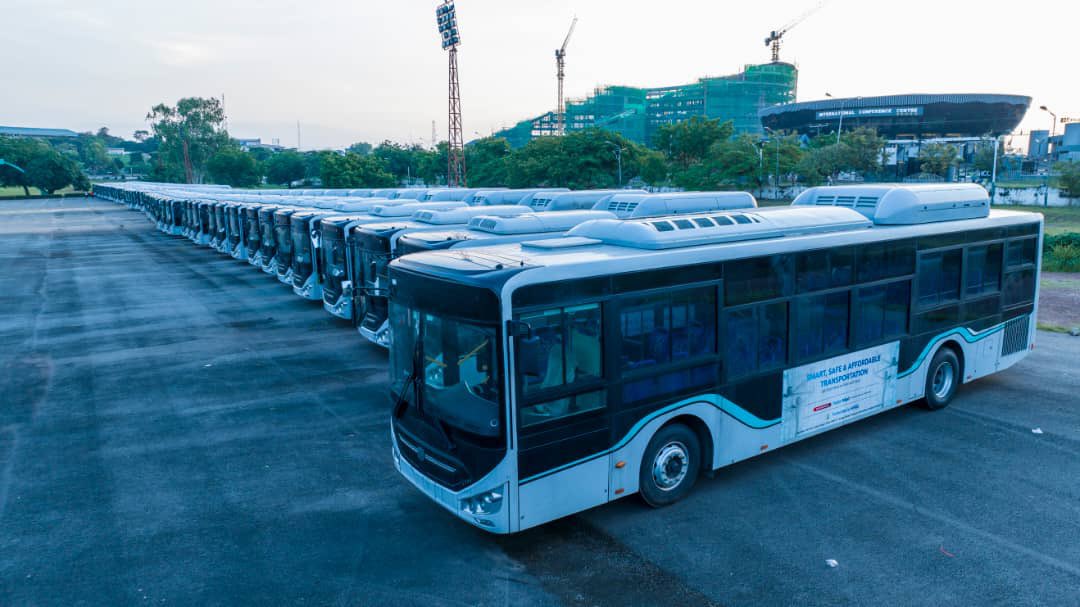
The Enugu State Government has announced plans to restrict the operations of tricycles, yellow buses, and minibuses on major highways within Enugu metropolis as part of preparations for the rollout of the state’s Bus Rapid Transit (BRT) system.
The disclosure was made by the Commissioner for Transport, Dr. Obi Ozor, during a consultative meeting with transport unions and key stakeholders held at the ministry’s headquarters in Enugu on Monday.
According to Dr. Ozor, the affected corridors include Okpara Avenue–Abakaliki Road–New Haven Junction–Naira Triangle–Emene Airport; Ogui Road–Chime Avenue–Naira Triangle; New Haven Junction–Bisala Road–Rangers Avenue–WAEC–Nkpokiti–Zik’s Avenue; Ogui Road–Presidential Road–WAEC–Nkpokiti; as well as the entire Agbani Road axis.
He explained that the routes would serve as dedicated BRT corridors in line with Governor Peter Mbah’s vision of repositioning Enugu as a modern, multimodal, and globally competitive city. He, however, clarified that taxis would still be permitted to operate along the BRT routes.
Dr. Ozor noted that tricycles were not designed for high-speed highways, stressing that their continued operation on such roads disrupts traffic flow and poses serious safety risks to commuters.
“We must be open to change. This reform is not about taking anyone’s job. It is about reorganizing the transport system so that BRT buses operate on primary roads, yellow buses serve secondary routes, and tricycles provide last-mile connectivity. Everyone has a role to play in the value chain,” he said.
The commissioner revealed that the state government has procured 200 compressed natural gas (CNG)-powered BRT buses, alongside plans to introduce 4,000 electric taxis to be assembled locally at the Anambra Motor Manufacturing Company (ANAMMCO) plant in Enugu. He added that the first batch of 1,000 electric taxis would be ready within three months.
He further disclosed that 84 new bus shelters have been constructed across the city to support a modern public transportation network focused on safety, comfort, and affordability.
Dr. Ozor stated that Enugu, with an estimated two million daily commuters, requires no fewer than 8,000 buses to effectively meet its mobility needs. He added that the BRT buses are equipped with padded seats, air-conditioning, WiFi, and advanced safety features, including real-time tracking through a central command and control centre.
“Passengers will not stand in these buses, and all vehicles are monitored in real time. To ease the burden on citizens, the BRT fare comes with a 47 per cent discount,” he said.
On resolutions reached during the meeting, the commissioner said transport unions interested in participating in BRT bus or terminal operations were invited to submit proposals, including financial models, for government consideration.
He also announced that the state’s electronic fare payment system, the Ije Card, would be decentralized to ensure wider access, with sales points expected to reach up to five million residents within 90 days.
Dr. Ozor acknowledged delays in allocating loading bays at the new transport terminals, noting that proposals currently under review would soon be finalized. He encouraged transport unions to explore financial opportunities to acquire buses or invest in the BRT operational framework.
“There are enormous investment opportunities as Enugu continues to expand its connectivity to other cities,” he said.
Stakeholders and transport union leaders at the meeting expressed support for the state’s transportation reforms, citing the long-term benefits for commuters, operators, and the state’s economy.
The Enugu State Chairman of the Road Transport Employers Association of Nigeria (RTEAN), Comrade Chidiebere Aniagu, said the union was not opposed to the reforms and aligned with the government’s vision for a safer and more efficient transport system, while urging the government to address the concerns of its members.