


Lagos, Nigeria — Calls for a unified, sovereign African payment ecosystem took center stage at the inaugural Pan-African Payment & Settlement System (PAPSS) Cowry Conference 2025, held this week in Lagos. The high-level gathering, themed “Building an Interoperable and Sovereign African Payment Ecosystem for Trade and Economic Growth,” brought together financial services leaders, policymakers, and technology innovators committed to advancing the continent’s economic integration.
Among the notable participants was Ngover Ihyembe-Nwankwo, a leading executive in payments, digital infrastructure, and financial inclusion, who described the event as a pivotal moment for Africa’s economic future. Reflecting on discussions from a Nigeria Inter-Bank Settlement System (NIBSS) sidebar session on “Improving Momentum in Cross-Border Payments,” Ihyembe-Nwankwo noted that the enthusiasm among industry stakeholders highlighted a shared commitment to driving continental progress.
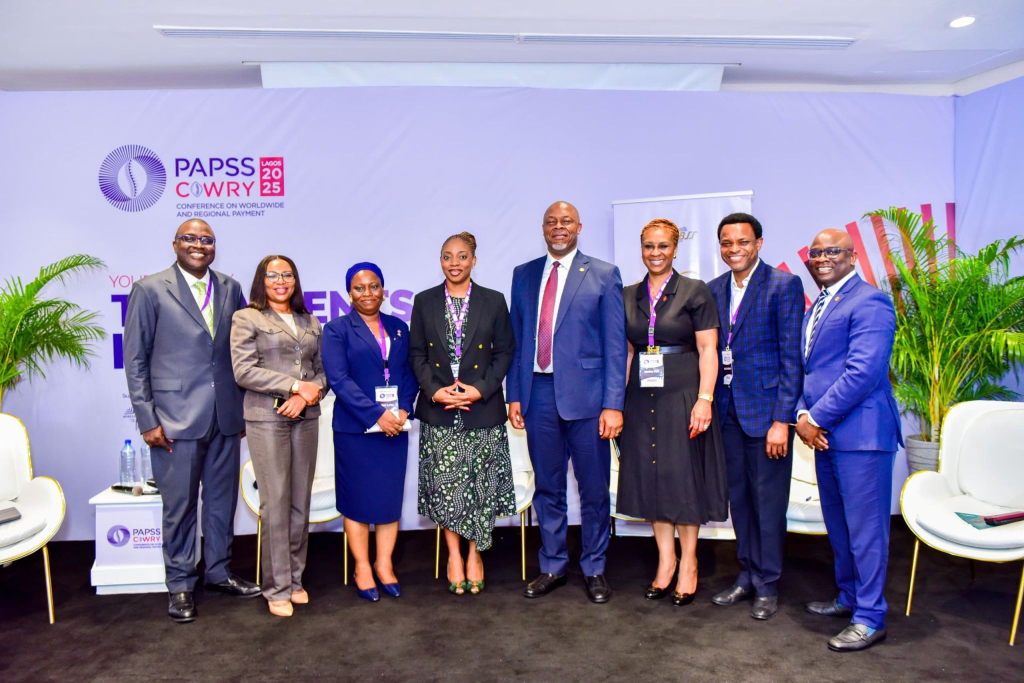
The session featured key contributions from panelists including Ositadimma Ugwu, Chief Information Officer at PAPSS; Uzoamaka Oyeka, Group Head of Remittance at UBA; Aminat Olatunji, Head of Payment & Remittance at Access Bank; Katherine Oba, Head of Strategy for International Operations at Fidelity Bank; and Oluseyi Adenmosun, Head of Technology at NIBSS. Moderated by William Uko III, Head of Strategy at NIBSS, the conversation underscored a central message: Africa’s economic destiny must be shaped by Africans.
Progress Takes Hold
Speakers highlighted that PAPSS—Africa’s cross-border payment and settlement infrastructure—is beginning to deliver measurable results. Transaction volumes are increasing, user confidence is strengthening and the vision of seamless intra-African trade is gradually becoming reality. The PAPSS rail and emerging marketplace were cited as critical components enabling faster, cheaper, and more secure financial flows across the continent.
Challenges Still to Overcome
Despite the momentum, participants acknowledged persistent barriers slowing adoption. These include fragmented regulatory regimes across African markets, inconsistencies in dispute resolution frameworks, the need for stronger and harmonized KYC processes, currency and language limitations, and the challenge of onboarding millions of unbanked citizens into the formal digital economy. Addressing these issues, they emphasized, is crucial to unlocking the full potential of payment sovereignty.
A Strategic Imperative for Africa
With global trends tilting toward protectionism and economic nationalism, African leaders argue that the continent must strengthen its internal financial systems. Payment infrastructure such as PAPSS, NIBSS and regional switches not only modernize commerce but also anchor economic and data sovereignty—ensuring that value generated by African trade remains within African economies.
“When Africans trade with Africans using African payment rails, we retain value, generate our own data insights, create jobs and advance financial inclusion for the 500 million unbanked Africans,” Ihyembe-Nwankwo stressed.
The presence of PAPSS CEO Mike Ogbalu III during the session was widely viewed as a strong signal of institutional commitment to accelerating progress.
As discussions concluded, one message resonated across the conference halls: the infrastructure is in place, the momentum is accelerating, and the window of opportunity is now.
“It’s time for Africa.”