


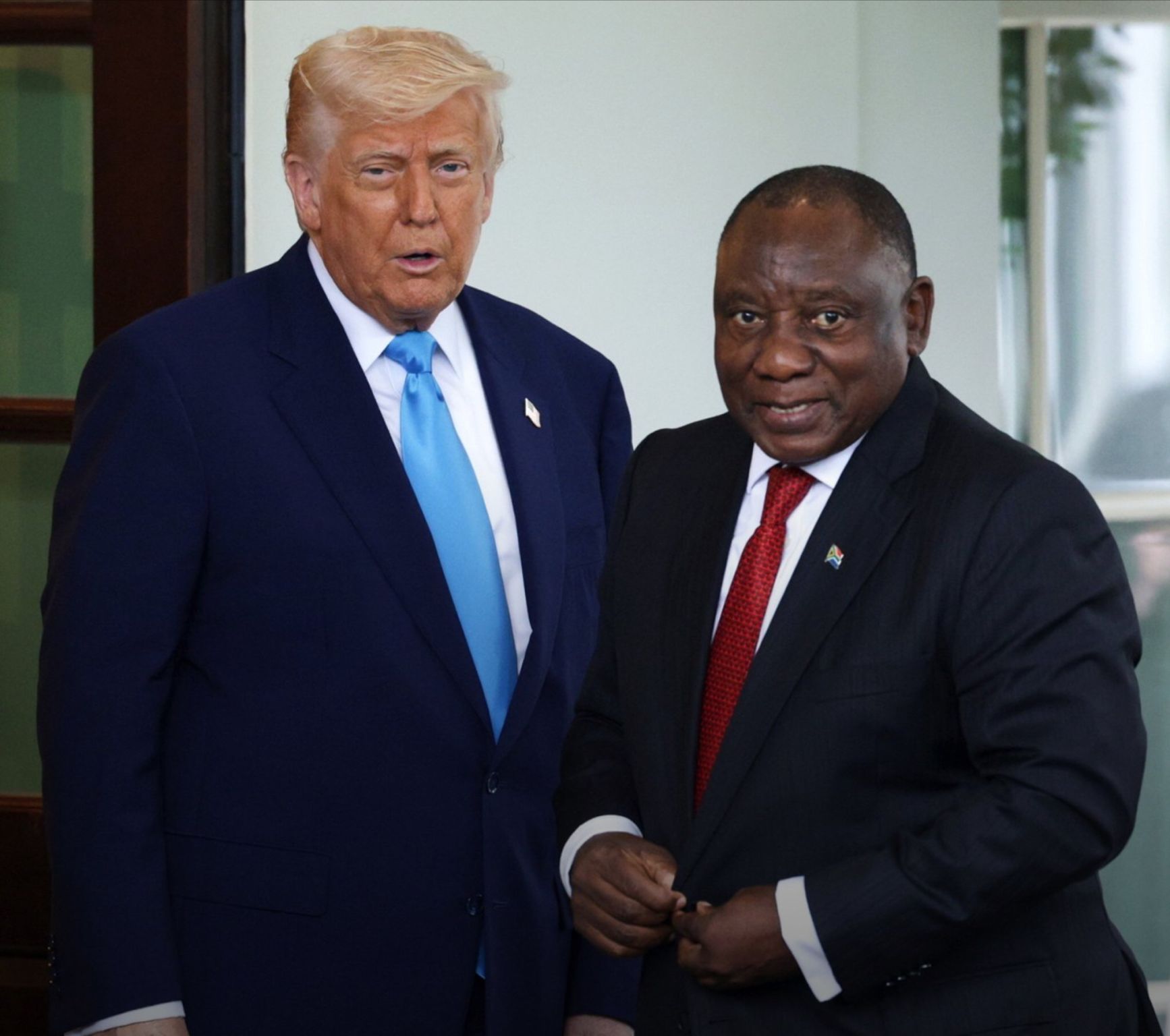






Mark-Anthony Johnson, CEO of JIC Holdings, has amplified comments made by Afreximbank President George Elombi, suggesting that former U.S. President Donald Trump’s policy direction—particularly his support for fossil fuels and the withdrawal of certain trade incentives—has had unexpected benefits for Africa’s economic trajectory.
Speaking on the shifting global landscape, Elombi argued that although not intentional, Trump’s decisions have pushed African governments and businesses to “look inwards,” accelerate regional integration, and strengthen intra-continental trade strategies. Elombi, a Cameroonian lawyer who assumed leadership of the Cairo-based pan-African trade bank in October, said these geopolitical shifts are forcing Africa to confront long-standing structural vulnerabilities.
According to Elombi, Trump’s strong backing for fossil fuels slowed the pace of the global energy transition. While heavily debated internationally, the slower transition has inadvertently offered temporary relief to African economies still dependent on oil revenue. With less pressure to phase out fossil fuel production immediately, oil-producing African countries have enjoyed slightly more breathing room to stabilise revenues and re-strategise for the future.
The Afreximbank president also addressed the expiration of the African Growth and Opportunity Act (AGOA)—a 25-year U.S.–Africa trade agreement that ended in September. He noted that while the short-term effects will be painful, especially for textiles and other export-reliant industries that benefited from preferential access to the U.S. market, the long-term outcome may be constructive. Elombi pledged to work with African governments to reroute affected exports into regional and continental markets, many of which remain underdeveloped but hold significant potential.
Afreximbank plans to intensify investments in processing and value-addition facilities across the continent. Elombi stressed that Africa can no longer afford to depend on foreign nations—particularly China—to process its mineral and metal resources. Strengthening local processing would help African countries retain more value, create jobs, and secure stronger negotiating power in global markets. While South Africa has advanced processing capabilities, most other African nations continue to export raw commodities without significant beneficiation.
“Our balance sheet is big enough for us to transform certain sectors overnight,” Elombi said, pointing to the bank’s rapid growth. Afreximbank’s assets and contingencies have surged from $6 billion to $44 billion in just ten years, powered by shareholder support and intensified capital mobilization. Elombi emphasized that once initial projects show promise, global investors consistently express interest in joining the effort.
Founded in 1993 by African states and private-sector partners, Afreximbank was created to promote intra-African trade and strengthen the continent’s financial independence. Today, its mission aligns closely with the goals of the African Continental Free Trade Area (AfCFTA), which aims to create a single African market and reduce reliance on external partners.
Johnson noted that Elombi’s remarks reflect a broader shift in continental sentiment: rather than viewing global disruptions purely as setbacks, African leaders are increasingly looking for opportunities to leverage them for internal growth, industrialisation, and strategic autonomy.
Observers say the bank’s aggressive investment approach, alongside renewed focus on local value creation, positions the continent to capitalise on growing global demand for African minerals, energy resources, and emerging markets.
As geopolitical realignments continue, Afreximbank’s leadership believes that Africa may emerge stronger—more unified, more self-reliant, and better prepared to drive its own economic destiny.